Yang Jianru, Jia Yang, Wang Bing, Yang Shengrong, Du Kun, Luo Yujie, Li Yunhe, Zhu Bing
Department of Obstetrics and Gynecology, The Second Affiliated Hospital of Chongqing Medical University, Chongqing, China.
Department of Plastic Surgery, The Second Hospital of Hebei Medical University, Shijiazhuang, China.
Front Oncol. 2021 Mar 11;11:595609. doi: 10.3389/fonc.2021.595609. eCollection 2021.
The effects of up-regulated CircCHST15 on lung cancer remained unclear. In this study, the role of CircCHST15 in lung cancer was investigated.
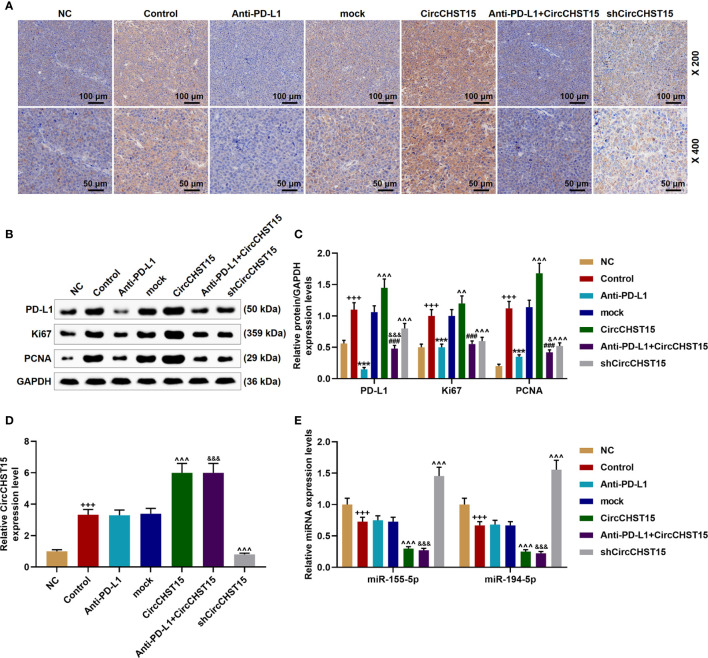
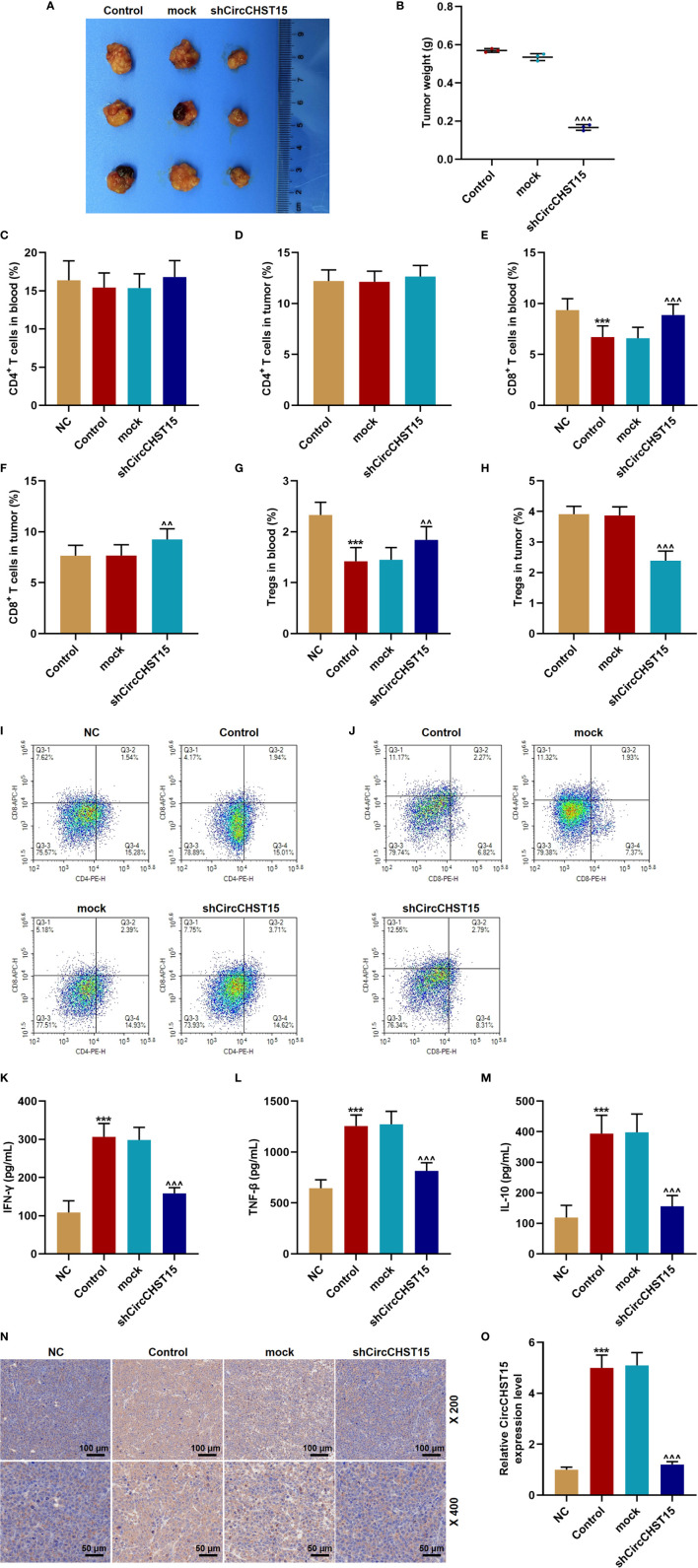
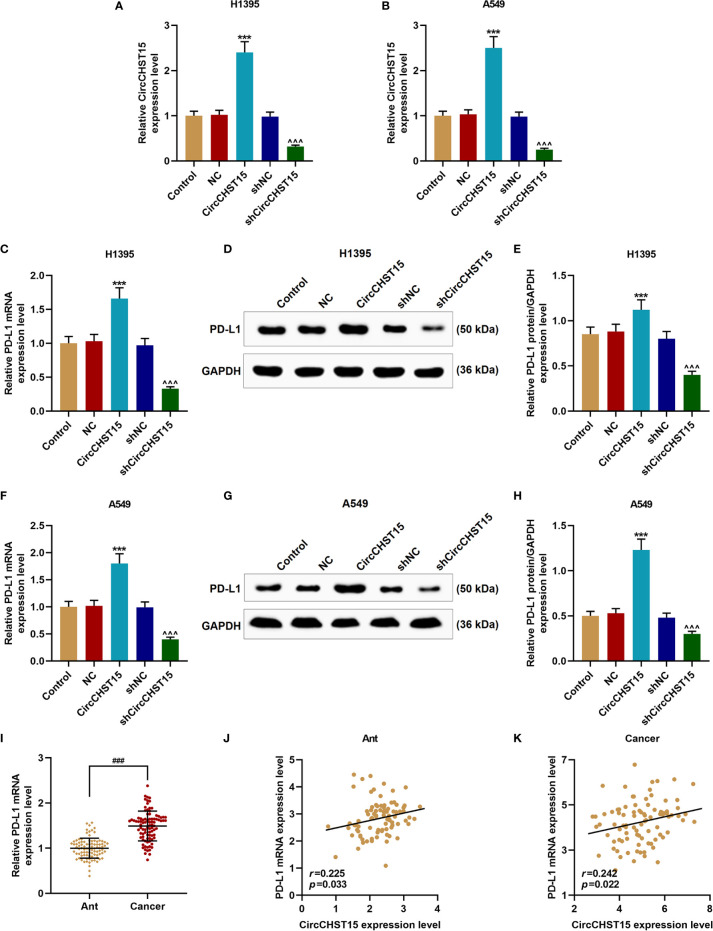
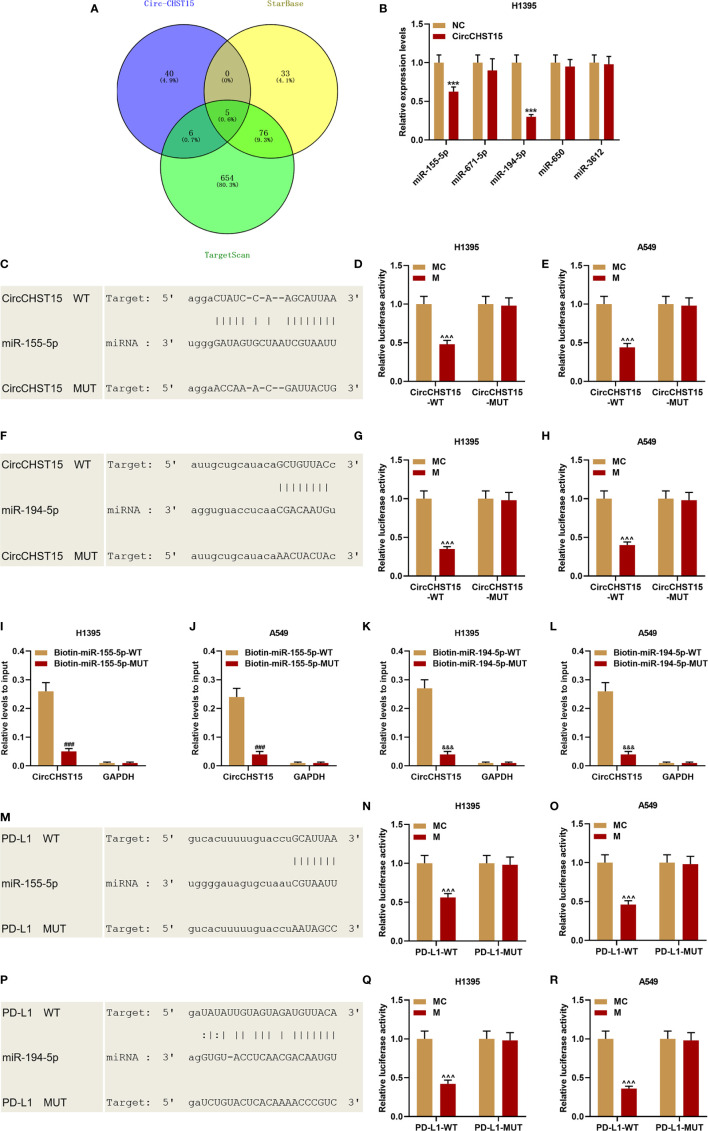
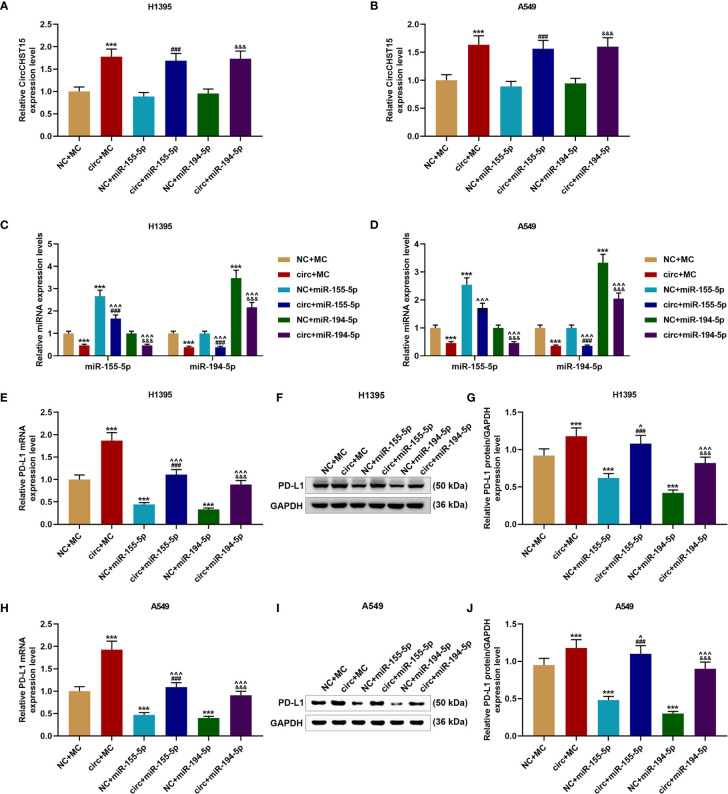
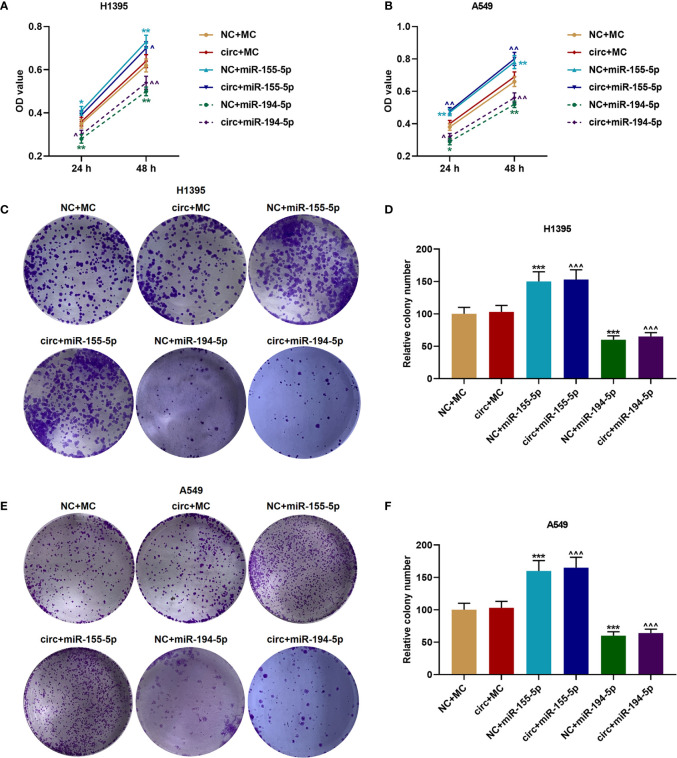
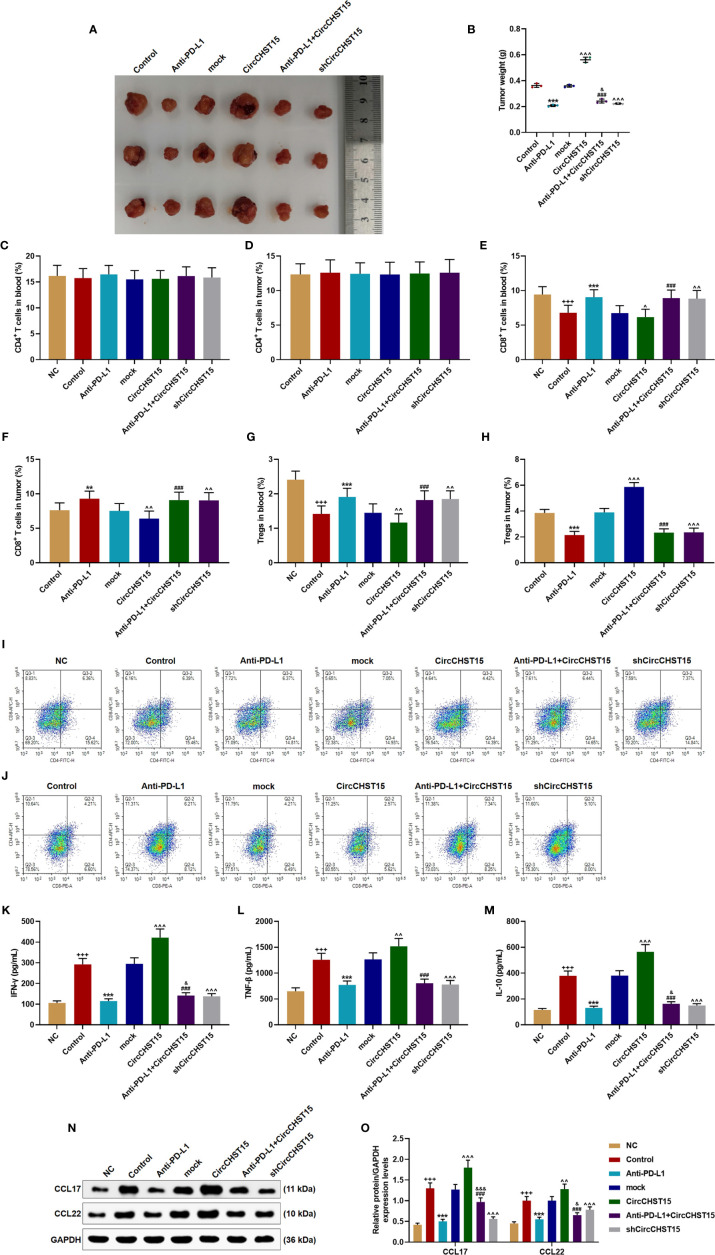
Dual-luciferase reporter verified the bioinformatics prediction that CircCHST15 targeted miR-155-5p and miR-194-5p. The correlation between CircCHST15 and PD-L1 was analyzed by Pearson analysis. CCK-8 and colony formation was performed to determine the viability and proliferation of lung cancer cells. After the lung cancer (subcutaneous-xenotransplant) model was established in mice, the T cell subtype and related cytokines in mouse tumor tissues were detected by flow cytometry and ELISA. Moreover, the expressions of CircCHST15, miR-155-5p, miR-194-5p, immune-related, and proliferation-related factors of the lung cancer cells or mice tumor tissues were detected by immunohistochemistry, RT-qPCR, or Western blot.
CircCHST15 and PD-L1 were high-expressed in lung cancer, and the two was positively correlated. CircCHST15 targeted miR-155-5p and miR-194-5p, the later further targeted PD-L1. Lung cancer cell viability and proliferation were increased by miR-155-5p and inhibited by miR-194-5p. CircCHST15 located in the cytoplasm promoted tumor growth, down-regulated the expressions of miR-155-5p and miR-194-5p, and up-regulated the expressions of PD-L1, Ki-67, PCNA, CCL17, CCL22, IFN-γ, TNF-β, and IL-10. Also, CircCHST15 decreased the CD8 cells in mouse blood and tumor, but increased the Tregs in mouse tumor. PD-L1 inhibitor showed an opposite effect to CircCHST15 on mouse tumors.
CircCHST15 sponged miR-155-5p and miR-194-5p to promote the PD-L1-mediated immune escape of lung cancer cells.
CircCHST15上调对肺癌的影响尚不清楚。本研究探讨了CircCHST15在肺癌中的作用。
双荧光素酶报告基因验证了CircCHST15靶向miR-155-5p和miR-194-5p的生物信息学预测。通过Pearson分析分析CircCHST15与PD-L1之间的相关性。进行CCK-8和集落形成实验以确定肺癌细胞的活力和增殖。在小鼠中建立肺癌(皮下异种移植)模型后,通过流式细胞术和ELISA检测小鼠肿瘤组织中的T细胞亚群和相关细胞因子。此外,通过免疫组织化学、RT-qPCR或蛋白质印迹法检测肺癌细胞或小鼠肿瘤组织中CircCHST15、miR-155-5p、miR-194-5p、免疫相关和增殖相关因子的表达。
CircCHST15和PD-L1在肺癌中高表达,且二者呈正相关。CircCHST15靶向miR-155-5p和miR-194-5p,后者进一步靶向PD-L1。miR-155-5p增加肺癌细胞活力和增殖,miR-194-5p则抑制。位于细胞质中的CircCHST15促进肿瘤生长,下调miR-155-5p和miR-194-5p的表达,并上调PD-L1、Ki-67、PCNA、CCL17、CCL22、IFN-γ、TNF-β和IL-10的表达。此外,CircCHST15减少小鼠血液和肿瘤中的CD8细胞,但增加小鼠肿瘤中的调节性T细胞。PD-L1抑制剂对小鼠肿瘤的作用与CircCHST15相反。
CircCHST15通过海绵吸附miR-155-5p和miR-194-5p促进肺癌细胞PD-L1介导的免疫逃逸。