Dong Lei, Han Da, Meng Xinyi, Xu Mengchuan, Zheng Chuwen, Xia Qin
School of Life Sciences, Beijing Institute of Technology, Beijing, China.
School of Biological Sciences, Georgia Institute of Technology, Atlanta, GA, United States.
Front Cell Dev Biol. 2021 Mar 11;9:630712. doi: 10.3389/fcell.2021.630712. eCollection 2021.
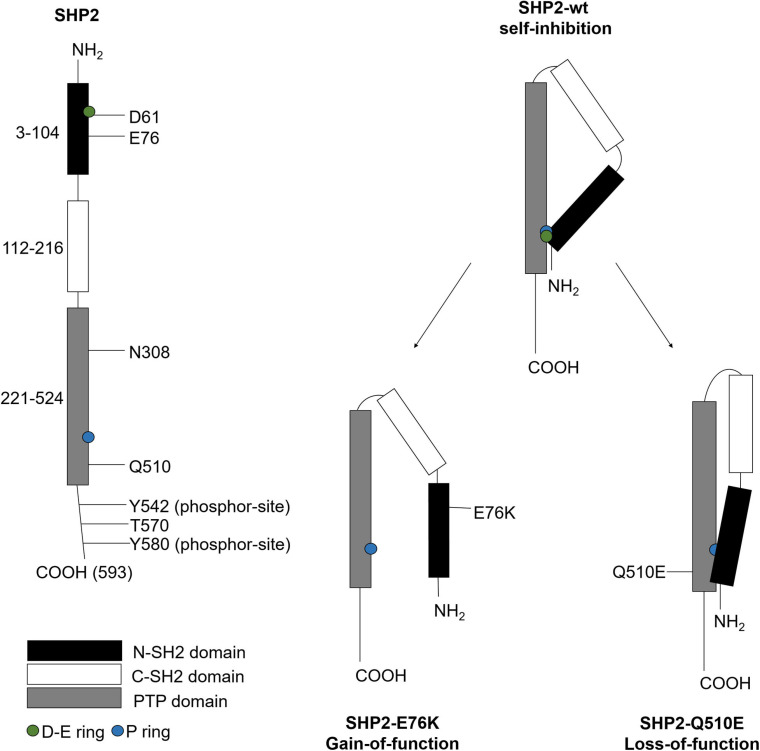
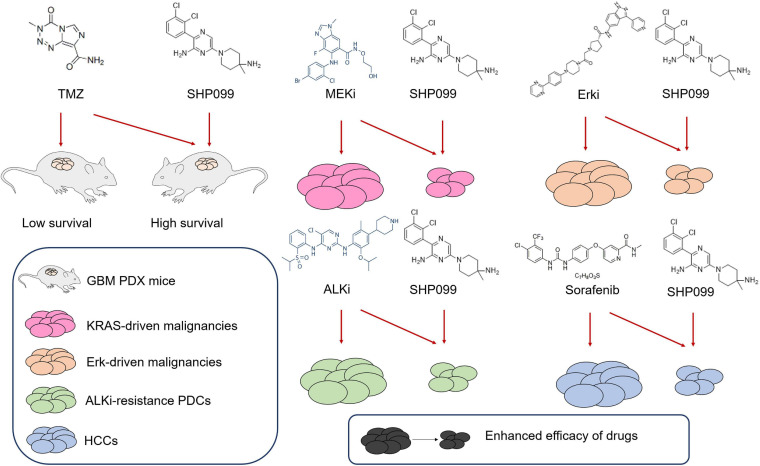
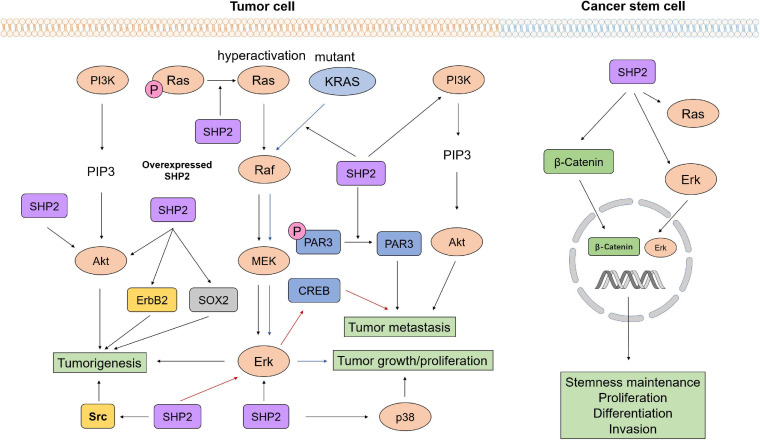
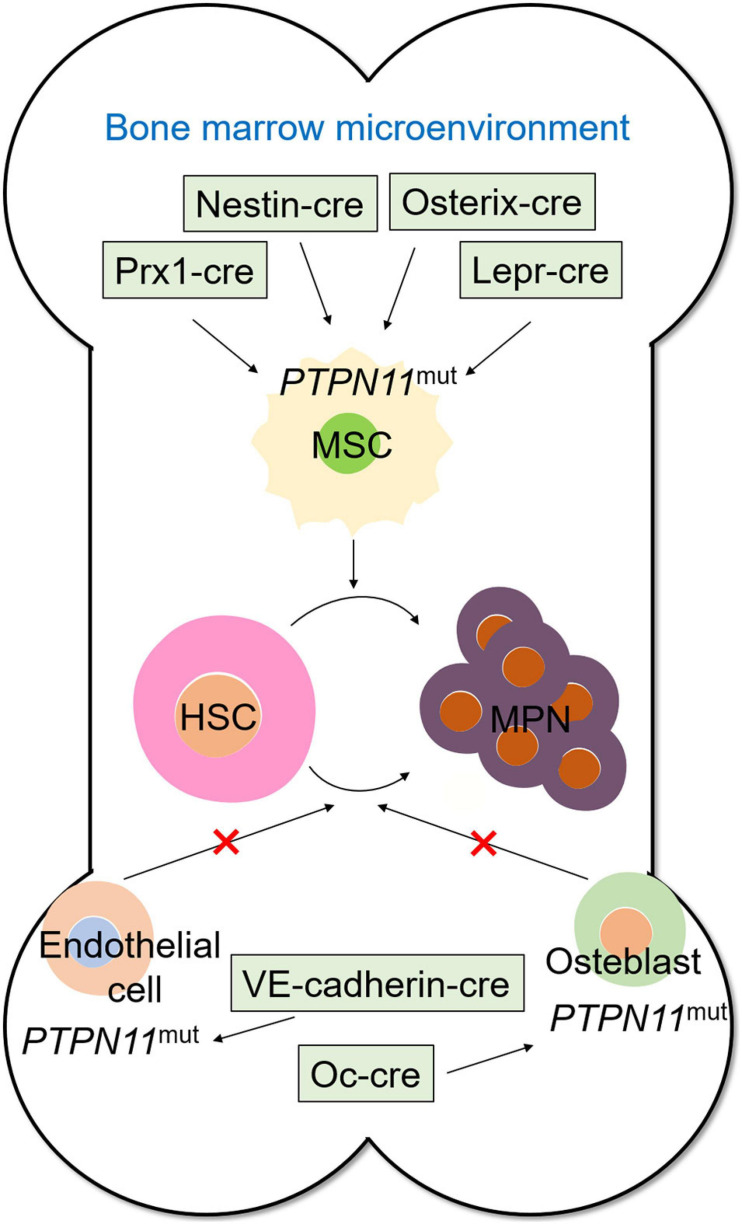
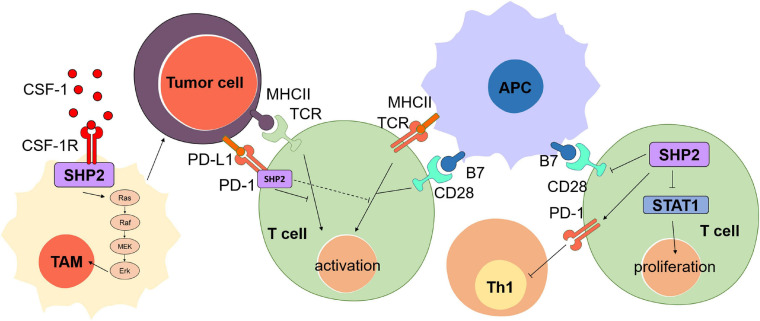
Gain-of-function mutation of SHP2 is a central regulator in tumorigenesis and cancer progression through cell-autonomous mechanisms. Activating mutation of SHP2 in microenvironment was identified to promote cancerous transformation of hematopoietic stem cell in non-autonomous mechanisms. It is interesting to see whether therapies directed against SHP2 in tumor or microenvironmental cells augment antitumor efficacy. In this review, we summarized different types of gain-of-function SHP2 mutations from a human disease. In general, gain-of-function mutations destroy the auto-inhibition state from wild-type SHP2, leading to consistency activation of SHP2. We illustrated how somatic or germline mutation of SHP2 plays an oncogenic role in tumorigenesis, stemness maintenance, invasion, etc. Moreover, the small-molecule SHP2 inhibitors are considered as a potential strategy for enhancing the efficacy of antitumor immunotherapy and chemotherapy. We also discussed the interconnection between phase separation and activating mutation of SHP2 in drug resistance of antitumor therapy.
SHP2的功能获得性突变是肿瘤发生和癌症进展中通过细胞自主机制起核心调节作用的因素。已确定微环境中SHP2的激活突变通过非自主机制促进造血干细胞的癌性转化。探究针对肿瘤细胞或微环境细胞中SHP2的疗法是否能增强抗肿瘤疗效是很有意思的。在这篇综述中,我们总结了来自人类疾病的不同类型的功能获得性SHP2突变。一般来说,功能获得性突变破坏了野生型SHP2的自抑制状态,导致SHP2持续激活。我们阐述了SHP2的体细胞或种系突变如何在肿瘤发生、干性维持、侵袭等过程中发挥致癌作用。此外,小分子SHP2抑制剂被认为是增强抗肿瘤免疫疗法和化疗疗效的一种潜在策略。我们还讨论了相分离与SHP2激活突变在抗肿瘤治疗耐药性中的相互联系。