Vandierendonck André
Department of Experimental Psychology, Ghent University, Henri Dunantlaan 2, B-9000 Gent, Belgium.
J Cogn. 2021 Mar 18;4(1):22. doi: 10.5334/joc.154.
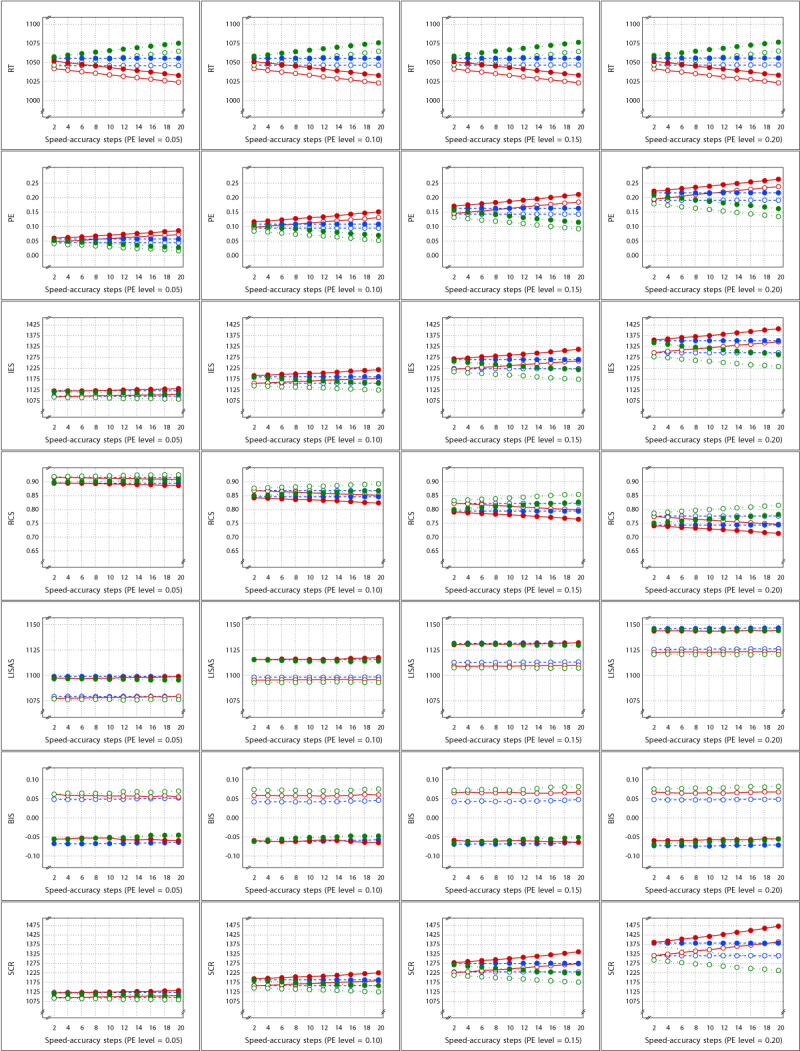
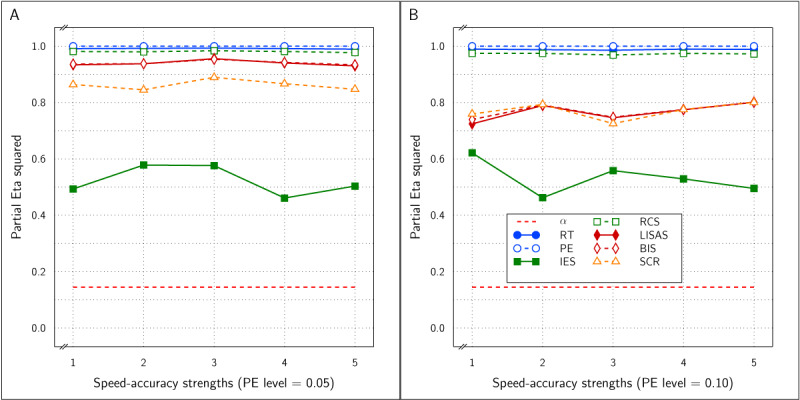
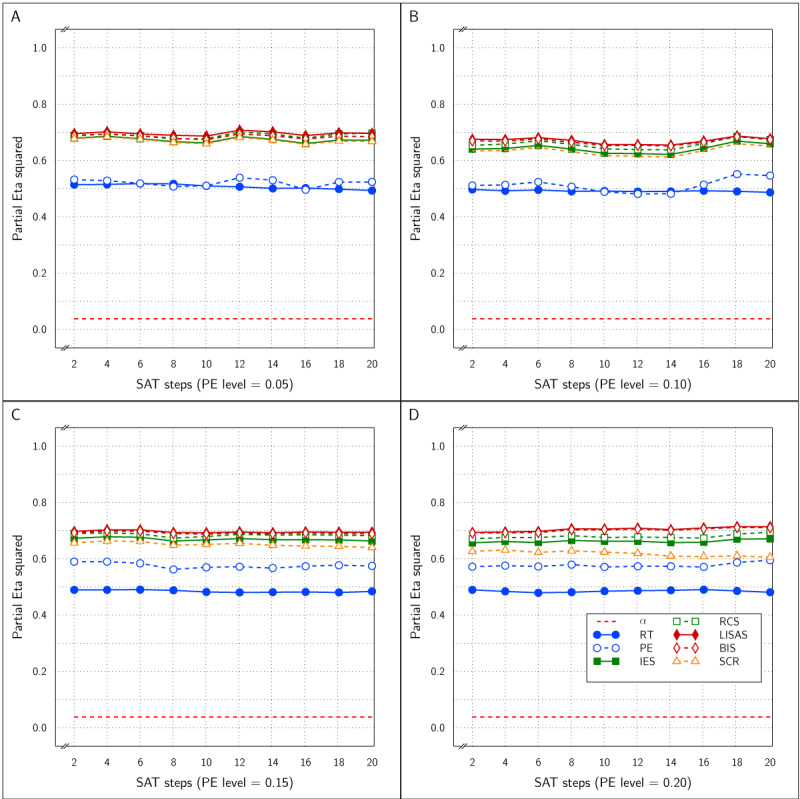
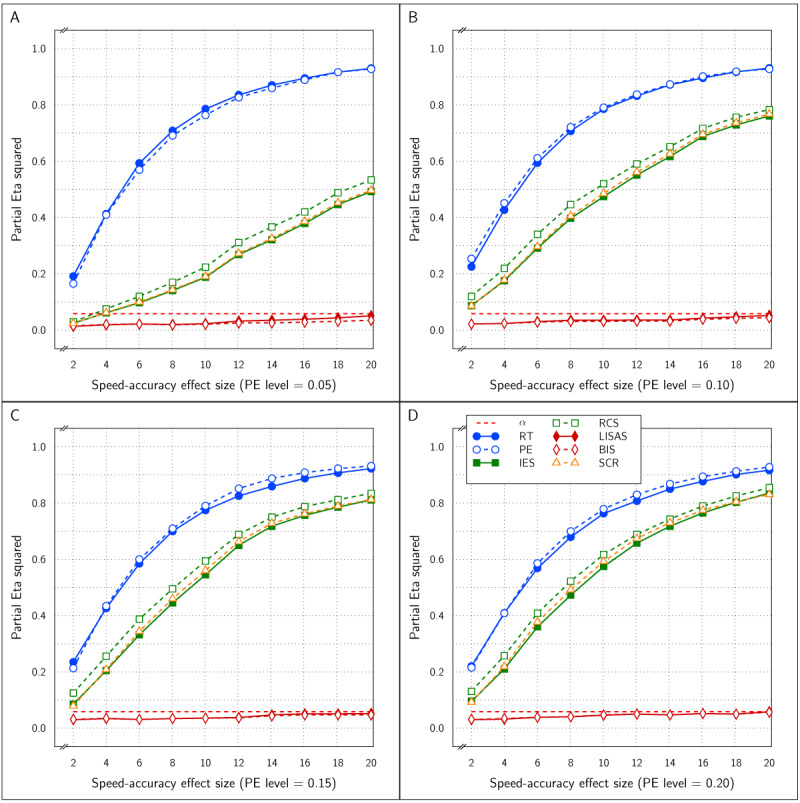
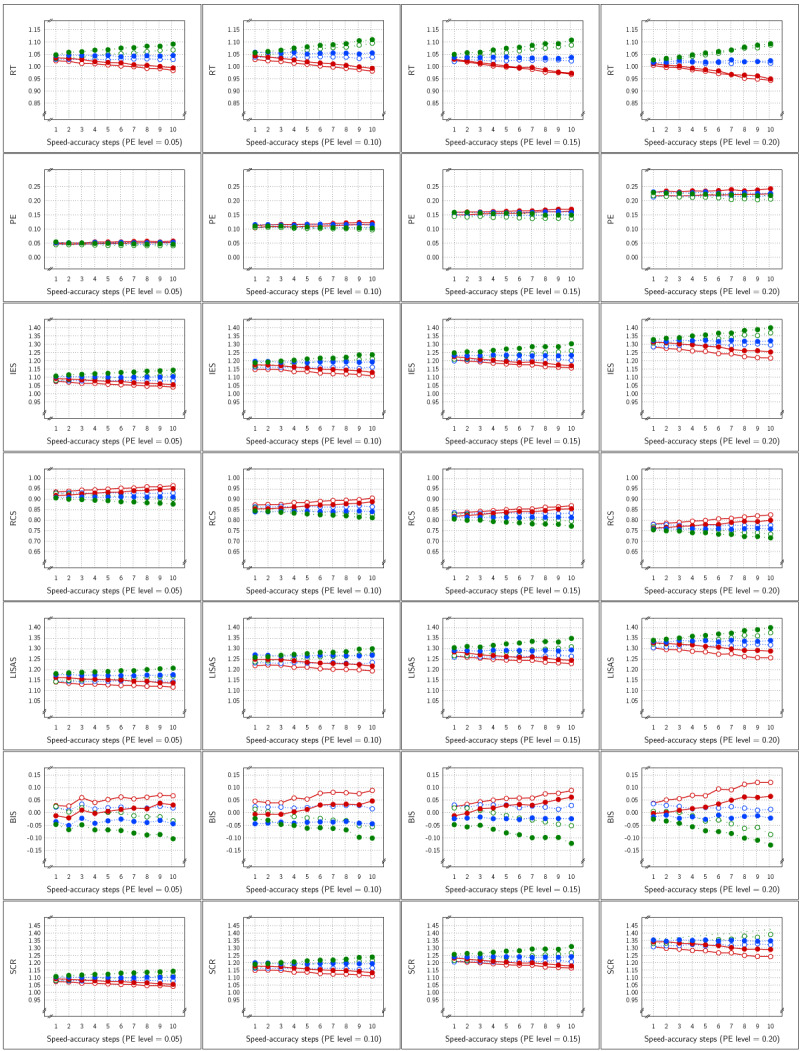
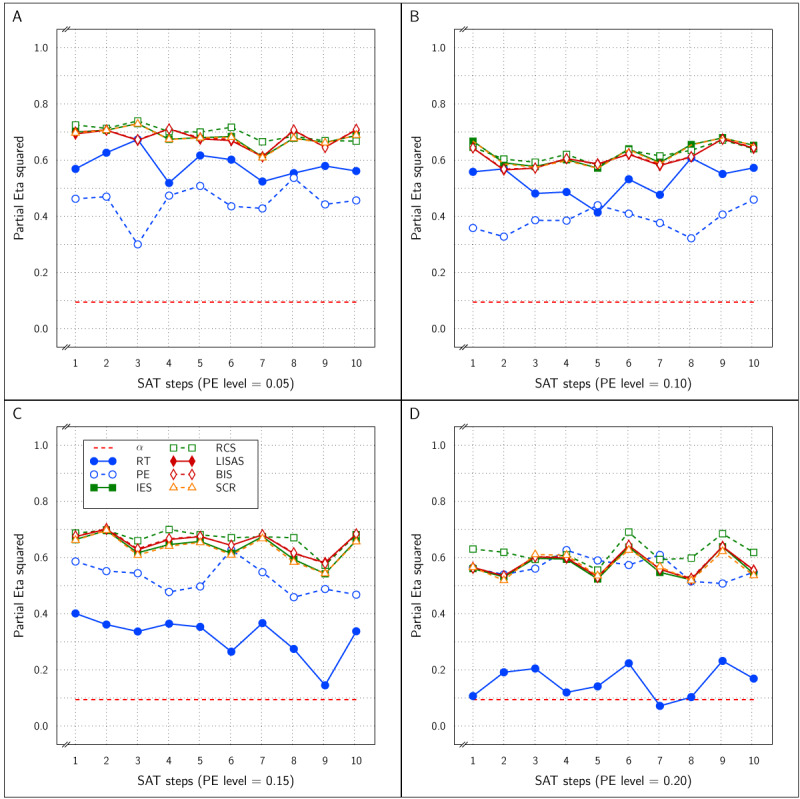
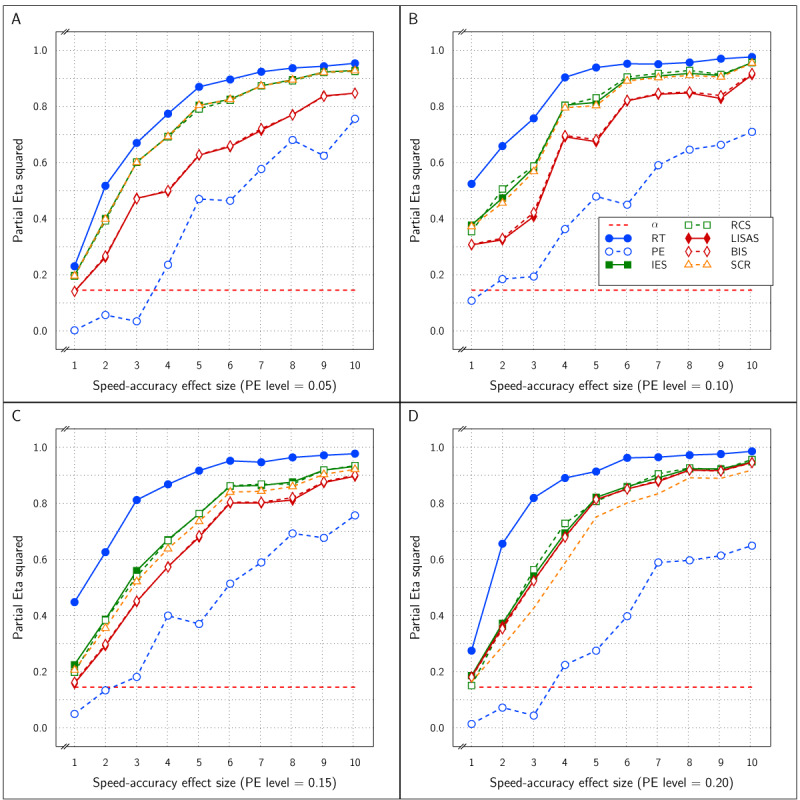
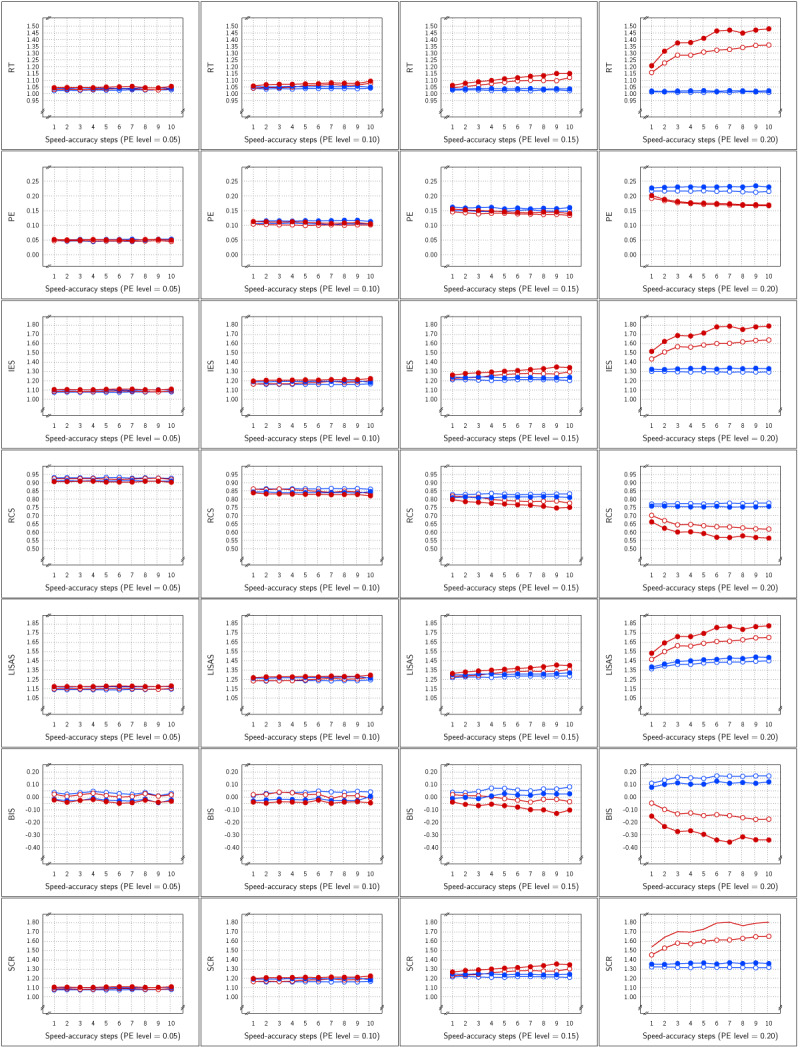
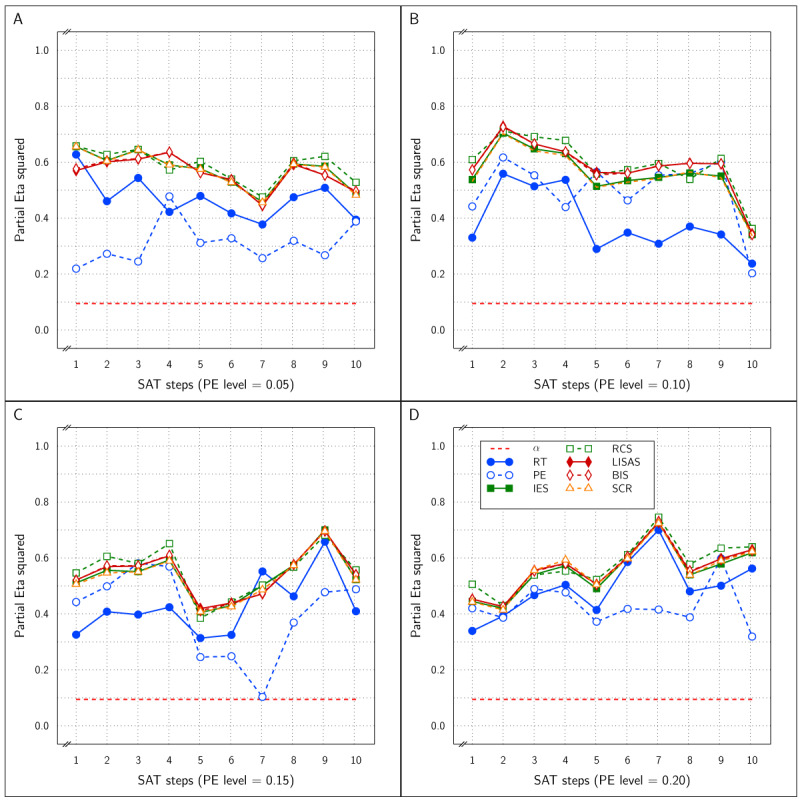
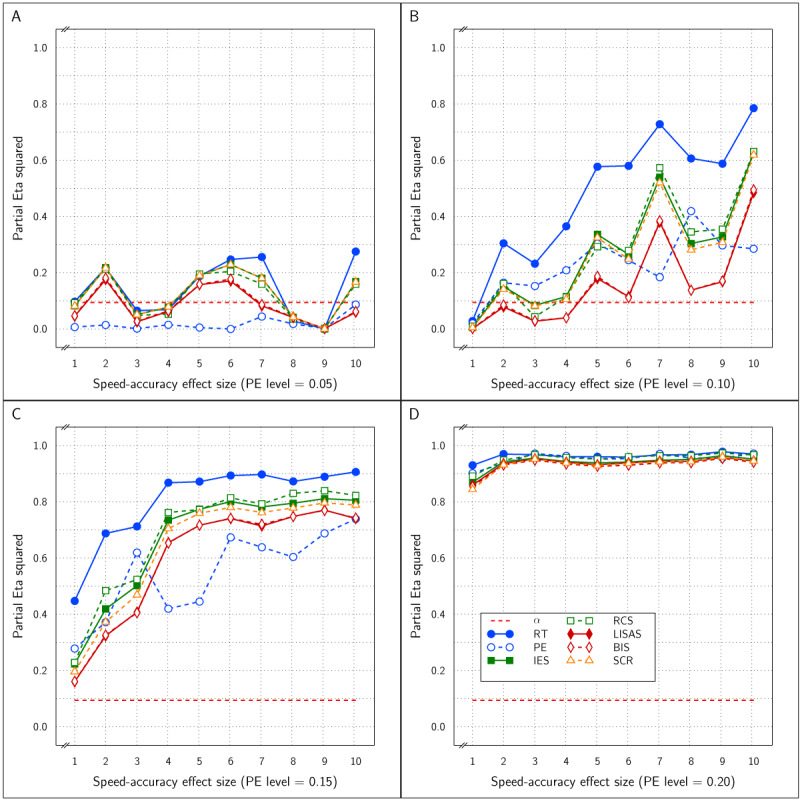
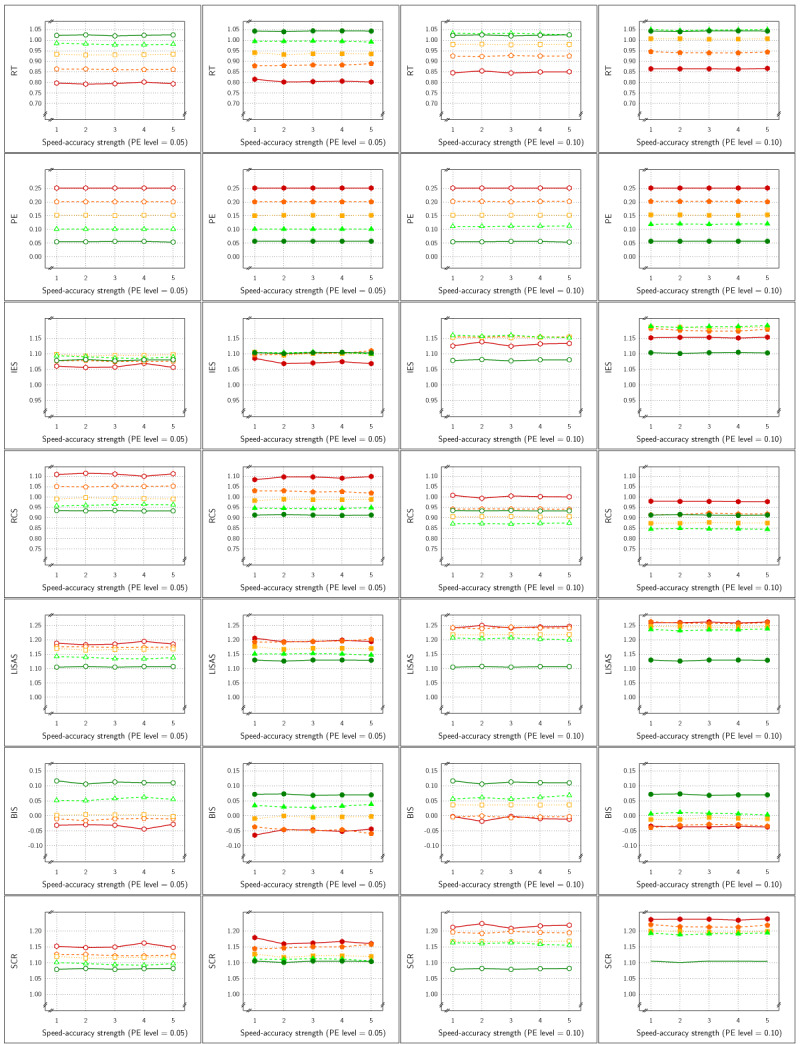
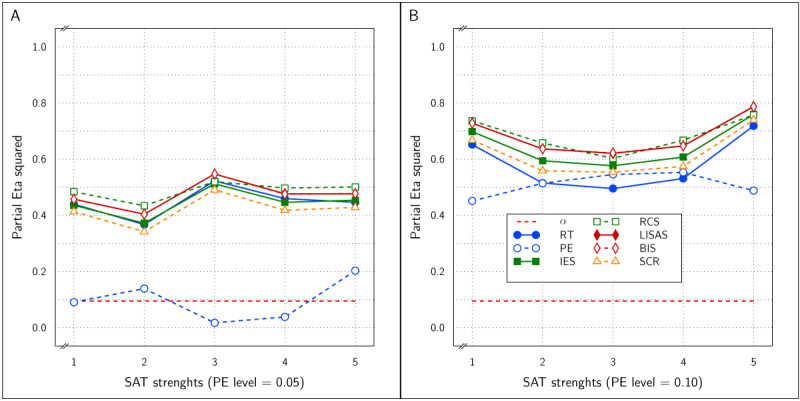
In an attempt to simplify data analysis and to avoid confounds due to speed-accuracy trade-off, sometimes integrated measures of speed and accuracy are used. Although it has been claimed that some of these combined measures are insensitive to speed-accuracy trade-off (SAT), a systematic and broad examination of such claims has not been performed thus far. The present article reports the results of four simulation studies in which five established integrated measures were studied in different speed-accuracy trade-off contexts. All four studies used repeated measures designs crossing an experimental factor (variable of interest) with a factor representing SAT settings, with all conditions occurring randomly over the sequence of trials to avoid condition-wise SATs (mixed conditions repeated measures design). The first study used speed modulations that were balanced by accuracy changes in the opposite direction. The other studies were all based on SAT as modeled either by the drift-diffusion model, with pro-active trade-off settings (Study 2) or with reactive trade-off modulations (Study 3) or by a discontinuous two-phase model (Study 4). Only the studies based on balanced trade-offs showed that two of the measures were insensitive to SAT settings, while in all other contexts, all measures were sensitive to SAT. Nevertheless, as the mixed conditions design distributes the SAT effects over the conditions of the variable of interest, all integrated measures reliably detected the effect of this variable in all SAT conditions. Although integrated measures are sensitive to SAT, these effects can be neutralised by using a mixed conditions repeated measures design.
为了简化数据分析并避免因速度 - 准确性权衡而产生的混淆,有时会使用速度和准确性的综合测量方法。尽管有人声称其中一些综合测量方法对速度 - 准确性权衡(SAT)不敏感,但迄今为止尚未对这些说法进行系统而广泛的研究。本文报告了四项模拟研究的结果,其中在不同的速度 - 准确性权衡背景下研究了五种既定的综合测量方法。所有四项研究均采用重复测量设计,将一个实验因素(感兴趣的变量)与一个代表SAT设置的因素交叉,所有条件在试验序列中随机出现,以避免条件性SAT(混合条件重复测量设计)。第一项研究使用了由相反方向的准确性变化平衡的速度调制。其他研究均基于SAT,分别由漂移扩散模型建模,具有主动权衡设置(研究2)或具有反应性权衡调制(研究3)或由不连续的两阶段模型(研究4)建模。只有基于平衡权衡的研究表明,其中两项测量方法对SAT设置不敏感,而在所有其他情况下,所有测量方法对SAT都敏感。然而,由于混合条件设计将SAT效应分布在感兴趣变量的条件上,所有综合测量方法都能在所有SAT条件下可靠地检测到该变量的效应。尽管综合测量方法对SAT敏感,但通过使用混合条件重复测量设计可以抵消这些效应。