Division of Vascular Surgery First Affiliated Hospital, Sun Yat-sen University Guangzhou China.
National-Guangdong Joint Engineering Laboratory for Diagnosis and Treatment of Vascular Diseases First Affiliated Hospital, Sun Yat-sen University Guangzhou China.
J Am Heart Assoc. 2021 Apr 6;10(7):e019820. doi: 10.1161/JAHA.120.019820. Epub 2021 Mar 31.
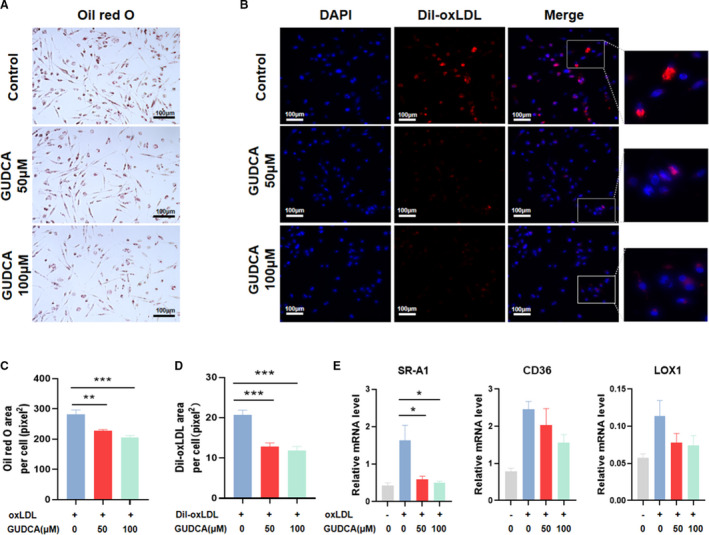
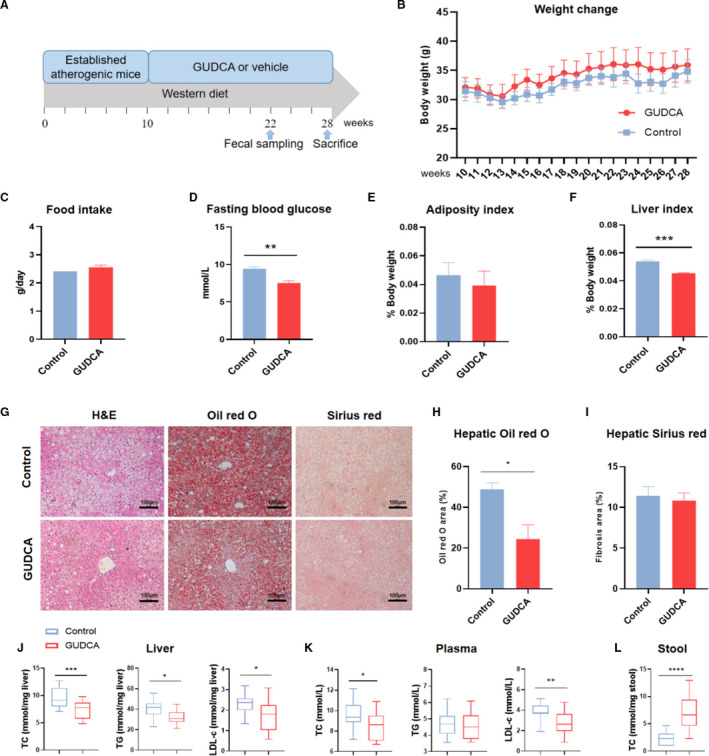
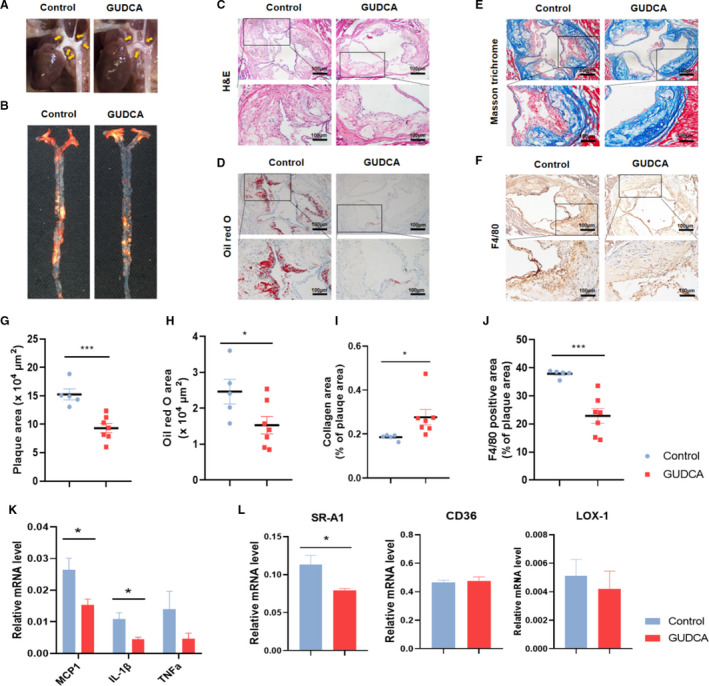
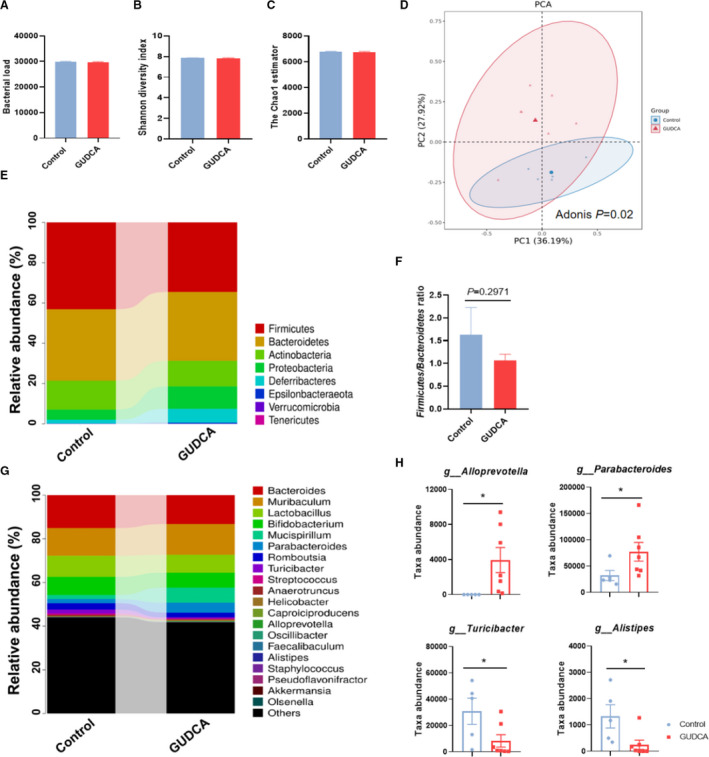
Background Although glycoursodeoxycholic acid (GUDCA) has been associated with the improvement of metabolic disorders, its effect on atherosclerosis remains elusive. This study aimed to investigate the role of GUDCA in the development of atherosclerosis and its potential mechanisms. Methods and Results Human THP-1 macrophages were used to investigate the effect of GUDCA on oxidized low-density lipoprotein-induced foam cell formation in vitro. We found that GUDCA downregulated scavenger receptor A1 mRNA expression, reduced oxidized low-density lipoprotein uptake, and inhibited macrophage foam cell formation. In an in vivo study, apolipoprotein E-deficient mice were fed a Western diet for 10 weeks to induce atherosclerosis, and then were gavaged once daily with or without GUDCA for 18 weeks. Parameters of systemic metabolism and atherosclerosis were detected. We found that GUDCA improved cholesterol homeostasis and protected against atherosclerosis progression as evidenced by reduced plaque area along with lipid deposition, ameliorated local chronic inflammation, and elevated plaque stability. In addition, 16S rDNA sequencing showed that GUDCA administration partially normalized the Western diet-associated gut microbiota dysbiosis. Interestingly, the changes of bacterial genera (, , , and ) modulated by GUDCA were correlated with the plaque area in mice aortas. Conclusions Our study for the first time indicates that GUDCA attenuates the development of atherosclerosis, probably attributable to the inhibition of foam cell formation, maintenance of cholesterol homeostasis, and modulation of gut microbiota.
尽管甘氨熊脱氧胆酸(GUDCA)与代谢紊乱的改善有关,但它对动脉粥样硬化的影响仍不清楚。本研究旨在探讨 GUDCA 在动脉粥样硬化发展中的作用及其潜在机制。
体外实验中,用人 THP-1 巨噬细胞研究 GUDCA 对氧化型低密度脂蛋白诱导的泡沫细胞形成的影响。我们发现 GUDCA 下调了清道夫受体 A1 mRNA 的表达,减少了氧化型低密度脂蛋白的摄取,并抑制了巨噬细胞泡沫细胞的形成。在体内研究中,载脂蛋白 E 缺陷小鼠用西方饮食喂养 10 周以诱导动脉粥样硬化,然后用或不用 GUDCA 每天灌胃 18 周。检测全身代谢和动脉粥样硬化的参数。我们发现 GUDCA 改善了胆固醇稳态,可防止动脉粥样硬化的进展,表现在斑块面积减小伴随着脂质沉积减少,局部慢性炎症得到改善,斑块稳定性提高。此外,16S rDNA 测序显示 GUDCA 给药部分纠正了西方饮食相关的肠道微生物群失调。有趣的是,GUDCA 调节的细菌属(、、、和)的变化与小鼠主动脉斑块面积相关。
本研究首次表明 GUDCA 可减轻动脉粥样硬化的发展,可能归因于抑制泡沫细胞形成、维持胆固醇稳态和调节肠道微生物群。