Bellaouchi Reda, Abouloifa Houssam, Rokni Yahya, Hasnaoui Amina, Ghabbour Nabil, Hakkou Abdelkader, Bechchari Abdelmajid, Asehraou Abdeslam
Laboratory of Bioresources, Biotechnology, Ethnopharmacology and Health, Faculty of Sciences, Mohammed Premier University, 60 000, Oujda, Morocco.
National Institute of Agronomic Research (INRA), Oujda Center, 60 000, Oujda, Morocco.
J Genet Eng Biotechnol. 2021 Mar 31;19(1):50. doi: 10.1186/s43141-021-00145-y.
This work aims to study the optimal conditions of the fermentation culture medium used for the production of extracellular enzymes (amylase, cellulase, lipase, and protease) from previously isolated Aspergillus niger strains in date by-products.
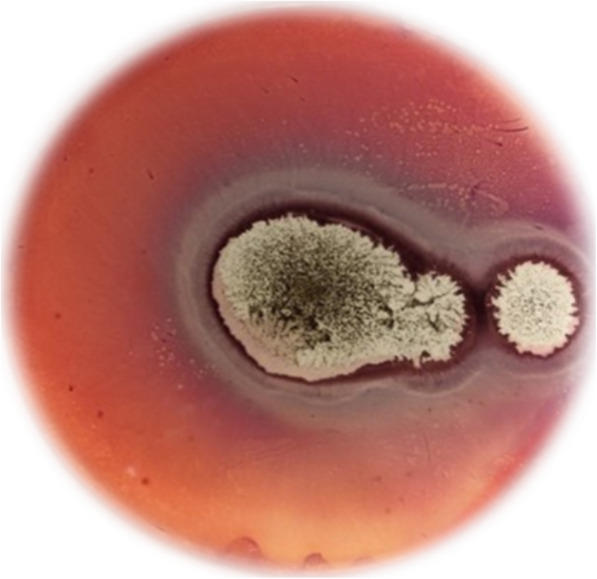
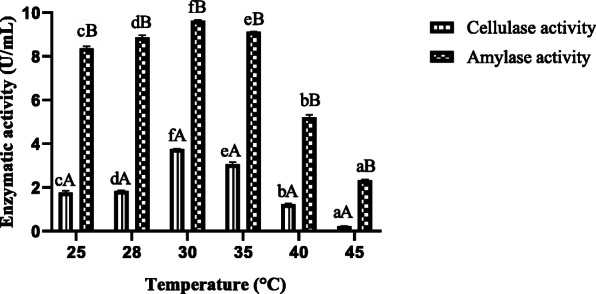
The five most powerful isolates selected based on the zone of degradation formed on Petri plates by the substrate were subjected to the quantitative evaluation of their enzymatic production. All five strains showed almost similar API-ZYM profiles, with minor variations observed at the level of some specific enzyme expression. The production of cellulase and amylase was depending on pH and incubation temperatures. ASP2 strain demonstrated the high production rate of amylase (at pH 5 and 30 °C) and cellulase (at pH 6 and 30 °C) for 96 h of incubation.
The A. niger showed the ability to produce several extracellular enzymes and can be used in the valorization of different agroindustrial residues.
本研究旨在探讨利用枣类副产品中先前分离出的黑曲霉菌株生产胞外酶(淀粉酶、纤维素酶、脂肪酶和蛋白酶)的发酵培养基的最佳条件。
根据平板上底物形成的降解圈选择了五株最强的分离株,并对其酶产量进行了定量评估。所有五株菌株的API-ZYM图谱几乎相似,在某些特定酶表达水平上观察到微小差异。纤维素酶和淀粉酶的产生取决于pH值和培养温度。ASP2菌株在pH 5和30°C下培养96小时时,淀粉酶产量较高;在pH 6和30°C下培养96小时时,纤维素酶产量较高。
黑曲霉具有产生多种胞外酶的能力,可用于不同农业工业残渣的增值利用。