Division of Geological and Planetary Sciences, California Institute of Technology, Pasadena, CA, USA.
Department of Earth and Planetary Sciences, Harvard University, Cambridge, MA, USA.
Nature. 2021 Apr;592(7852):65-69. doi: 10.1038/s41586-021-03325-5. Epub 2021 Mar 31.
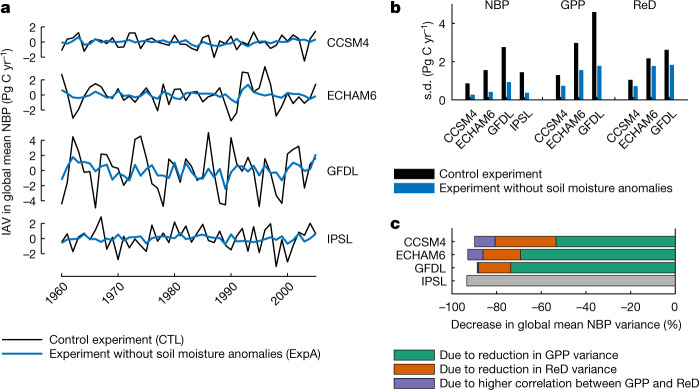
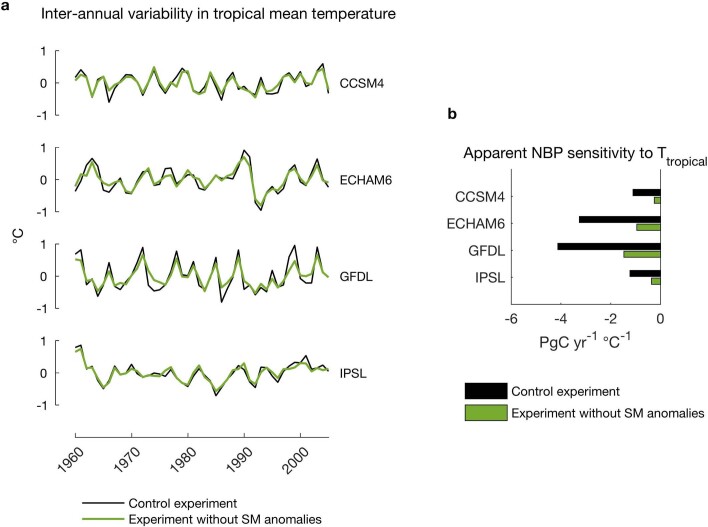
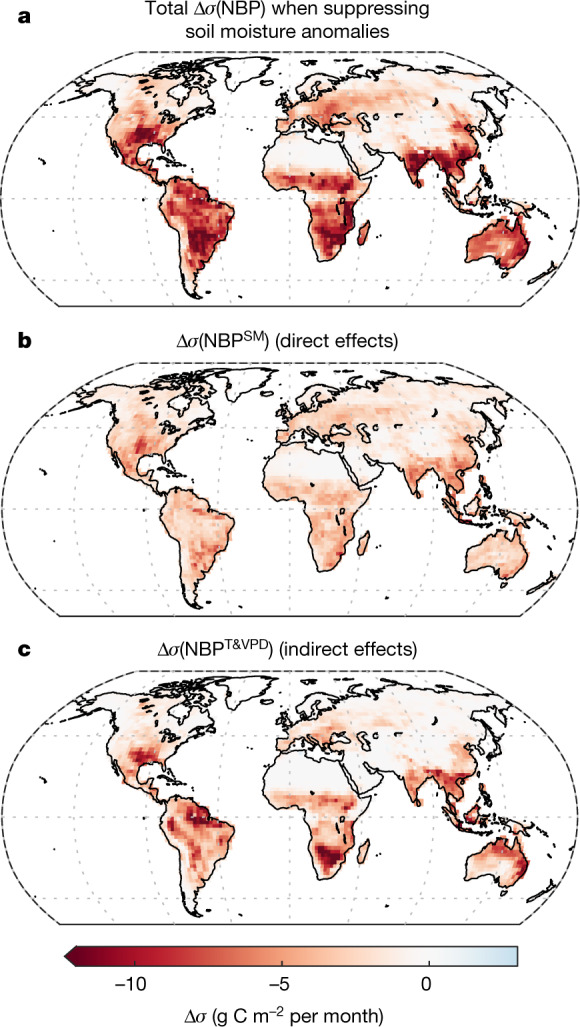
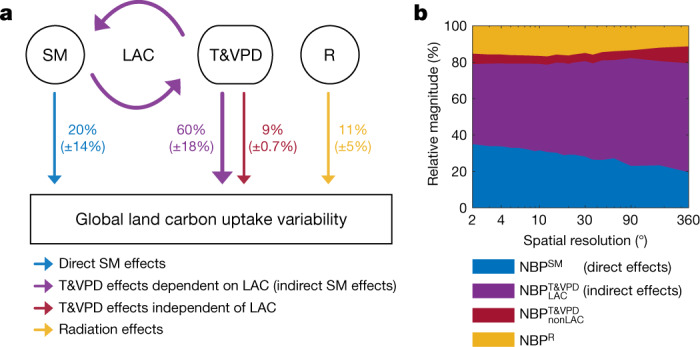
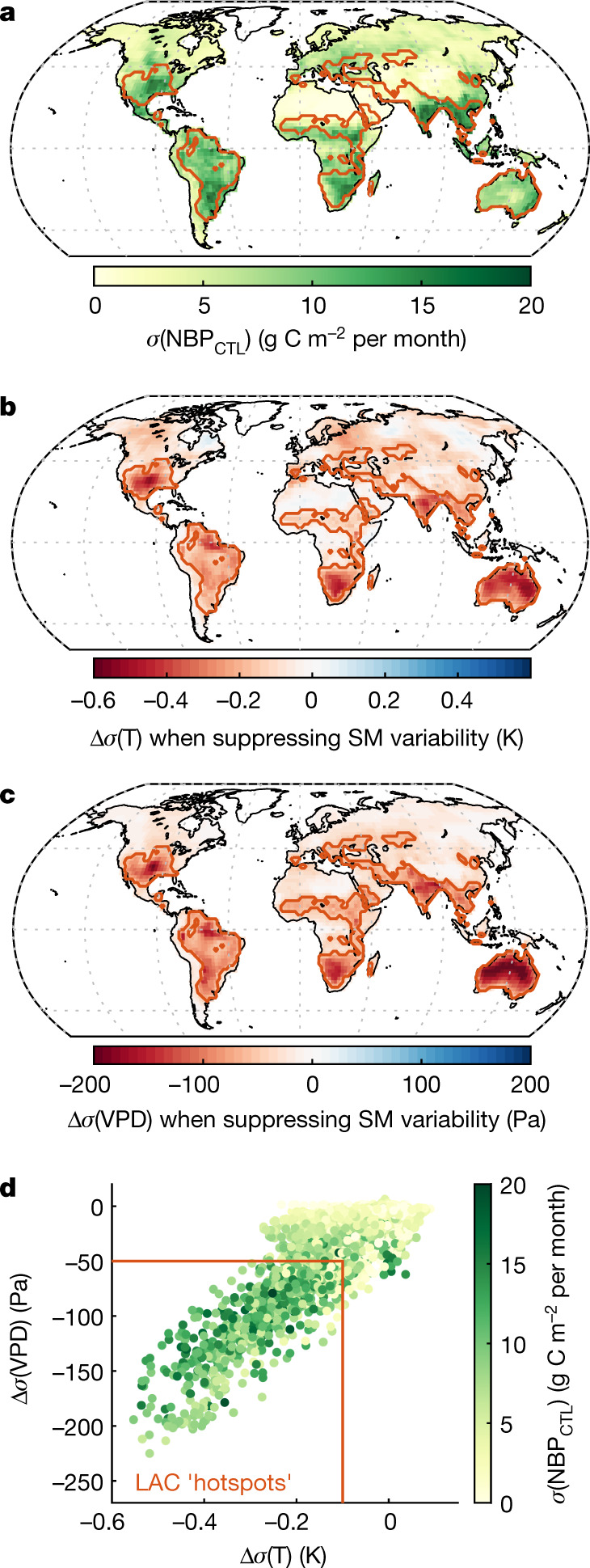
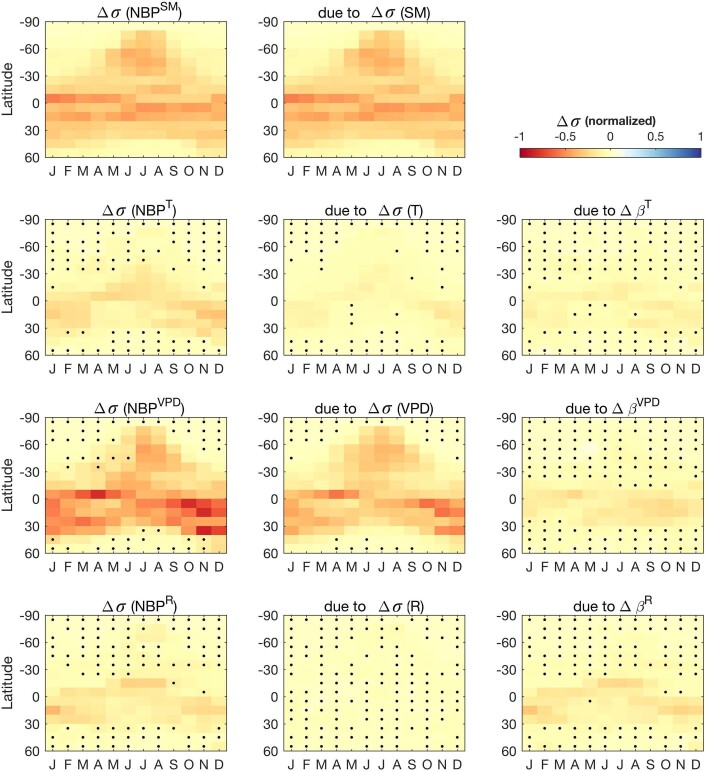
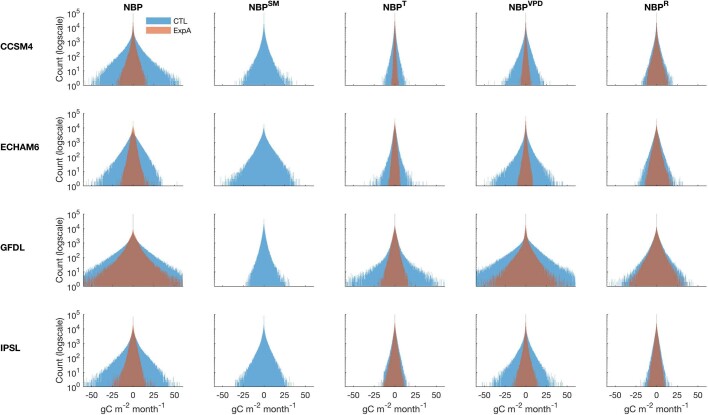
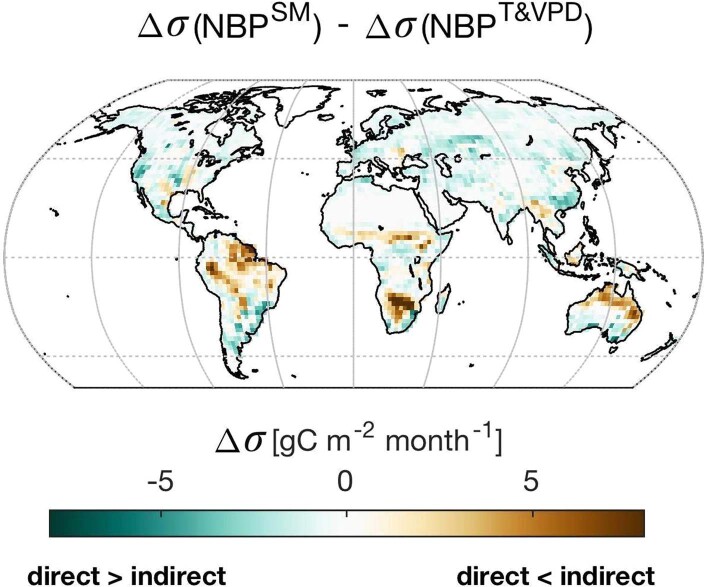
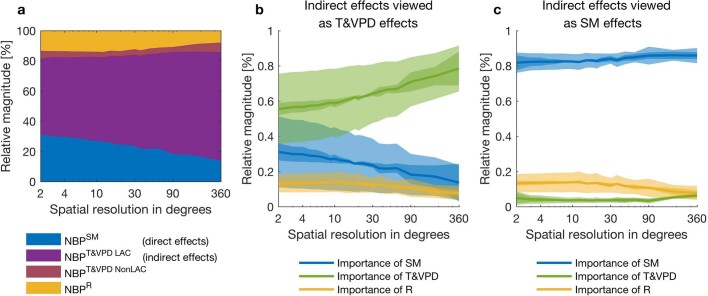
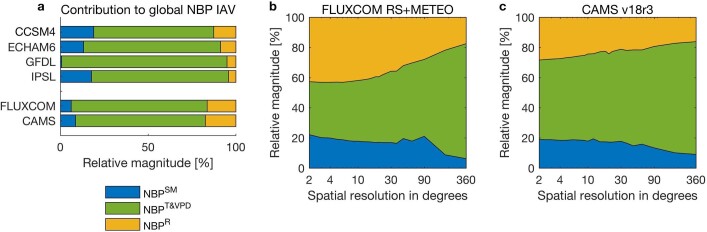
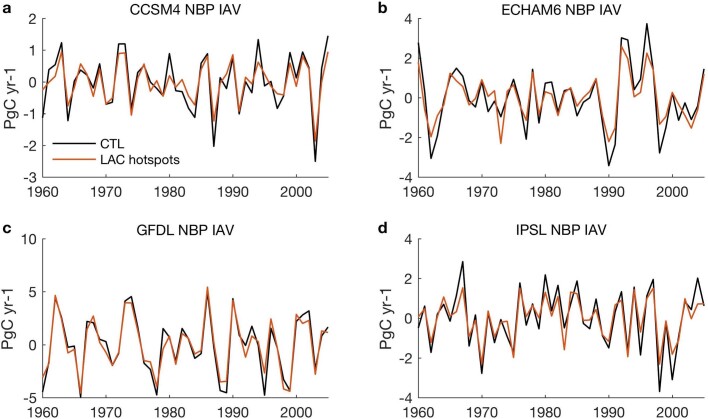
Year-to-year changes in carbon uptake by terrestrial ecosystems have an essential role in determining atmospheric carbon dioxide concentrations. It remains uncertain to what extent temperature and water availability can explain these variations at the global scale. Here we use factorial climate model simulations and show that variability in soil moisture drives 90 per cent of the inter-annual variability in global land carbon uptake, mainly through its impact on photosynthesis. We find that most of this ecosystem response occurs indirectly as soil moisture-atmosphere feedback amplifies temperature and humidity anomalies and enhances the direct effects of soil water stress. The strength of this feedback mechanism explains why coupled climate models indicate that soil moisture has a dominant role, which is not readily apparent from land surface model simulations and observational analyses. These findings highlight the need to account for feedback between soil and atmospheric dryness when estimating the response of the carbon cycle to climatic change globally, as well as when conducting field-scale investigations of the response of the ecosystem to droughts. Our results show that most of the global variability in modelled land carbon uptake is driven by temperature and vapour pressure deficit effects that are controlled by soil moisture.
陆地生态系统每年吸收碳的变化对确定大气二氧化碳浓度起着重要作用。在全球范围内,温度和水分供应在多大程度上可以解释这些变化仍不确定。在这里,我们使用析因气候模型模拟表明,土壤湿度的可变性驱动了全球陆地碳吸收的 90%的年际变化,主要是通过其对光合作用的影响。我们发现,这种生态系统响应的大部分是间接的,因为土壤湿度与大气的反馈放大了温度和湿度异常,并增强了土壤水分胁迫的直接影响。这种反馈机制的强度解释了为什么耦合气候模型表明土壤湿度起着主导作用,而这一点从陆地表面模型模拟和观测分析中并不明显。这些发现强调了在估计全球碳循环对气候变化的响应时,以及在对生态系统对干旱的响应进行田间尺度调查时,需要考虑土壤和大气干燥之间的反馈。我们的结果表明,模型化陆地碳吸收的大部分全球可变性是由土壤湿度控制的温度和蒸气压亏缺效应驱动的。