Brenaut Emilie, Misery Laurent, Legeas Cécile, Roudot Alain-Claude, Ficheux Anne-Sophie
Department of Dermatology, CHU Brest, Brest, France.
University of Brest, LIEN, Brest, France.
Front Med (Lausanne). 2021 Mar 15;7:596544. doi: 10.3389/fmed.2020.596544. eCollection 2020.
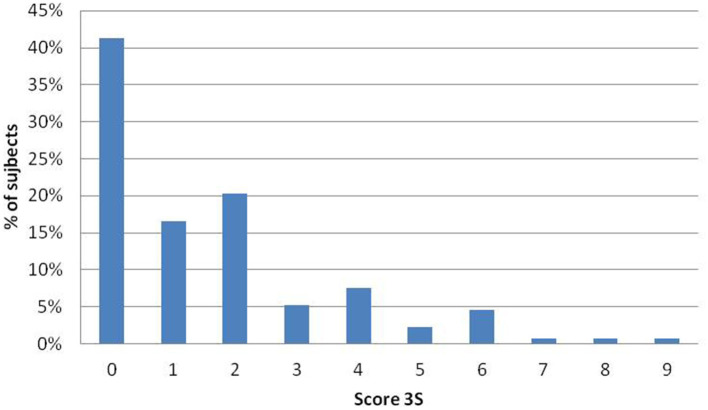
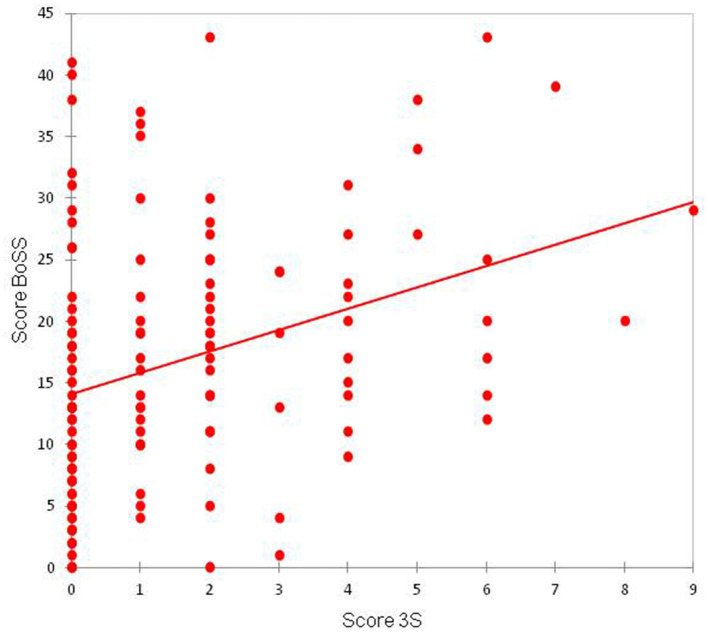
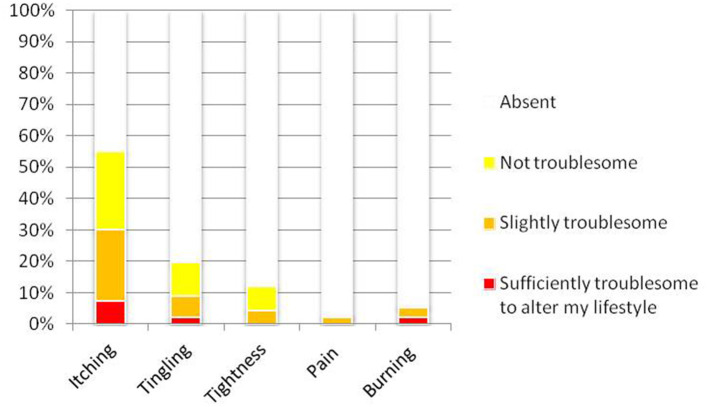
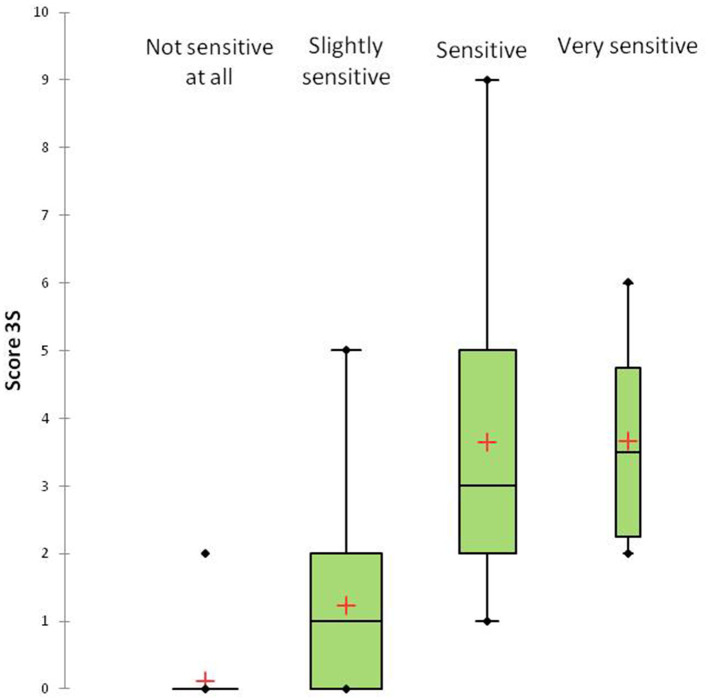
A sensitive scalp is defined by the occurrence of unpleasant sensations (tingling, burning, pain, pruritus) triggered by stimuli that should not cause such sensations. Environmental factors, particularly cosmetics, can be triggering factors. The aims of this study were to assess hair cosmetic product consumption in subjects with sensitive scalp and to perform a clinical evaluation of sensitive scalp. After a dermatological examination, women between the ages of 18 and 65 years with or without a sensitive scalp completed different questionnaires. Their use of hair cosmetics (frequency, amount per application) was recorded. A total of 160 women with a mean age of 41 years were included. Twenty-seven subjects presented with seborrheic dermatitis or psoriasis, so only 133 were included in the analysis. Five percent of the subjects declared they had a very sensitive scalp, 25% had a sensitive scalp, 38% had a slightly sensitive scalp, and 32% had a scalp that was not sensitive. The mean sensitive scalp score (3S) score was 3.7 ± 1.6 in the very sensitive scalp group, 3.6 ± 2.1 in the sensitive group, 1.2 ± 1.2 in the slightly sensitive group and 0.1 ± 0.4 in the non-sensitive group. Two groups were analyzed: the 56 subjects with a sensitive scalp (3S ≥ 2 score) and the 56 subjects with a null 3S score. In the sensitive scalp group, 89% suffered from itch, and 45% suffered from tingling. No parameter (hormonal status, smoking, age, phototype, BMI) was associated with the 3S score. No differences in the exposure to shampoos and masks between the two groups were noted. The exposure to hair conditioners was significantly higher in the sensitive scalp group than in the group without sensitive scalp. Itch is the main symptom of a sensitive scalp. The frequency of a sensitive scalp was lower than that previously described when the subjects with scalp dermatosis were excluded. The amount of hair conditioners used was significantly higher in subjects with sensitive scalp than in those without sensitive scalp, suggesting a possible link.
敏感头皮的定义是由不应引发此类感觉的刺激所触发的不愉快感觉(刺痛、灼烧、疼痛、瘙痒)的出现。环境因素,尤其是化妆品,可能是触发因素。本研究的目的是评估敏感头皮受试者的头发化妆品消费情况,并对敏感头皮进行临床评估。经过皮肤科检查后,18至65岁有或无敏感头皮的女性完成了不同的问卷。记录她们使用头发化妆品的情况(频率、每次用量)。总共纳入了160名平均年龄为41岁的女性。27名受试者患有脂溢性皮炎或银屑病,因此仅133名被纳入分析。5%的受试者宣称自己有非常敏感的头皮,25%有敏感头皮,38%有轻度敏感头皮,32%的头皮不敏感。非常敏感头皮组的平均敏感头皮评分(3S)为3.7±1.6,敏感组为3.6±2.1,轻度敏感组为1.2±1.2,非敏感组为0.1±0.4。分析了两组:56名敏感头皮受试者(3S评分≥2分)和56名3S评分为零的受试者。在敏感头皮组中,89%的人患有瘙痒,45%的人患有刺痛。没有参数(激素状态、吸烟、年龄、光型、BMI)与3S评分相关。两组在洗发水和发膜的使用方面没有差异。敏感头皮组使用护发素的频率明显高于无敏感头皮组。瘙痒是敏感头皮的主要症状。排除头皮皮肤病患者后,敏感头皮的发生率低于先前描述的情况。敏感头皮受试者使用护发素的量明显高于无敏感头皮的受试者,这表明可能存在关联。