Rico-Guevara A, Rubega M A, Hurme K J, Dudley R
Department of Integrative Biology, University of California, Berkeley, 3040 Valley Life Sciences Building, Berkeley, CA 94720, USA.
Department of Ecology and Evolutionary Biology, University of Connecticut, Storrs, CT 06269, USA.
Integr Org Biol. 2019 Jan 2;1(1):oby006. doi: 10.1093/iob/oby006. eCollection 2019.
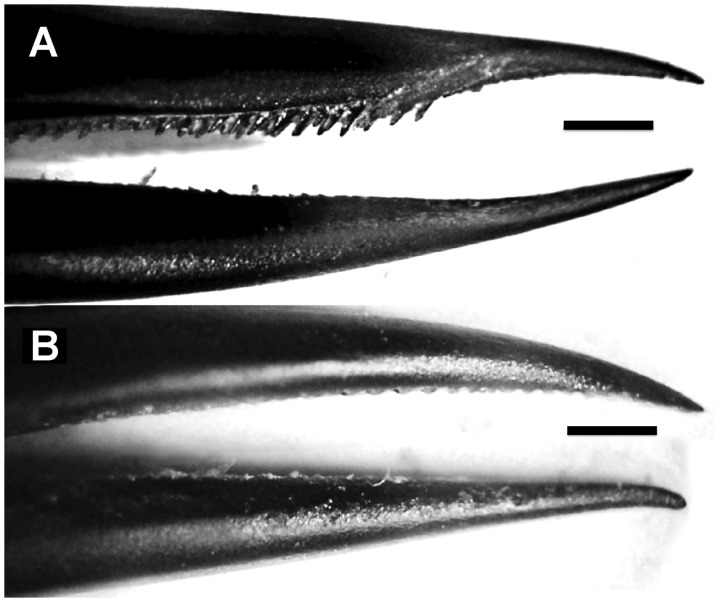
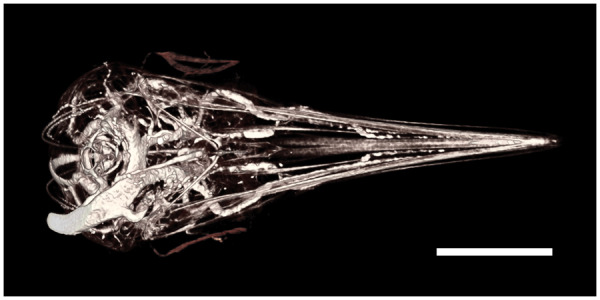
As functional morphologists, we aim to connect structures, mechanisms, and emergent higher-scale phenomena (e.g., behavior), with the ulterior motive of addressing evolutionary patterns. The fit between flowers and hummingbird bills has long been used as an example of impressive co-evolution, and hence hummingbirds' foraging behavior and ecological associations have been the subject of intense study. To date, models of hummingbird foraging have been based on the almost two-centuries-old assumption that capillary rise loads nectar into hummingbird tongue grooves. Furthermore, the role of the bill in the drinking process has been overlooked, instead considering it as the mere vehicle with which to traverse the corolla and access the nectar chamber. As a scientific community, we have been making incorrect assumptions about the basic aspects of how hummingbirds extract nectar from flowers. In this article, we summarize recent advances on drinking biomechanics, morphological and ecological patterns, and selective forces involved in the shaping of the hummingbird feeding apparatus, and also address its modifications in a previously unexpected context, namely conspecific and heterospecific fighting. We explore questions such as: how do the mechanics of feeding define the limits and adaptive consequences of foraging behaviors? Which are the selective forces that drive bill and tongue shape, and associated sexually dimorphic traits? And finally, what are the proximate and ultimate causes of their foraging strategies, including exploitative and interference competition? Increasing our knowledge of morphology, mechanics, and diversity of hummingbird feeding structures will have implications for understanding the ecology and evolution of these remarkable animals.
作为功能形态学家,我们旨在将结构、机制和涌现的更高尺度现象(如行为)联系起来,其最终目的是探讨进化模式。花与蜂鸟喙之间的契合长期以来一直被用作令人印象深刻的共同进化的例子,因此蜂鸟的觅食行为和生态关联一直是深入研究的主题。迄今为止,蜂鸟觅食模型一直基于近两个世纪前的假设,即毛吸作用将花蜜加载到蜂鸟的舌沟中。此外,喙在吸食过程中的作用被忽视了,反而仅仅将其视为穿过花冠进入花蜜腔的工具。作为一个科学界,我们一直在对蜂鸟如何从花中获取花蜜的基本方面做出错误假设。在本文中,我们总结了关于吸食生物力学、形态和生态模式以及塑造蜂鸟进食器官所涉及的选择力的最新进展,并探讨了在一个此前未预料到的背景下,即同种和异种争斗中,蜂鸟进食器官的变化。我们探讨了以下问题:进食机制如何界定觅食行为的限度和适应性后果?驱动喙和舌形状以及相关两性异形特征的选择力有哪些?最后,它们觅食策略的近因和终极原因是什么,包括剥削性竞争和干扰性竞争?增加我们对蜂鸟进食结构形态、力学和多样性的了解,将有助于理解这些非凡动物的生态学和进化。