Department of Biology, University of Washington, Seattle, WA 98195, USA.
Burke Museum of Natural History and Culture, University of Washington, Seattle, WA 98105, USA.
J Exp Biol. 2023 Apr 25;226(Suppl_1). doi: 10.1242/jeb.245074. Epub 2023 Apr 3.
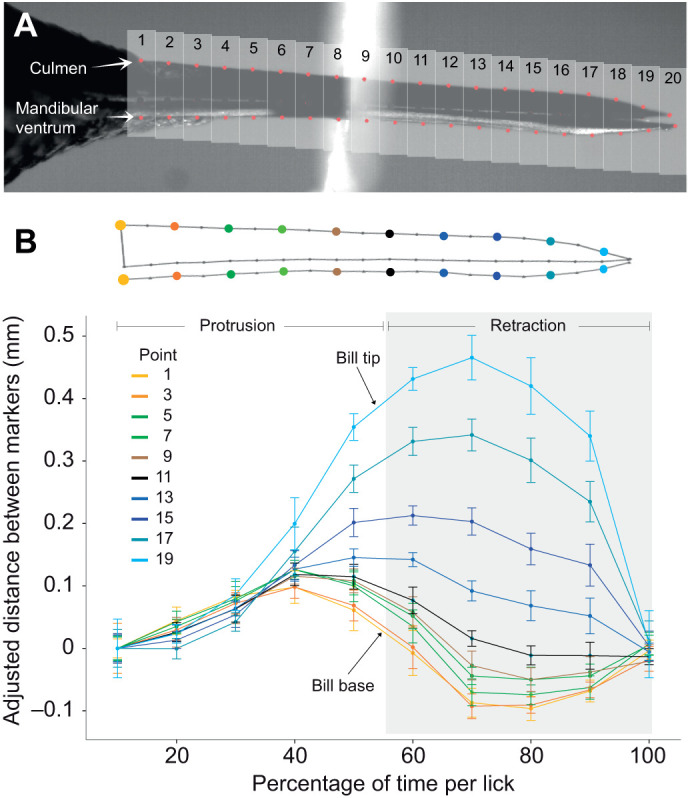
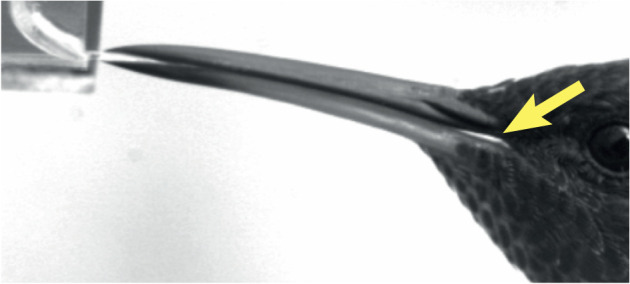
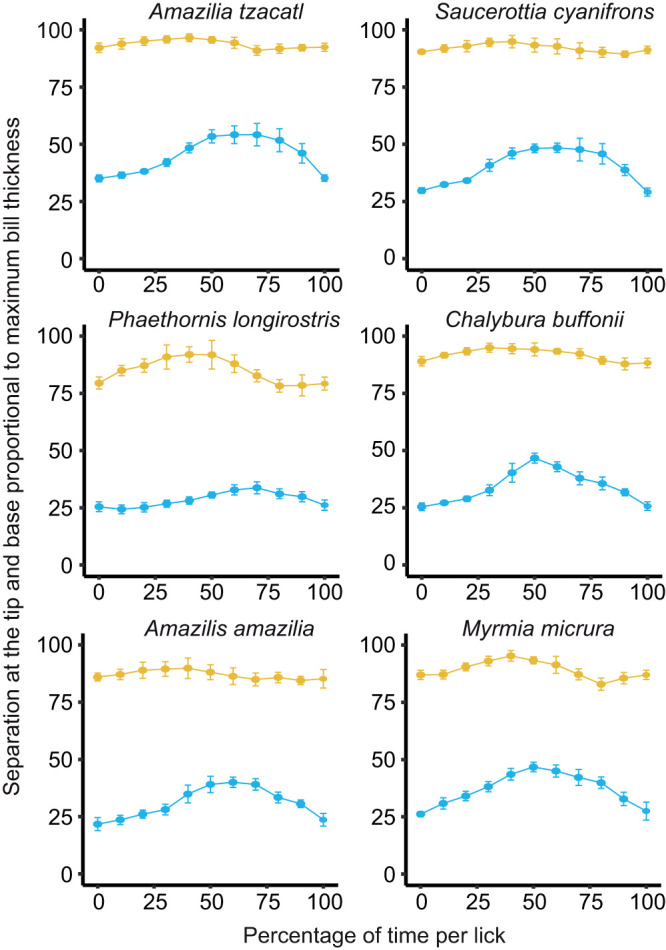
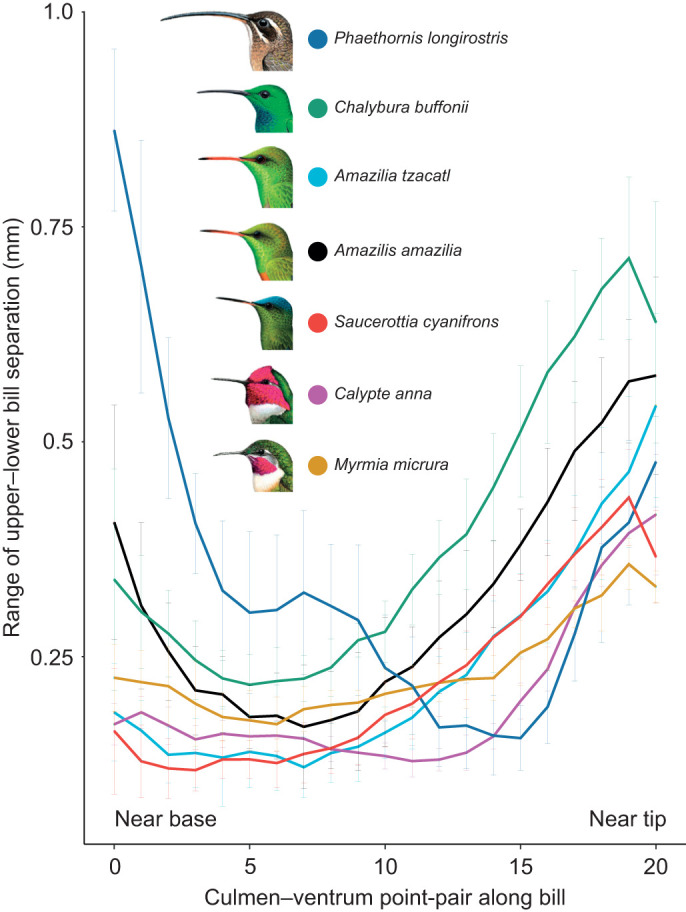
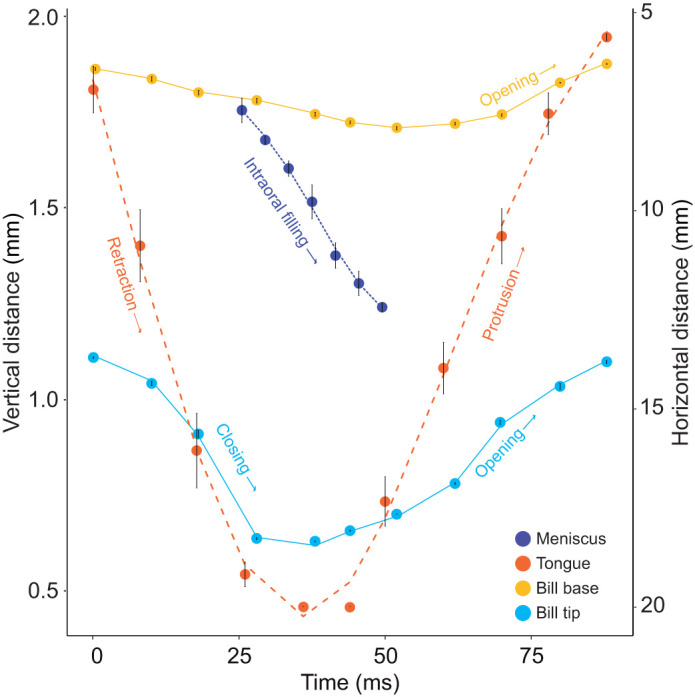
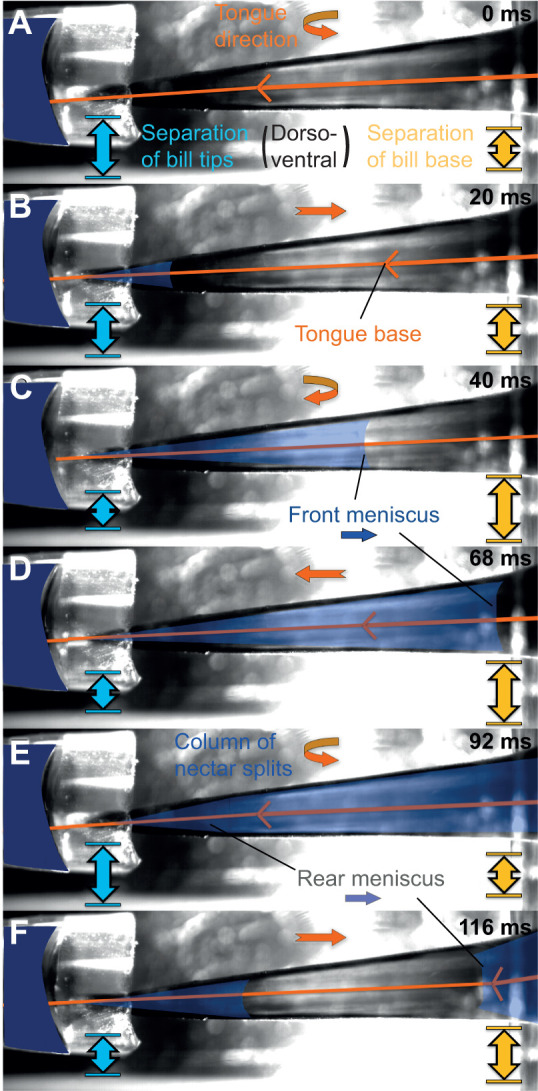
Hummingbirds are the most speciose group of vertebrate nectarivores and exhibit striking bill variation in association with their floral food sources. To explicitly link comparative feeding biomechanics to hummingbird ecology, deciphering how they move nectar from the tongue to the throat is as important as understanding how this liquid is collected. We employed synced, orthogonally positioned, high-speed cameras to describe the bill movements, and backlight filming to track tongue and nectar displacements intraorally. We reveal that the tongue base plays a central role in fluid handling, and that the bill is neither just a passive vehicle taking the tongue inside the flower nor a static tube for the nectar to flow into the throat. Instead, we show that the bill is actually a dynamic device with an unexpected pattern of opening and closing of its tip and base. We describe three complementary mechanisms: (1) distal wringing: the tongue is wrung out as soon as it is retracted and upon protrusion, near the bill tip where the intraoral capacity is decreased when the bill tips are closed; (2) tongue raking: the nectar filling the intraoral cavity is moved mouthwards by the tongue base, leveraging flexible flaps, upon retraction; (3) basal expansion: as more nectar is released into the oral cavity, the bill base is open (phase-shifted from the tip opening), increasing the intraoral capacity to facilitate nectar flow towards the throat.
蜂鸟是脊椎动物中种类最多的花蜜吸食者,它们的喙部形态存在显著差异,这与它们的花卉食物来源有关。为了明确将比较性摄食生物力学与蜂鸟生态学联系起来,阐明它们如何将花蜜从舌头上转移到喉咙中,与理解它们如何采集这种液体同样重要。我们采用同步、正交定位的高速摄像机来描述喙部的运动,并采用逆光拍摄来追踪口腔内的舌头和花蜜的位移。我们揭示了舌基在液体处理中起着核心作用,喙既不是将舌头带入花朵内部的被动工具,也不是让花蜜流入喉咙的静态管。相反,我们发现喙实际上是一个具有意想不到的尖端和基部开闭模式的动态装置。我们描述了三种互补的机制:(1)远端绞拧:一旦舌头缩回并再次伸出时,靠近喙尖,当喙尖关闭时,口腔内的容量会减小,舌头就会被绞拧出来;(2)舌耙:当舌头缩回时,充满口腔的花蜜会被舌基向前推动,利用灵活的翼片,从而将花蜜移向口腔前部;(3)基部扩张:随着更多的花蜜被释放到口腔中,喙基部张开(与喙尖的张开相位错开),增加口腔内的容量,从而促进花蜜流向喉咙。