Alharthi A S, Coleman D N, Alhidary I A, Abdelrahman M M, Trevisi E, Loor J J
Department of Animal Production, College of Food and Agriculture Sciences, King Saud University, Riyadh, 11451, Saudi Arabia.
Department of Animal Sciences and Division of Nutritional Sciences, University of Illinois, Urbana, IL, 61801, USA.
J Anim Sci Biotechnol. 2021 Apr 2;12(1):44. doi: 10.1186/s40104-021-00566-2.
Nutritional management in the dry period can alter body condition score (BCS) in dairy cows, a subjective measure of body fat. As such, differences in BCS during late-pregnancy not only mirror nutrient utilization by fat depots, but also can play important roles on the metabolic and hormonal environment. We investigated the association between cow BCS during late-pregnancy on developmental parameters and blood variables of neonatal calves. Forty-nine multiparous Holstein cows were retrospectively divided by prepartal BCS into normal BCS ≤3.25 (NormBCS; 3.02 ± 0.17, n = 30) or high BCS ≥3.75 (HighBCS; 3.83 ± 0.15, n = 19) groups. Plasma samples were collected from cows at - 10 d relative to parturition. Body weight, hip and wither height, hip width and body length were measured at birth and weekly through weaning (42 d of age) and until 9 weeks of age. Calf blood samples were collected from the jugular vein at birth (before receiving colostrum, 0 d), 24 h after first colostrum and at 7, 21, 42 and 50 d of age. The data were subjected to ANOVA using the mixed procedure of SAS. The statistical model included day, BCS, and their interactions.
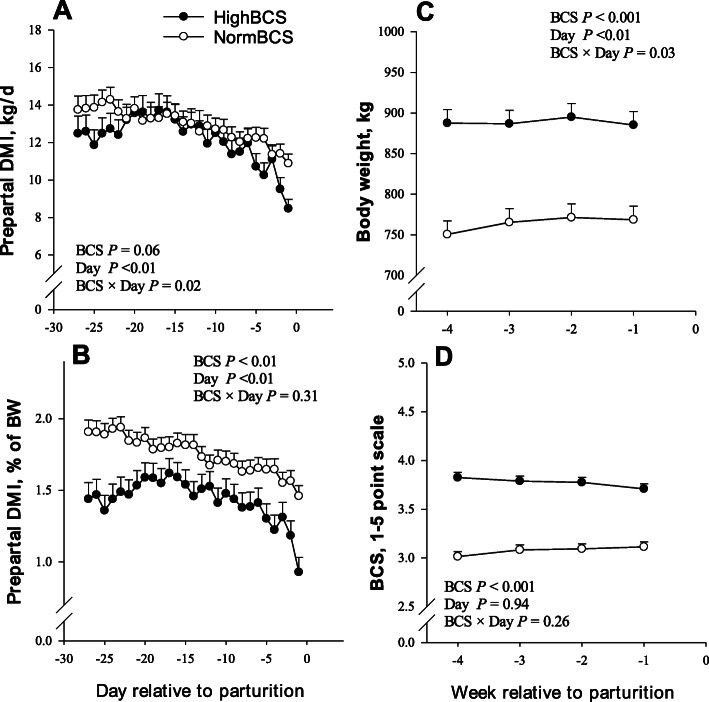
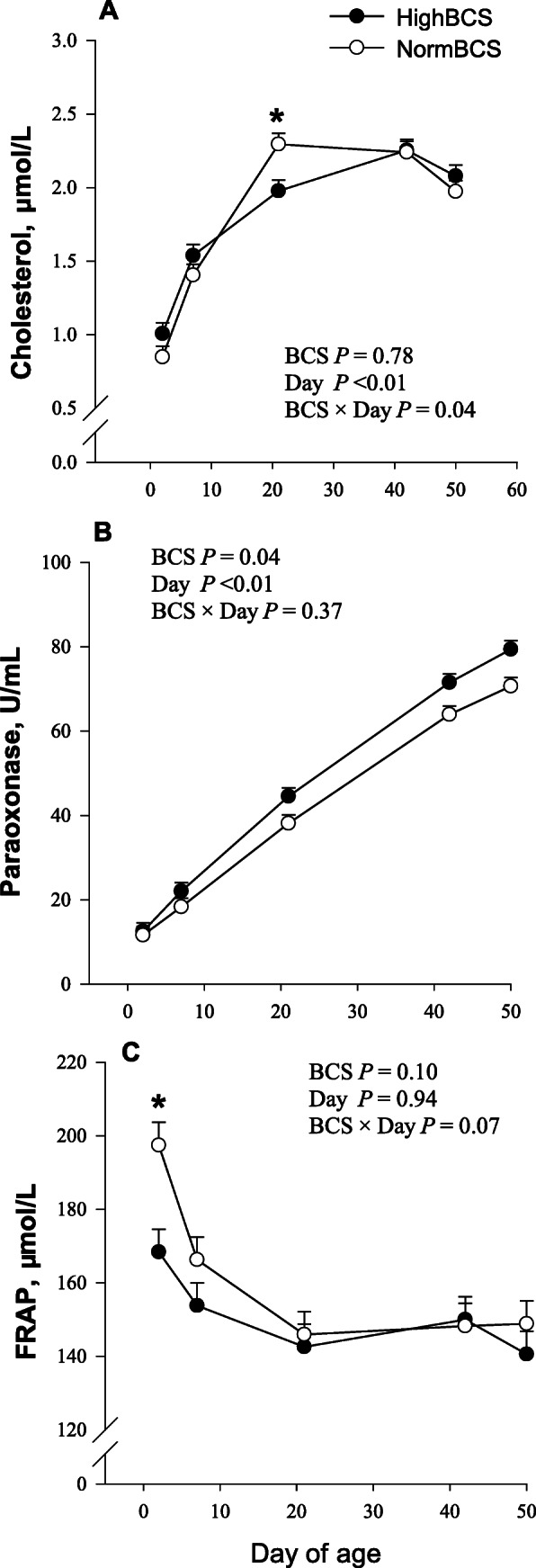
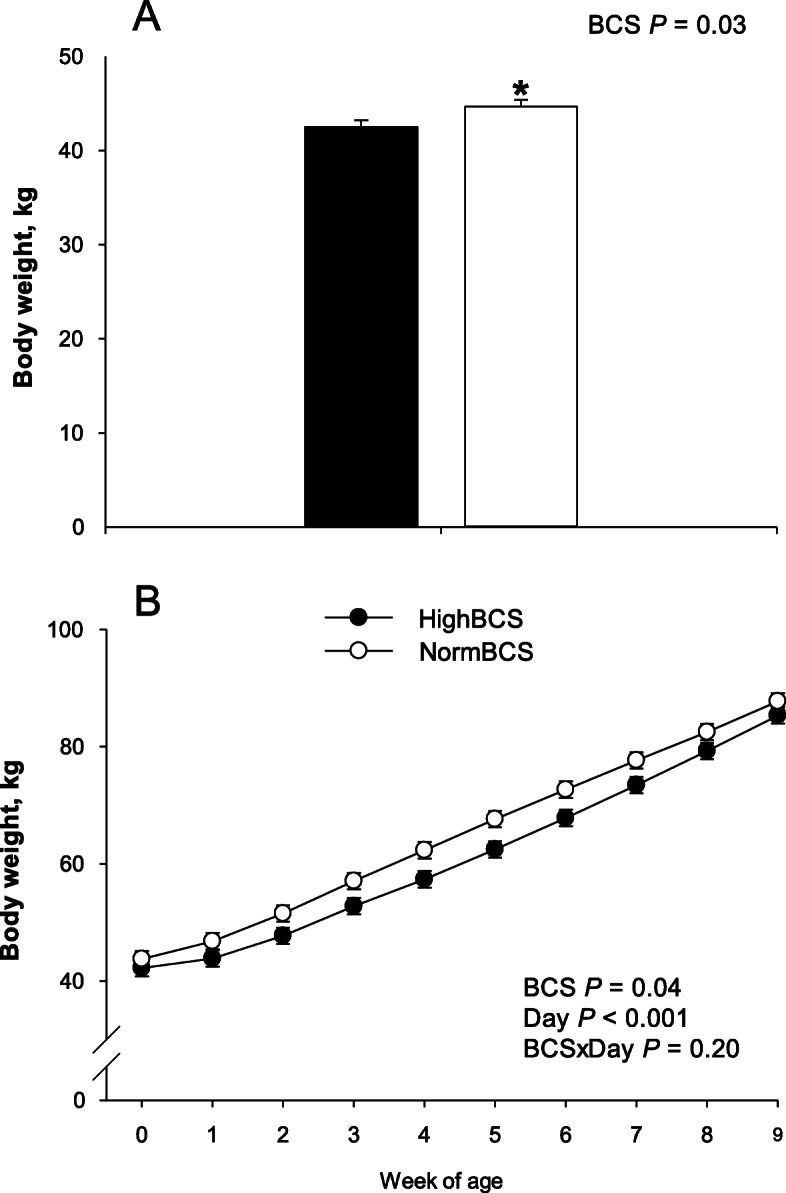
Dry matter intake (kg/d or % of body weight) during the last 4 weeks of pregnancy was lower (P ≤ 0.06) in HighBCS cows. Plasma concentrations of fatty acids, ceruloplasmin, and nitric oxide were greater overall (P < 0.05) at d - 10 prior to calving in HighBCS cows, and they tended (P = 0.08) to have greater concentrations of reactive oxygen metabolites. Birth body weight was lower (P = 0.03) in calves born to dams with HighBCS. In addition, plasma concentrations of fatty acids, albumin and urea (P < 0.05) were greater in those calves. Although calves born to cows with HighBCS maintained a lower postnatal body weight (P = 0.04), hip and wither height, hip width, and body length, there was no difference (P > 0.05) in daily starter intake and average daily gain due to maternal BCS.
Overall, results highlight an association between BCS during late-gestation on in utero calf development and postnatal growth. A high maternal BCS during late-gestation was associated with lower calf body weights, which could be due to lower maternal intakes and a state of inflammation and metabolic stress.
干奶期的营养管理可改变奶牛的体况评分(BCS),这是一种衡量体脂的主观指标。因此,妊娠后期BCS的差异不仅反映了脂肪库对营养物质的利用情况,还可能对代谢和激素环境产生重要影响。我们研究了妊娠后期奶牛的BCS与新生犊牛发育参数和血液变量之间的关联。49头经产荷斯坦奶牛根据产前BCS回顾性分为正常BCS≤3.25(正常BCS组;3.02±0.17,n = 30)或高BCS≥3.75(高BCS组;3.83±0.15,n = 19)两组。在分娩前-10天采集奶牛的血浆样本。在出生时、断奶前每周(42日龄)直至9周龄测量犊牛的体重、髋部和肩胛高度、髋部宽度和体长。在出生时(未摄入初乳前,0天)、首次摄入初乳后24小时以及7、21、42和50日龄时从颈静脉采集犊牛血液样本。使用SAS的混合程序对数据进行方差分析。统计模型包括日龄、BCS及其交互作用。
高BCS组奶牛在妊娠最后4周的干物质摄入量(kg/天或体重的%)较低(P≤0.06)。在分娩前-10天,高BCS组奶牛血浆中脂肪酸、铜蓝蛋白和一氧化氮的总体浓度较高(P<0.05),且活性氧代谢产物浓度有升高趋势(P = 0.故08)。高BCS组奶牛所产犊牛的出生体重较低(P = 0.03)。此外,这些犊牛血浆中脂肪酸、白蛋白和尿素的浓度较高(P<0.05)。虽然高BCS组奶牛所产犊牛出生后的体重、髋部和肩胛高度、髋部宽度和体长较低(P = 0.04),但由于母体BCS不同,犊牛的每日开食料摄入量和平均日增重没有差异(P>0.05)。
总体而言,结果突出了妊娠后期BCS与子宫内犊牛发育及出生后生长之间的关联。妊娠后期母体BCS较高与犊牛体重较低有关,这可能是由于母体摄入量较低以及炎症和代谢应激状态所致。