Westchester Medical Center/New York Medical College, NY USA.
Yale School of Medicine, New Haven, CT, USA.
Glob Health Sci Pract. 2021 Mar 31;9(1):187-200. doi: 10.9745/GHSP-D-20-00234.
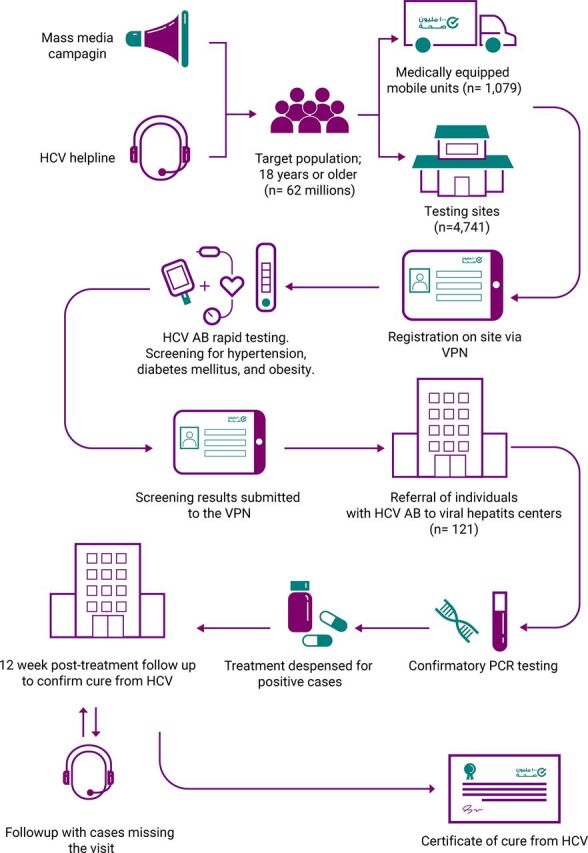
Chronic hepatitis C virus (HCV) infection is a major public health problem in many low- and middle-income countries. In 2015, Egypt's HCV infection prevalence of 7% among adults was among the highest in the world and accounted for 7.6% of the country's mortality. In 2014, Egypt embarked on an aggressive screening and treatment program that evolved into a national strategy to eliminate HCV as a public health threat by 2021.
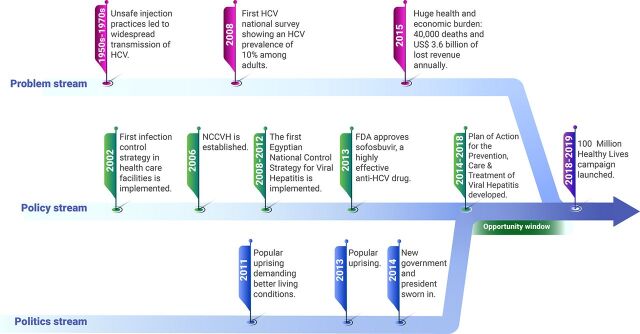
In this qualitative case study, we analyzed Egypt's HCV control strategy using the Kingdon framework to understand how the problem, policy, and political streams merged to create an opportunity to achieve an ambitious elimination goal. We describe key aspects of the implementation, identify lessons learned, and provide recommendations for other low- and middle-income countries aiming to eliminate HCV.
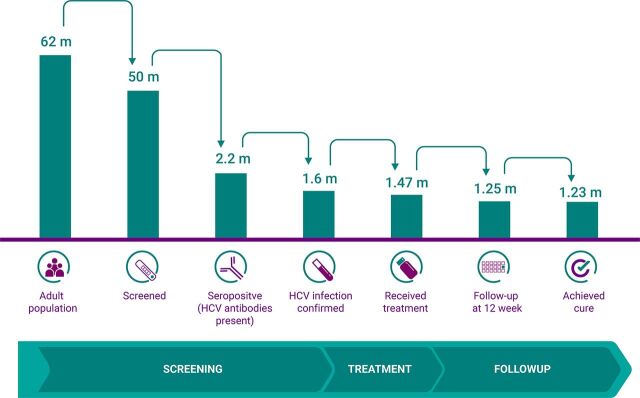
Between 2014 and 2020, Egypt screened more than 50 million and treated more than 4 million residents for HCV. Five key elements contributed to Egypt's successful HCV elimination program: (1) sufficient and reliable epidemiologic data to quantify and monitor public health threats; (2) a robust public health care infrastructure; (3) inclusive care that reached all sectors of society; (4) increased health care spending; and (5) innovative scientific research and use of information technology.
Egypt conducted a successful HCV screening program that covered more than 50 million residents and treated more than 4 million. It is poised to be the first country in the world to eliminate HCV within its borders. The lessons learned from this experience can inform the elimination plans of other low- and middle-income countries with high HCV burden.
慢性丙型肝炎病毒 (HCV) 感染是许多低收入和中等收入国家的一个主要公共卫生问题。2015 年,埃及成年人 HCV 感染率为 7%,居世界首位,占该国死亡率的 7.6%。2014 年,埃及启动了一项积极的筛查和治疗计划,该计划后来演变为一项国家战略,旨在到 2021 年消除 HCV 对公共卫生的威胁。
在这项定性案例研究中,我们使用金登框架分析了埃及的 HCV 控制策略,以了解问题、政策和政治流是如何融合在一起,为实现一个雄心勃勃的消除目标创造机会的。我们描述了实施的关键方面,确定了经验教训,并为其他旨在消除 HCV 的低收入和中等收入国家提供了建议。
2014 年至 2020 年间,埃及对 5000 多万居民进行了 HCV 筛查,并对 400 多万居民进行了 HCV 治疗。埃及 HCV 消除计划的成功有五个关键因素:(1)有足够和可靠的流行病学数据来量化和监测公共卫生威胁;(2)强大的公共卫生保健基础设施;(3)包容各个社会阶层的关怀;(4)增加医疗保健支出;(5)创新性的科学研究和信息技术的使用。
埃及开展了一项成功的 HCV 筛查计划,覆盖了 5000 多万居民,并对 400 多万人进行了治疗。埃及有望成为世界上第一个在其境内消除 HCV 的国家。从这一经验中吸取的教训可以为其他 HCV 负担高的低收入和中等收入国家的消除计划提供信息。