Kim Ha-Neui, Ponte Filipa, Warren Aaron, Ring Rebecca, Iyer Srividhya, Han Li, Almeida Maria
Division of Endocrinology, University of Arkansas for Medical Sciences, Little Rock, AR, USA.
Department of Orthopaedic Surgery, University of Arkansas for Medical Sciences, Little Rock, AR, USA.
NPJ Aging Mech Dis. 2021 Apr 1;7(1):8. doi: 10.1038/s41514-021-00058-7.
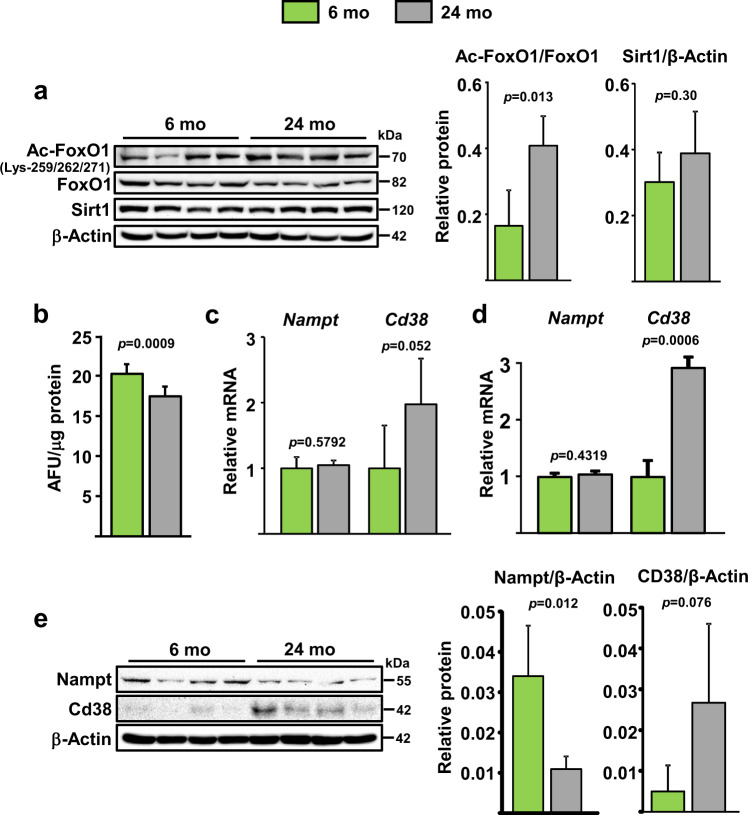
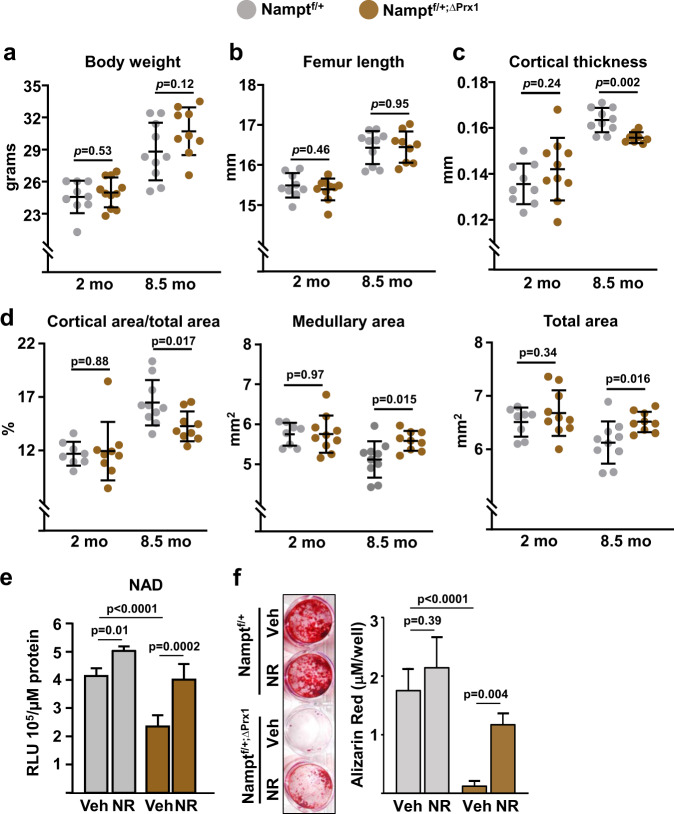
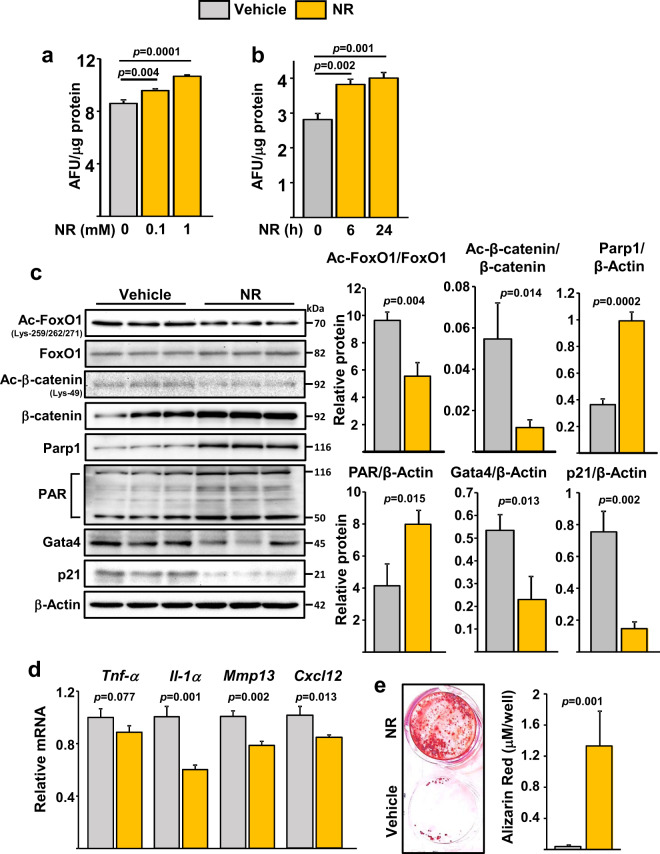
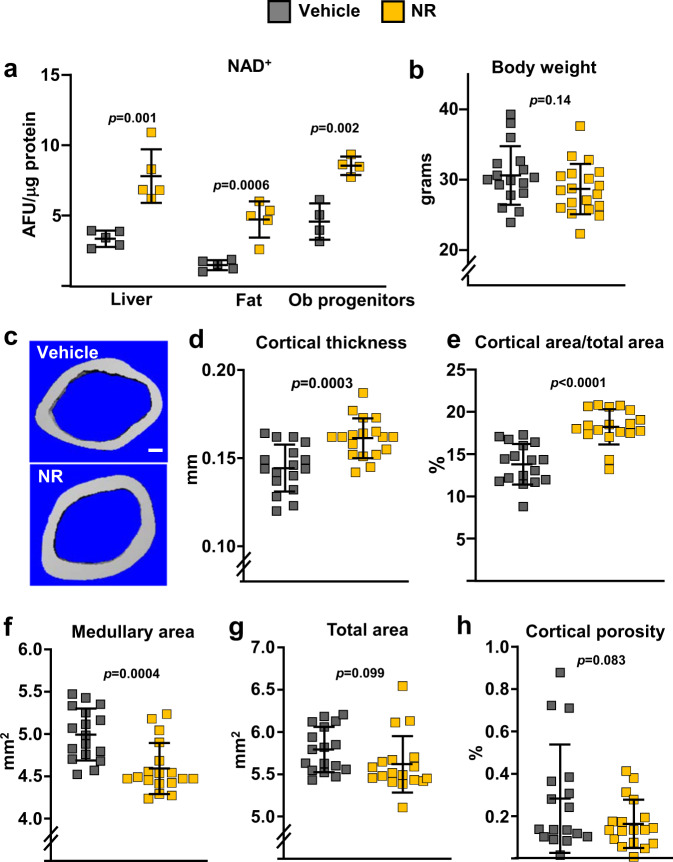
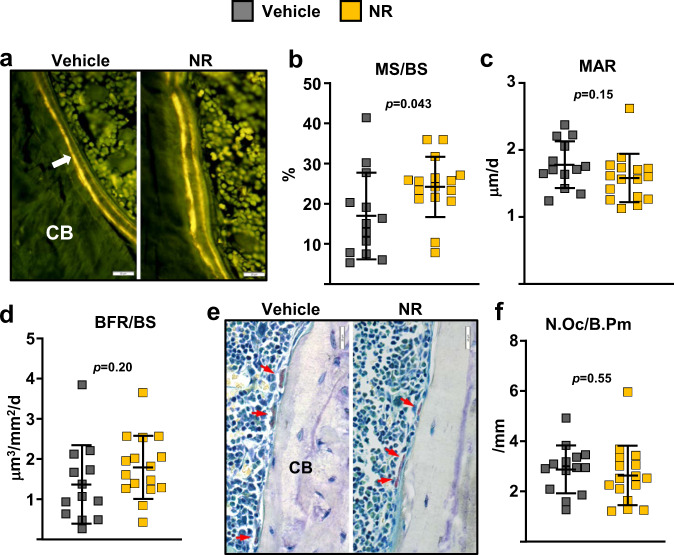
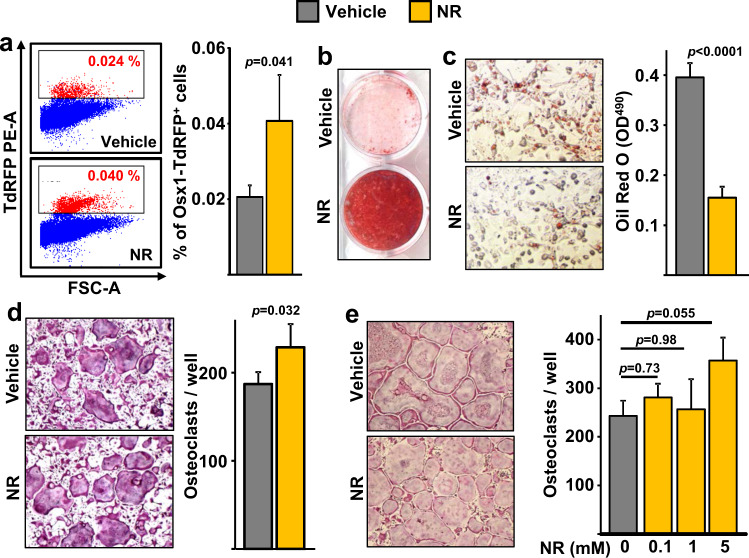
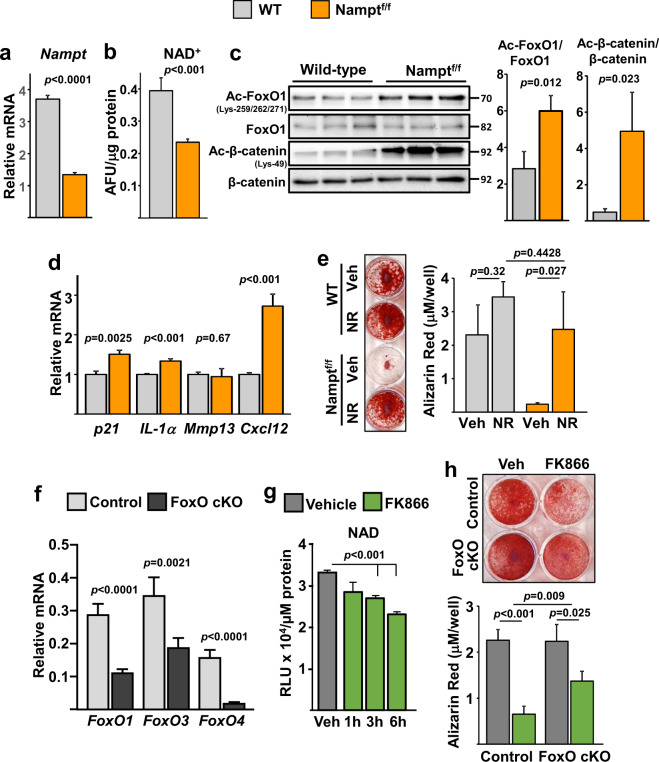
Age-related osteoporosis is caused by a deficit in osteoblasts, the cells that secrete bone matrix. The number of osteoblast progenitors also declines with age associated with increased markers of cell senescence. The forkhead box O (FoxO) transcription factors attenuate Wnt/β-catenin signaling and the proliferation of osteoprogenitors, thereby decreasing bone formation. The NAD-dependent Sirtuin1 (Sirt1) deacetylates FoxOs and β-catenin in osteoblast progenitors and, thereby, increases bone mass. However, it remains unknown whether the Sirt1/FoxO/β-catenin pathway is dysregulated with age in osteoblast progenitors. We found decreased levels of NAD in osteoblast progenitor cultures from old mice, associated with increased acetylation of FoxO1 and markers of cell senescence. The NAD precursor nicotinamide riboside (NR) abrogated FoxO1 and β-catenin acetylation and several marker of cellular senescence, and increased the osteoblastogenic capacity of cells from old mice. Consistent with these effects, NR administration to C57BL/6 mice counteracted the loss of bone mass with aging. Attenuation of NAD levels in osteoprogenitor cultures from young mice inhibited osteoblastogenesis in a FoxO-dependent manner. In addition, mice with decreased NAD in cells of the osteoblast lineage lost bone mass at a young age. Together, these findings suggest that the decrease in bone formation with old age is due, at least in part, to a decrease in NAD and dysregulated Sirt1/FoxO/β-catenin pathway in osteoblast progenitors. NAD repletion, therefore, represents a rational therapeutic approach to skeletal involution.
年龄相关性骨质疏松症是由成骨细胞(即分泌骨基质的细胞)数量不足引起的。成骨细胞祖细胞的数量也会随着年龄的增长而减少,这与细胞衰老标志物的增加有关。叉头框O(FoxO)转录因子会减弱Wnt/β-连环蛋白信号传导和成骨祖细胞的增殖,从而减少骨形成。烟酰胺腺嘌呤二核苷酸(NAD)依赖性的沉默调节蛋白1(Sirt1)可使成骨细胞祖细胞中的FoxO和β-连环蛋白去乙酰化,从而增加骨量。然而,在成骨细胞祖细胞中,Sirt1/FoxO/β-连环蛋白通路是否会随着年龄的增长而失调仍不清楚。我们发现老年小鼠成骨细胞祖细胞培养物中NAD水平降低,这与FoxO1的乙酰化增加和细胞衰老标志物有关。NAD前体烟酰胺核糖苷(NR)消除了FoxO1和β-连环蛋白的乙酰化以及几种细胞衰老标志物,并增加了老年小鼠细胞的成骨能力。与这些作用一致,给C57BL/6小鼠施用NR可抵消衰老过程中骨量流失。年轻小鼠成骨祖细胞培养物中NAD水平的降低以FoxO依赖性方式抑制了成骨作用。此外,成骨细胞谱系细胞中NAD降低的小鼠在年轻时就出现了骨量流失。总之,这些发现表明,随着年龄增长骨形成减少至少部分是由于成骨细胞祖细胞中NAD减少和Sirt1/FoxO/β-连环蛋白通路失调所致。因此,补充NAD代表了一种合理的治疗骨骼退化的方法。