Paul Bindu Diana
The Solomon H. Snyder Department of Neuroscience, Johns Hopkins University School of Medicine, Baltimore, MD, United States.
Front Aging Neurosci. 2021 Mar 16;13:659402. doi: 10.3389/fnagi.2021.659402. eCollection 2021.
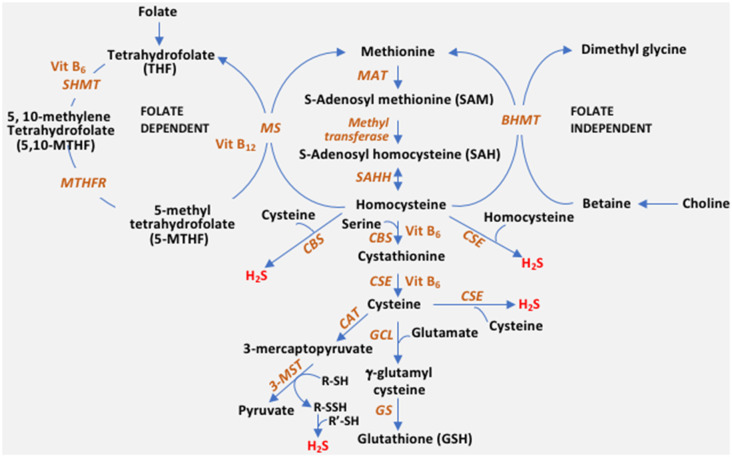
The reverse transsulfuration pathway has emerged as a central hub that integrates the metabolism of sulfur-containing amino acids and redox homeostasis. Transsulfuration involves the transfer of sulfur from homocysteine to cysteine. Cysteine serves as the precursor for several sulfur-containing molecules, which play diverse roles in cellular processes. Recent evidence shows that disruption of the flux through the pathway has deleterious consequences. In this review article, I will discuss the actions and regulation of the reverse transsulfuration pathway and its links to other metabolic pathways, which are disrupted in Alzheimer's disease (AD). The potential nodes of therapeutic intervention are also discussed, which may pave the way for the development of novel treatments.
转硫途径已成为整合含硫氨基酸代谢和氧化还原稳态的核心枢纽。转硫过程涉及硫从同型半胱氨酸向半胱氨酸的转移。半胱氨酸是几种含硫分子的前体,这些含硫分子在细胞过程中发挥着不同的作用。最近的证据表明,该途径通量的破坏会产生有害后果。在这篇综述文章中,我将讨论转硫途径的作用和调节及其与其他代谢途径的联系,这些在阿尔茨海默病(AD)中会受到破坏。还讨论了治疗干预的潜在节点,这可能为新疗法的开发铺平道路。