Biomedical Informatics Training Program, Stanford University, Stanford, CA 94305, USA.
Biophysics Graduate Group, University of California, Berkeley, Berkeley, CA 94720, USA; Department of Plant and Microbial Biology, University of California, Berkeley, Berkeley, CA 94720, USA.
Am J Hum Genet. 2021 Apr 1;108(4):535-548. doi: 10.1016/j.ajhg.2021.03.003.
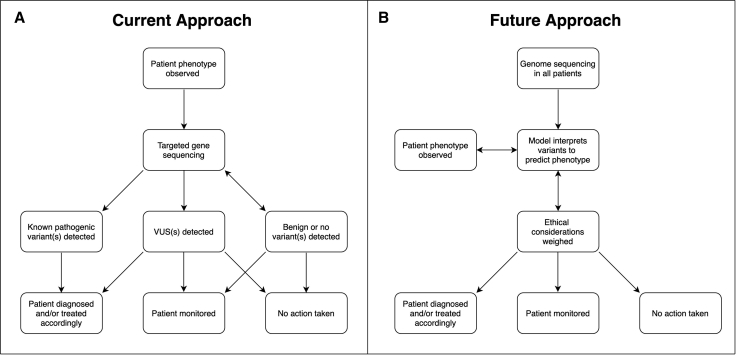
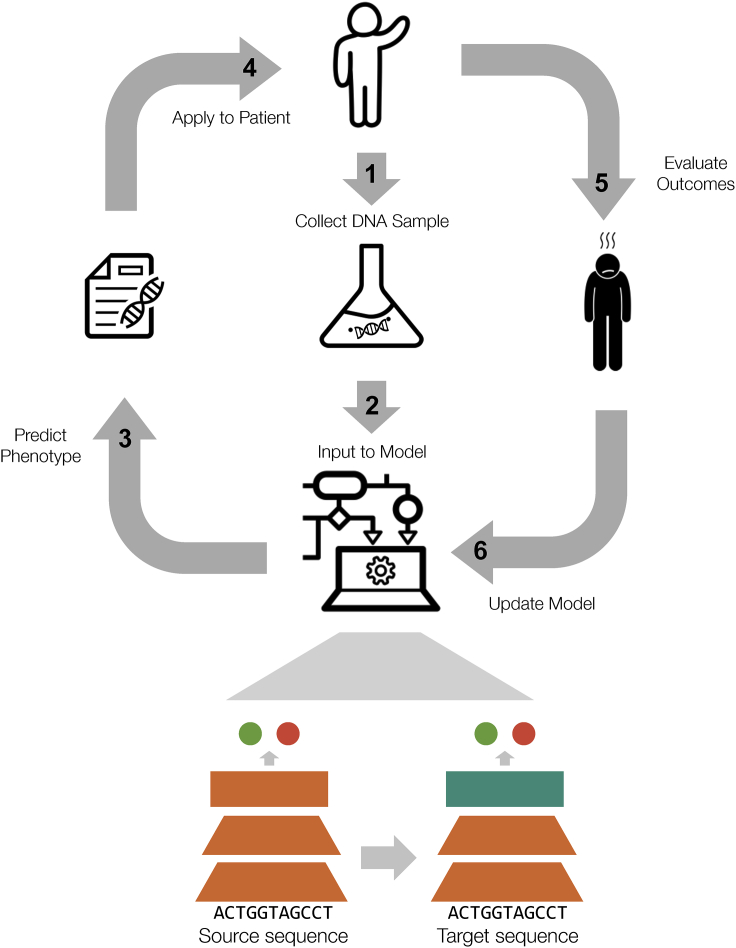
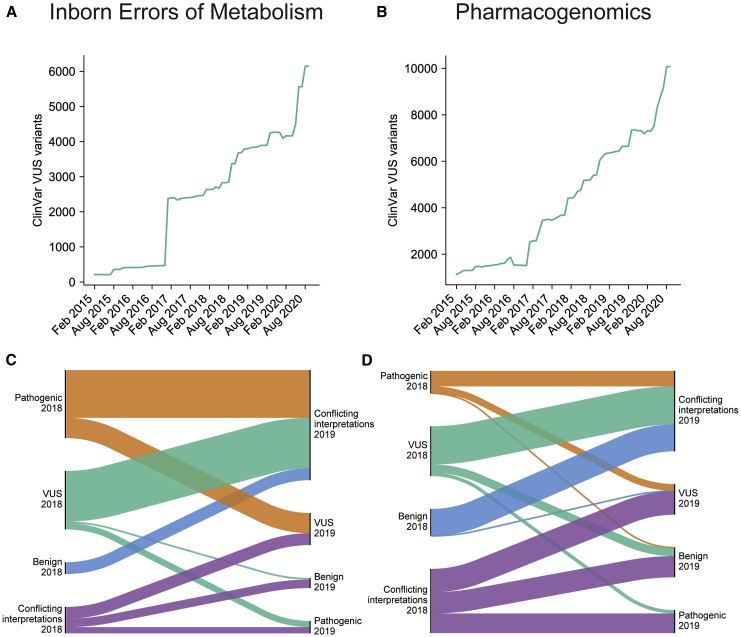
Genome sequencing is enabling precision medicine-tailoring treatment to the unique constellation of variants in an individual's genome. The impact of recurrent pathogenic variants is often understood, however there is a long tail of rare genetic variants that are uncharacterized. The problem of uncharacterized rare variation is especially acute when it occurs in genes of known clinical importance with functionally consequential variants and associated mechanisms. Variants of uncertain significance (VUSs) in these genes are discovered at a rate that outpaces current ability to classify them with databases of previous cases, experimental evaluation, and computational predictors. Clinicians are thus left without guidance about the significance of variants that may have actionable consequences. Computational prediction of the impact of rare genetic variation is increasingly becoming an important capability. In this paper, we review the technical and ethical challenges of interpreting the function of rare variants in two settings: inborn errors of metabolism in newborns and pharmacogenomics. We propose a framework for a genomic learning healthcare system with an initial focus on early-onset treatable disease in newborns and actionable pharmacogenomics. We argue that (1) a genomic learning healthcare system must allow for continuous collection and assessment of rare variants, (2) emerging machine learning methods will enable algorithms to predict the clinical impact of rare variants on protein function, and (3) ethical considerations must inform the construction and deployment of all rare-variation triage strategies, particularly with respect to health disparities arising from unbalanced ancestry representation.
基因组测序正在实现精准医学——根据个体基因组中独特的变异组合来定制治疗方案。尽管人们已经了解了反复出现的致病性变异的影响,但还有大量未被描述的罕见遗传变异。当这些罕见的遗传变异发生在具有功能相关变异和相关机制的已知具有临床重要性的基因中时,未被描述的罕见变异问题尤其严重。这些基因中的意义不明变异(VUS)的发现速度超过了当前使用先前病例数据库、实验评估和计算预测器对其进行分类的能力。因此,临床医生对于可能具有可操作后果的变异的意义缺乏指导。对罕见遗传变异影响的计算预测正日益成为一项重要能力。本文回顾了在两种情况下解释罕见变异功能的技术和伦理挑战:新生儿遗传性代谢疾病和药物基因组学。我们提出了一个基因组学习型医疗保健系统的框架,该系统最初专注于新生儿的早期治疗性疾病和可操作性药物基因组学。我们认为:(1)基因组学习型医疗保健系统必须允许对罕见变异进行持续收集和评估;(2)新兴的机器学习方法将使算法能够预测罕见变异对蛋白质功能的临床影响;(3)伦理考虑因素必须为所有罕见变异分类策略的构建和部署提供信息,特别是在由于不平衡的祖先代表性而导致健康差异的情况下。