Inflammation, Nutrition, Metabolism and Oxidative Stress Research Laboratory, Biomedical Research and Innovation Institute of Cadiz (INiBICA), Cadiz, Spain.
Mother and Child Health and Radiology Department. Area of Clinical Genetics, University of Cadiz. Faculty of Medicine, Cadiz, Spain.
Orphanet J Rare Dis. 2024 Sep 6;19(1):327. doi: 10.1186/s13023-024-03307-6.
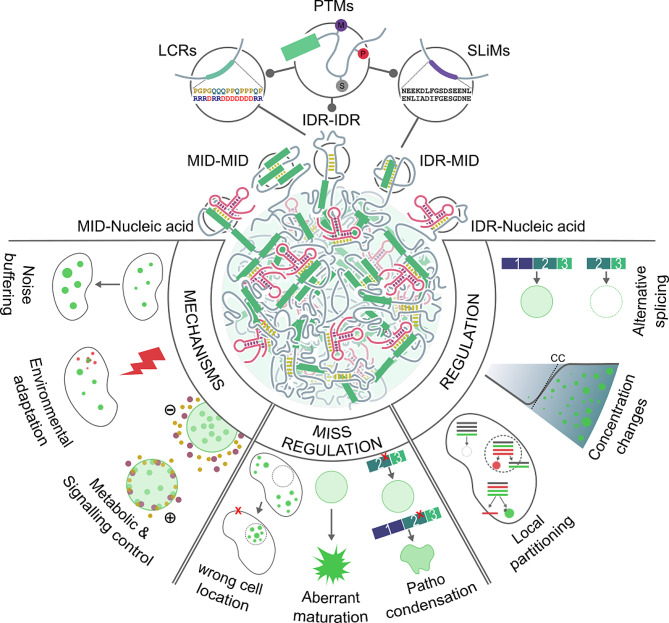
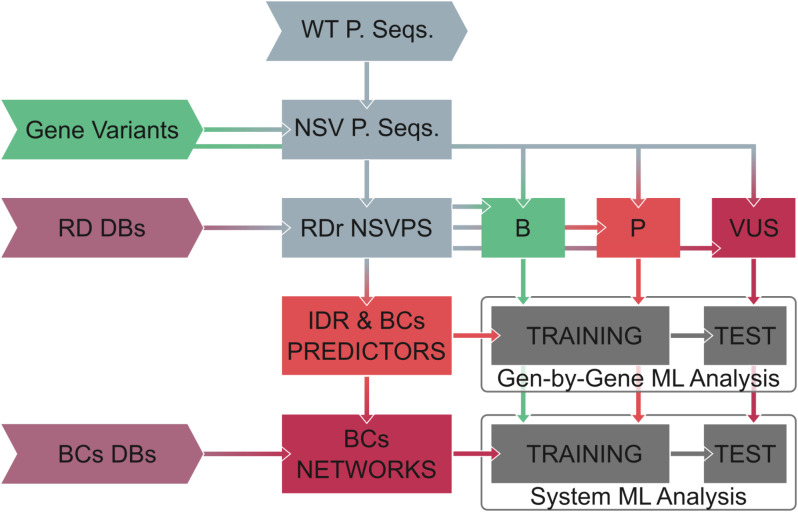
The diagnostic odysseys for rare disease patients are getting shorter as next-generation sequencing becomes more widespread. However, the complex genetic diversity and factors influencing expressivity continue to challenge accurate diagnosis, leaving more than 50% of genetic variants categorized as variants of uncertain significance.Genomic expression intricately hinges on localized interactions among its products. Conventional variant prioritization, biased towards known disease genes and the structure-function paradigm, overlooks the potential impact of variants shaping the composition, location, size, and properties of biomolecular condensates, genuine membraneless organelles swiftly sensing and responding to environmental changes, and modulating expressivity.To address this complexity, we propose to focus on the nexus of genetic variants within biomolecular condensates determinants. Scrutinizing variant effects in these membraneless organelles could refine prioritization, enhance diagnostics, and unveil the molecular underpinnings of rare diseases. Integrating comprehensive genome sequencing, transcriptomics, and computational models can unravel variant pathogenicity and disease mechanisms, enabling precision medicine. This paper presents the rationale driving our proposal and describes a protocol to implement this approach. By fusing state-of-the-art knowledge and methodologies into the clinical practice, we aim to redefine rare diseases diagnosis, leveraging the power of scientific advancement for more informed medical decisions.
随着下一代测序技术的广泛应用,罕见病患者的诊断之旅变得越来越短。然而,复杂的遗传多样性和影响表现度的因素仍然持续挑战着准确诊断,导致超过 50%的遗传变异被归类为意义未明的变异。基因组表达高度依赖于其产物在局部的相互作用。传统的变异优先级排序方法偏向于已知的疾病基因和结构-功能范式,忽略了变异对生物分子凝聚物组成、位置、大小和性质的潜在影响,而这些凝聚物是真正的无膜细胞器,能够快速感知和响应环境变化,并调节表达度。为了解决这个复杂性,我们建议关注生物分子凝聚物决定因素内的遗传变异的交汇点。在这些无膜细胞器中仔细研究变异的影响,可以优化优先级排序,提高诊断能力,并揭示罕见疾病的分子基础。整合全面的基因组测序、转录组学和计算模型可以揭示变异的致病性和疾病机制,实现精准医学。本文介绍了推动我们建议的基本原理,并描述了实施该方法的方案。通过将最先进的知识和方法融合到临床实践中,我们旨在重新定义罕见病的诊断,利用科学进步的力量做出更明智的医疗决策。