Medical Affairs, Nutricia Ltd., White Horse Business Park, Trowbridge BA14 0XQ, UK.
Institute of Human Nutrition, Faculty of Medicine, Mailpoint 113, Southampton General Hospital, Tremona Road, Southampton SO16 6YD, UK.
Nutrients. 2021 Mar 14;13(3):935. doi: 10.3390/nu13030935.
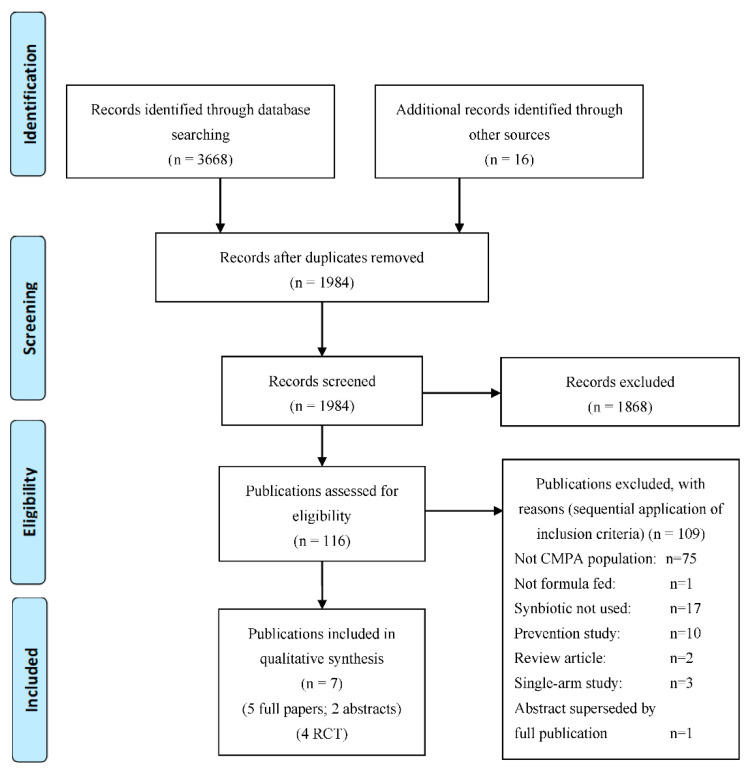
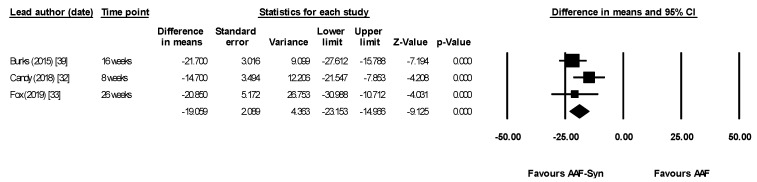
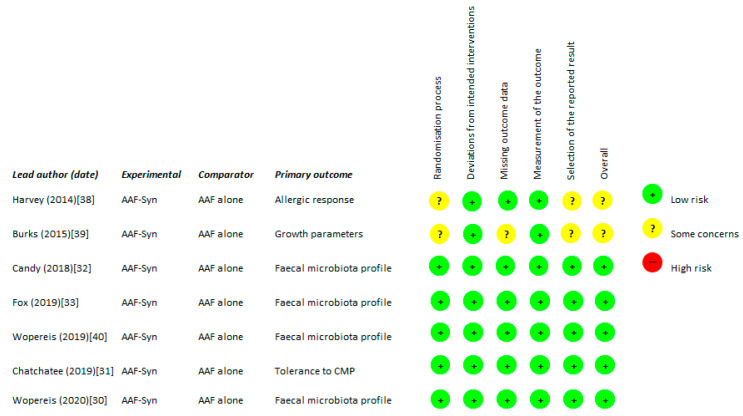
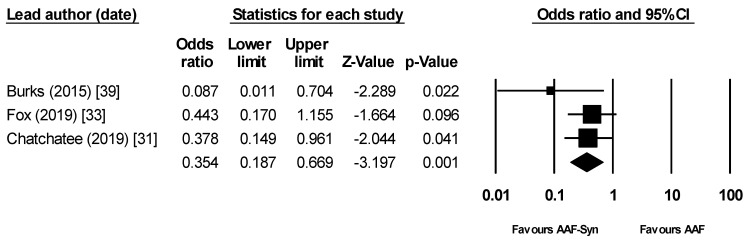
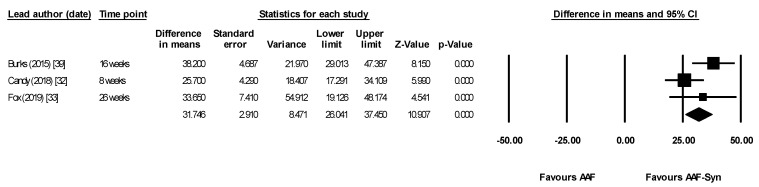
Cow's milk protein allergy (CMPA) is associated with dysbiosis of the infant gut microbiome, with allergic and immune development implications. Studies show benefits of combining synbiotics with hypoallergenic formulae, although evidence has never been systematically examined. This review identified seven publications of four randomised controlled trials comparing an amino acid formula (AAF) with an AAF containing synbiotics (AAF-Syn) in infants with CMPA (mean age 8.6 months; 68% male, mean intervention 27.3 weeks, = 410). AAF and AAF-Syn were equally effective in managing allergic symptoms and promoting normal growth. Compared to AAF, significantly fewer infants fed AAF-Syn had infections (OR 0.35 (95% CI 0.19-0.67), = 0.001). Overall medication use, including antibacterials and antifectives, was lower among infants fed AAF-Syn. Significantly fewer infants had hospital admissions with AAF-Syn compared to AAF (8.8% vs. 20.2%, = 0.036; 56% reduction), leading to potential cost savings per infant of £164.05-£338.77. AAF-Syn was associated with increased bifidobacteria (difference in means 31.75, 95% CI 26.04-37.45, < 0.0001); reduced and (difference in means -19.06, 95% CI -23.15 to -14.97, < 0.0001); and reduced microbial diversity ( < 0.05), similar to that described in healthy breastfed infants, and may be associated with the improved clinical outcomes described. This review provides evidence that suggests combining synbiotics with AAF produces clinical benefits with potential economic implications.
牛奶蛋白过敏(CMPA)与婴儿肠道微生物组的失调有关,这对过敏和免疫发育有影响。研究表明,将合生剂与低致敏配方结合使用具有益处,尽管从未对其进行过系统的评估。本综述确定了四项随机对照试验的七项出版物,比较了氨基酸配方(AAF)与含有合生剂的 AAF(AAF-Syn)在患有 CMPA 的婴儿中的应用(平均年龄 8.6 个月;68%为男性,平均干预时间为 27.3 周, = 410)。AAF 和 AAF-Syn 在管理过敏症状和促进正常生长方面同样有效。与 AAF 相比,接受 AAF-Syn 喂养的婴儿感染的比例显著更低(OR 0.35(95%CI 0.19-0.67), = 0.001)。接受 AAF-Syn 喂养的婴儿使用的总体药物(包括抗菌药和抗真菌药)也更少。与 AAF 相比,接受 AAF-Syn 喂养的婴儿住院的比例显著更低(8.8%比 20.2%, = 0.036;降低 56%),这可能使每个婴儿节省 164.05-338.77 英镑的费用。AAF-Syn 与双歧杆菌的增加有关(均值差 31.75,95%CI 26.04-37.45, < 0.0001);减少 和 (均值差-19.06,95%CI -23.15 至-14.97, < 0.0001);以及微生物多样性的降低( < 0.05),类似于健康母乳喂养婴儿的情况,这可能与描述的临床改善结果有关。本综述提供的证据表明,将合生剂与 AAF 结合使用可产生临床益处,并具有潜在的经济意义。