Stewart Zachary P, Paparozzi Ellen T, Wortmann Charles S, Jha Prakash Kumar, Shapiro Charles A
Center for Agriculture-Led Growth, Bureau for Resilience and Food Security, United States Agency for International Development, 1300 Pennsylvania Ave NW, Washington, DC 20004, USA.
Department of Agronomy and Horticulture, University of Nebraska, Lincoln, NE 68583-0915, USA.
Plants (Basel). 2021 Mar 11;10(3):528. doi: 10.3390/plants10030528.
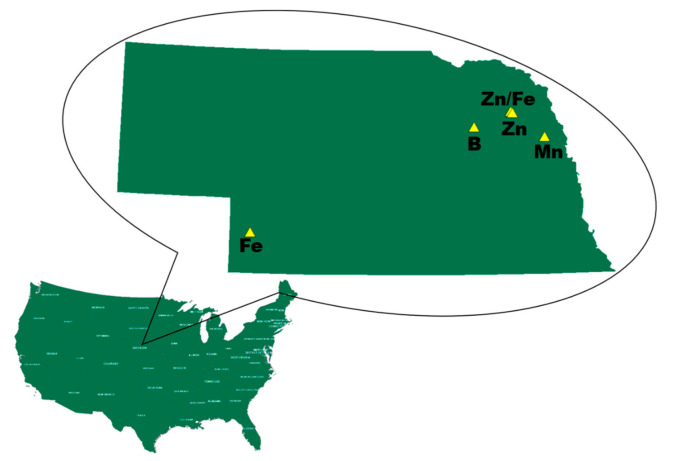
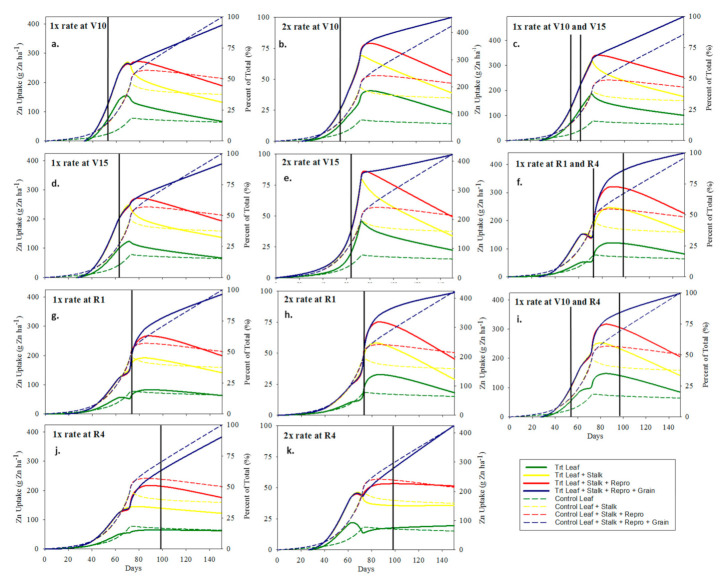
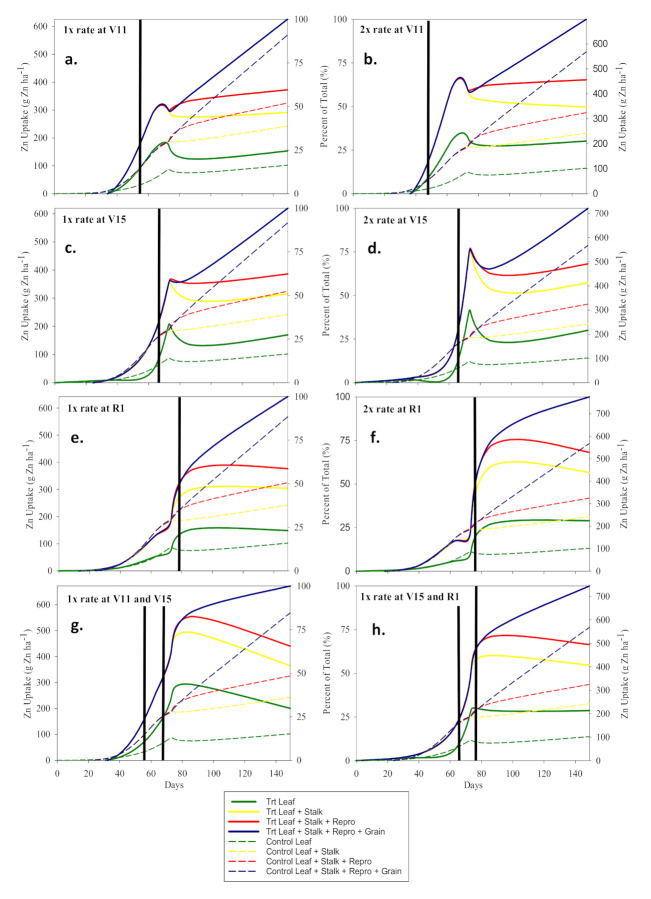
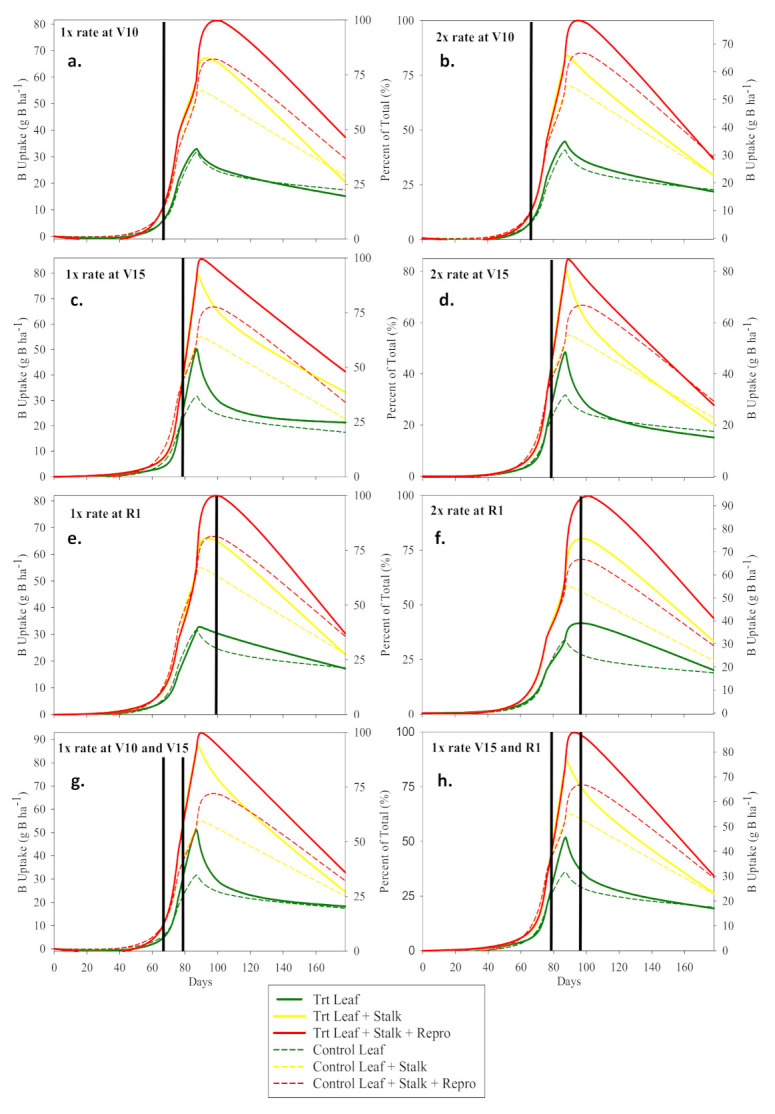
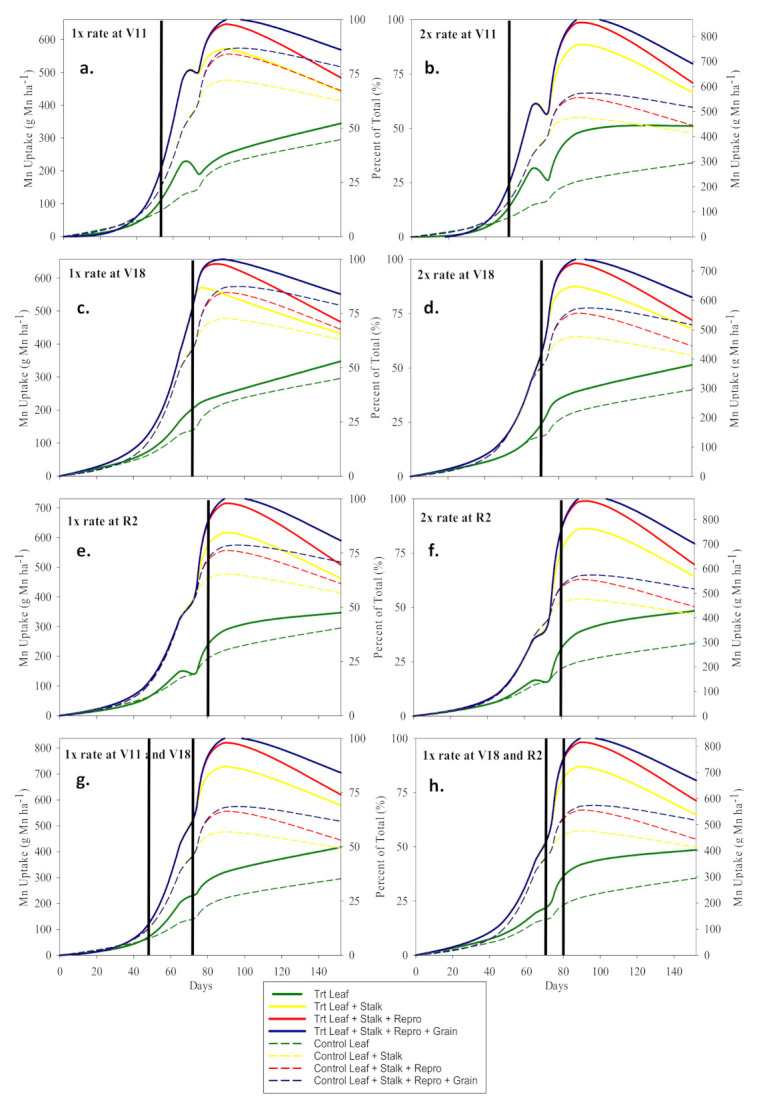
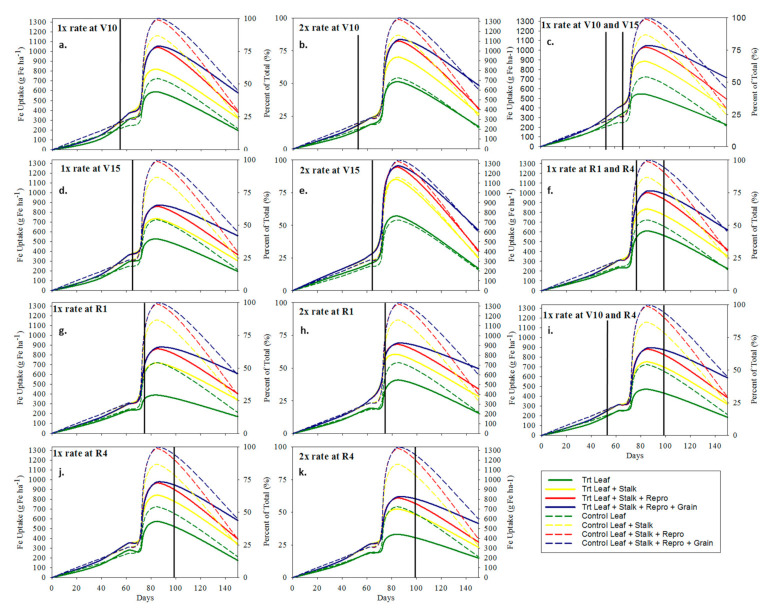
Timing of micronutrient demand and acquisition by maize ( L.) is nutrient specific and associated with key vegetative and reproductive growth stages. The objective of this study was to determine the fate of foliar-applied B, Fe, Mn, Zn, and Fe/Zn together, evaluate the effect of foliar micronutrients applied at multiple rates and growth stages on maize grain yield, and determine their apparent nutrient recovery efficiency (ANR). Five Randomized Complete Block Design (RCBD) experiments were conducted in 2014 and 2015 at five locations across Nebraska. Total dry matter was collected at 5-6 stages, and separated into leaves, stalk, and reproductive tissue as appropriate to determine micronutrient uptake, partitioning, and translocation. Foliar B, Mn, Zn, and Fe/Zn had no effect on grain yield for most application time by rate levels, though, at the foliar Mn site, there was a 19% yield increase due to a V18 application of 0.73 kg Mn ha which corresponded with reduced Mn uptake in maize grown in control plots. At the foliar Zn site, there was 4.5% decrease in yield due to a split foliar application of 0.84 kg Zn ha total, applied at V11 and V15 stage, which increased leaf Zn concentrations greater than the established toxic level. Only the Fe site had consistent grain yield response and was the only experiment that had visual signs of micronutrient deficiency. Regardless of application time from V6 to R2, there was a 13.5-14.6% increase in grain yield due to 0.22 kg Fe ha foliar application. Most micronutrients had limited or no translocation, however, early season applications of B, prior to V10, had significant mobilization to reproductive tissues at or after VT. Foliar Mn, Zn, and B application had ANR LSmeans of 9.5, 16.9, and 2.5%, respectively, whereas the Fe/Zn mix had negative ANR LSmeans of -9.1% Fe and -1.3% Zn which indicate suppression. These data highlight the importance of confirming a micronutrient deficiency prior to foliar application, guide specific growth stages to target with specific micronutrients, track the fate of foliar-applied micronutrients, and describe the variable effect of foliar-applied micronutrients on grain yield.
玉米对微量营养素的需求和获取时机因营养素种类而异,且与关键的营养生长和生殖生长阶段相关。本研究的目的是确定叶面喷施硼、铁、锰、锌以及铁/锌组合后的去向,评估在多个施用量和生长阶段叶面喷施微量营养素对玉米籽粒产量的影响,并确定其表观养分回收效率(ANR)。2014年和2015年在内布拉斯加州的五个地点进行了五项随机完全区组设计(RCBD)试验。在5 - 6个阶段收集总干物质,并根据情况分为叶片、茎杆和生殖组织,以确定微量营养素的吸收、分配和转运情况。叶面喷施硼、锰、锌以及铁/锌组合,在大多数施用量和施用时间水平下对籽粒产量没有影响,不过,在叶面喷施锰的试验点,在V18阶段施用0.73千克锰/公顷,产量提高了19%,这与对照地块种植的玉米中锰吸收量减少相对应。在叶面喷施锌的试验点,由于在V11和V15阶段分两次叶面喷施总量为0.84千克锌/公顷,导致产量下降了4.5%,这使得叶片锌浓度高于既定的有毒水平。只有铁试验点有一致的籽粒产量响应,并且是唯一有微量营养素缺乏视觉迹象的试验。无论从V6到R2的施用时间如何,叶面喷施0.22千克铁/公顷都会使籽粒产量提高13.5 - 14.6%。大多数微量营养素的转运有限或没有转运,然而,在V10之前早期喷施硼,在VT期或之后会有大量硼转运到生殖组织。叶面喷施锰、锌和硼的ANR最小二乘均值分别为9.5%、16.9%和2.5%,而铁/锌混合物的铁和锌的ANR最小二乘均值为负,分别为 - 9.1%和 - 1.3%,这表明存在抑制作用。这些数据突出了在叶面喷施之前确认微量营养素缺乏的重要性,指导针对特定微量营养素的特定生长阶段,追踪叶面喷施微量营养素的去向,并描述叶面喷施微量营养素对籽粒产量的可变影响。