Kawai Shigeru, Martinez Joval N, Lichtenberg Mads, Trampe Erik, Kühl Michael, Tank Marcus, Haruta Shin, Nishihara Arisa, Hanada Satoshi, Thiel Vera
Department of Biological Sciences, Tokyo Metropolitan University, Hachioji, Tokyo 192-0397, Japan.
Institute for Extra-cutting-edge Science and Technology Avant-garde Research (X-star), Japan Agency for Marine-Earth Science and Technology (JAMSTEC), Yokosuka, Kanagawa 237-0061, Japan.
Microorganisms. 2021 Mar 21;9(3):652. doi: 10.3390/microorganisms9030652.
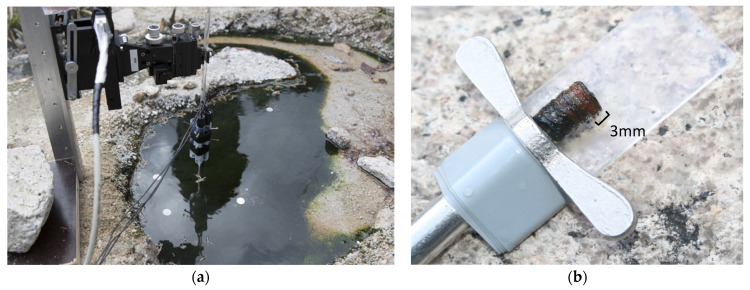
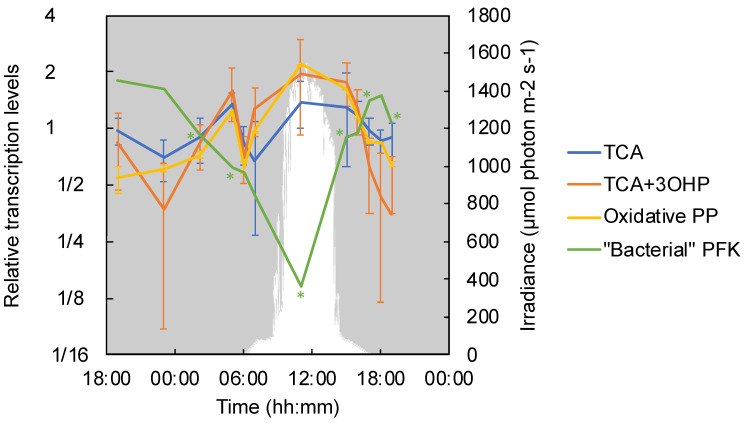
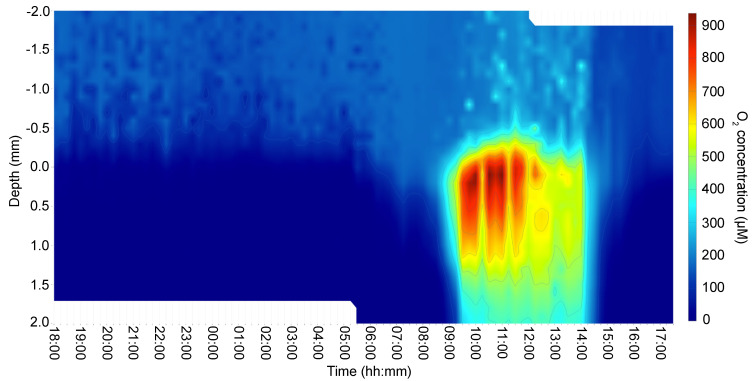
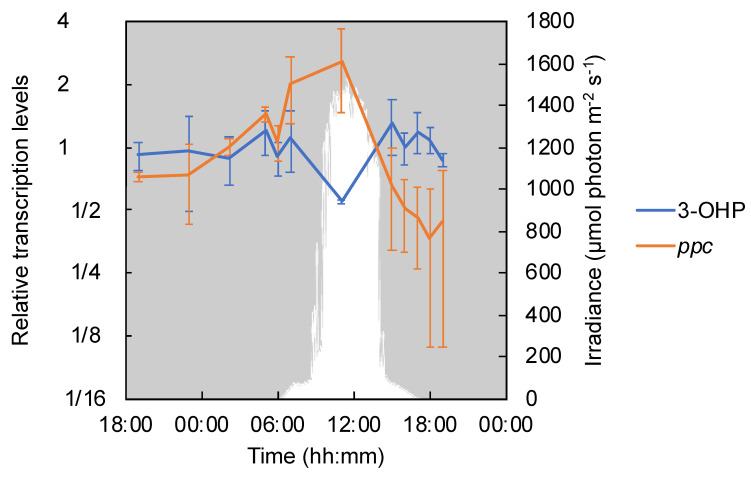
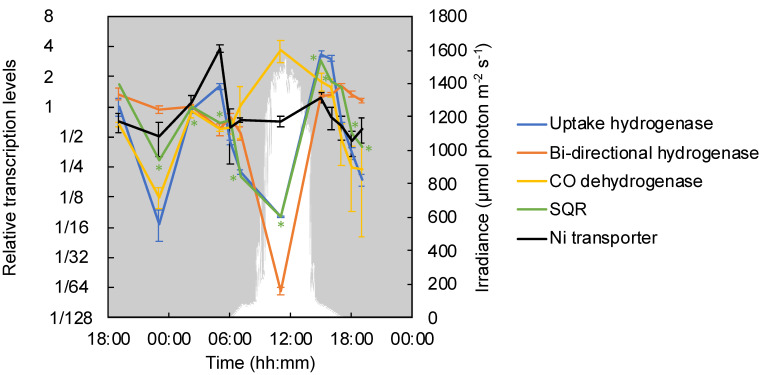
is a metabolically versatile, thermophilic, anoxygenic phototrophic member of the phylum (formerly ), which can grow photoheterotrophically, photoautotrophically, chemoheterotrophically, and chemoautotrophically. In hot spring-associated microbial mats, co-exists with oxygenic cyanobacteria under dynamic micro-environmental conditions. To elucidate the predominant growth modes of , relative transcription levels of energy metabolism- and CO fixation-related genes were studied in Nakabusa Hot Springs microbial mats over a diel cycle and correlated with microscale in situ measurements of O and light. Metatranscriptomic analyses indicated two periods with different modes of energy metabolism of : (1) phototrophy around midday and (2) chemotrophy in the early morning hours. During midday, mainly employed photoheterotrophy when the microbial mats were hyperoxic (400-800 µmol L O). In the early morning hours, relative transcription peaks of genes encoding uptake hydrogenase, key enzymes for carbon fixation, respiratory complexes as well as enzymes for TCA cycle and acetate uptake suggest an aerobic chemomixotrophic lifestyle. This is the first in situ study of the versatile energy metabolism of based on gene transcription patterns. The results provide novel insights into the metabolic flexibility of these filamentous anoxygenic phototrophs that thrive under dynamic environmental conditions.
是(以前的)门中一种代谢多样、嗜热、无氧光合的成员,它可以进行光异养、光自养、化能异养和化能自养生长。在与温泉相关的微生物垫中,在动态微环境条件下与产氧蓝细菌共存。为了阐明的主要生长模式,在一天的周期内研究了中田布施温泉微生物垫中能量代谢和CO固定相关基因的相对转录水平,并与O和光的微尺度原位测量相关联。宏转录组分析表明存在两个不同能量代谢模式的时期:(1)中午前后的光养和(2)清晨时分的化能营养。中午时分,当微生物垫处于高氧状态(400 - 800 µmol L O)时,主要采用光异养。在清晨时分,编码摄取氢化酶、碳固定关键酶、呼吸复合体以及三羧酸循环和乙酸摄取酶的基因的相对转录峰值表明其为需氧化学混合营养型生活方式。这是首次基于基因转录模式对的多功能能量代谢进行的原位研究。这些结果为这些在动态环境条件下茁壮成长的丝状无氧光合细菌的代谢灵活性提供了新的见解。