Rondoni Gabriele, Roman Alessandro, Meslin Camille, Montagné Nicolas, Conti Eric, Jacquin-Joly Emmanuelle
Department of Agricultural, Food and Environmental Sciences, University of Perugia, 16123 Perugia, Italy.
Institute of Ecology and Environmental Sciences of Paris, iEES-Paris, INRAE, Sorbonne Université, CNRS, IRD, UPEC, Université Paris Diderot, 75013 Versailles, France.
Insects. 2021 Mar 2;12(3):209. doi: 10.3390/insects12030209.
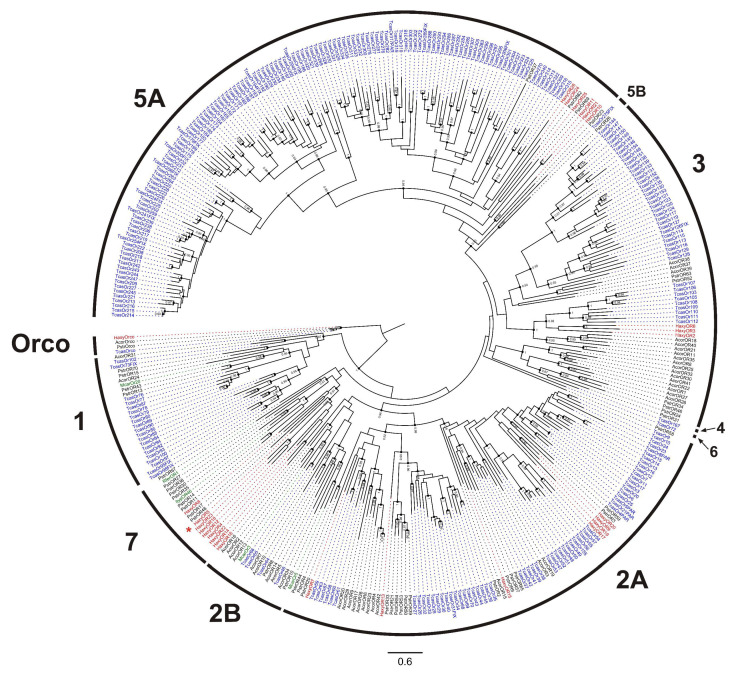
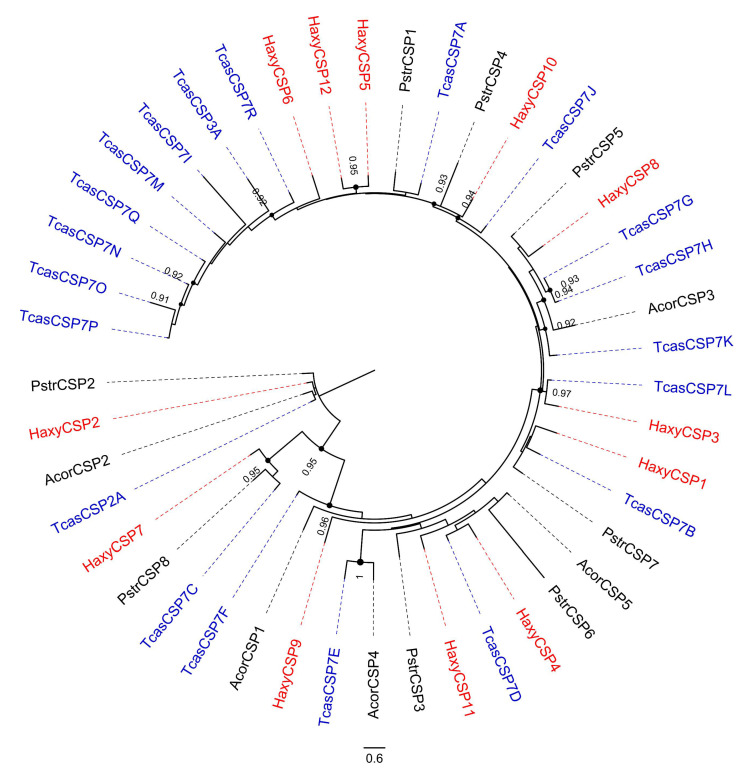
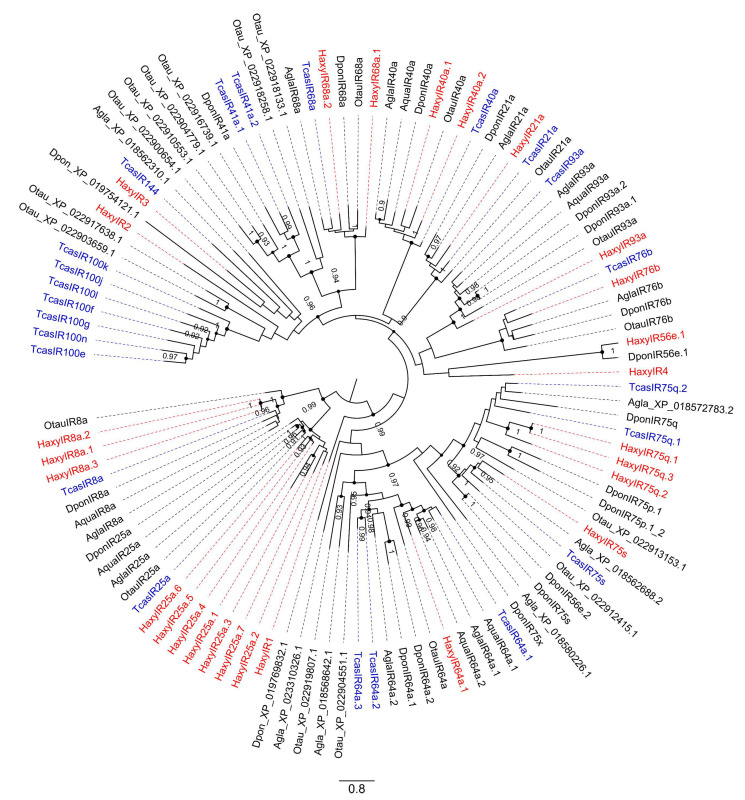
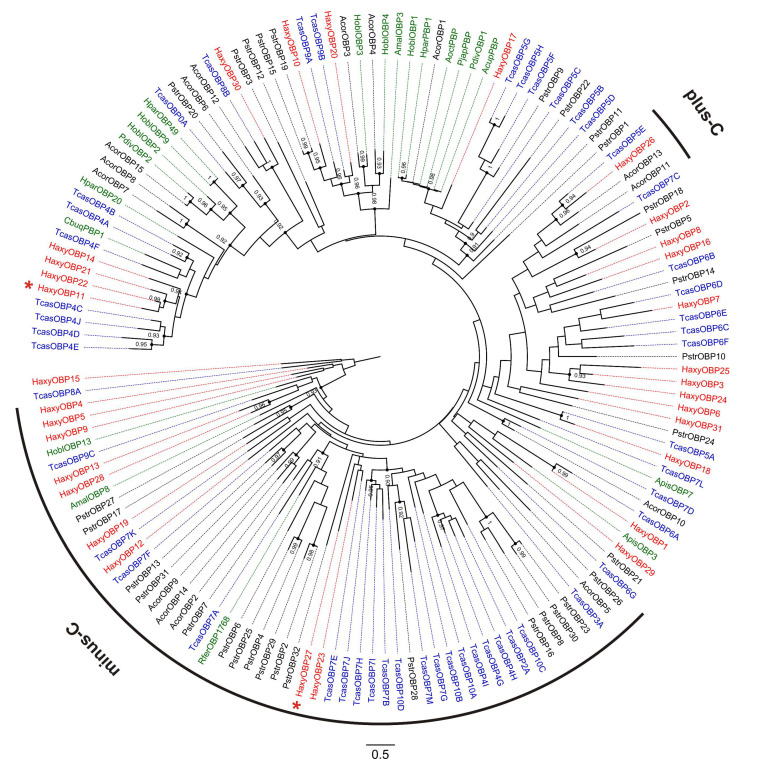
In predatory ladybirds (Coleoptera: Coccinellidae), antennae are important for chemosensory reception used during food and mate location, and for finding a suitable oviposition habitat. Based on NextSeq 550 Illumina sequencing, we assembled the antennal transcriptome of mated (Pallas) (Coleoptera: Coccinellidae) males and females and described the first chemosensory gene repertoire expressed in this species. We annotated candidate chemosensory sequences encoding 26 odorant receptors (including the coreceptor, Orco), 17 gustatory receptors, 27 ionotropic receptors, 31 odorant-binding proteins, 12 chemosensory proteins, and 4 sensory neuron membrane proteins. Maximum-likelihood phylogenetic analyses allowed to assign candidate chemosensory genes to previously described groups in each of these families. Differential expression analysis between males and females revealed low variability between sexes, possibly reflecting the known absence of relevant sexual dimorphism in the structure of the antennae and in the distribution and abundance of the sensilla. However, we revealed significant differences in expression of three chemosensory genes, namely two male-biased odorant-binding proteins and one male-biased odorant receptor, suggesting their possible involvement in pheromone detection. Our data pave the way for improving the understanding of the molecular basis of chemosensory reception in Coccinellidae.
在捕食性瓢虫(鞘翅目:瓢虫科)中,触角对于在寻找食物和配偶以及寻找合适的产卵栖息地时所使用的化学感应接收非常重要。基于NextSeq 550 Illumina测序技术,我们组装了交配后的七星瓢虫(鞘翅目:瓢虫科)雄虫和雌虫的触角转录组,并描述了该物种中首次表达的化学感应基因库。我们注释了编码26种气味受体(包括共受体Orco)、17种味觉受体、27种离子型受体、31种气味结合蛋白、12种化学感应蛋白和4种感觉神经元膜蛋白的候选化学感应序列。最大似然系统发育分析能够将候选化学感应基因归入这些家族中先前描述的类别。雌雄之间的差异表达分析显示两性之间的变异性较低,这可能反映出触角结构以及感器分布和丰度中已知不存在相关的两性异形。然而,我们发现三种化学感应基因的表达存在显著差异,即两种雄性偏向的气味结合蛋白和一种雄性偏向的气味受体,这表明它们可能参与信息素检测。我们的数据为增进对瓢虫科化学感应接收分子基础的理解铺平了道路。