Université de Bordeaux, INRAE, Bordeaux INP, NutriNeuro, 146 rue Léo Saignat, 33076 Bordeaux, France.
Abyss Ingredients, 56850 Caudan, France.
Nutrients. 2021 Mar 2;13(3):824. doi: 10.3390/nu13030824.
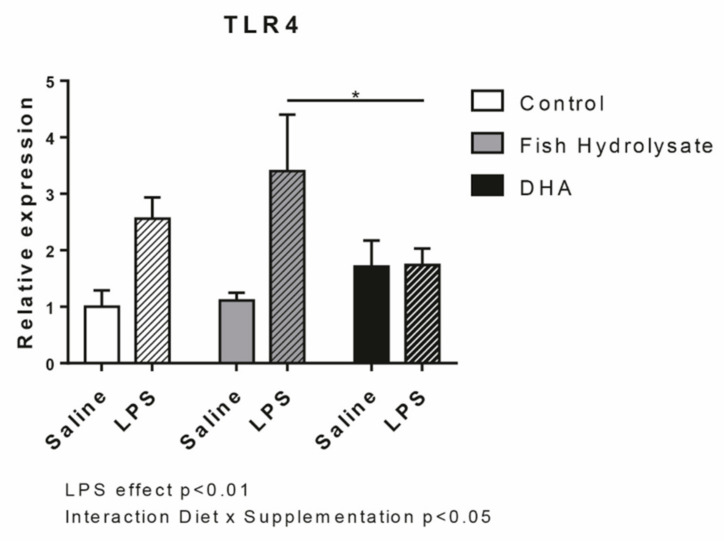
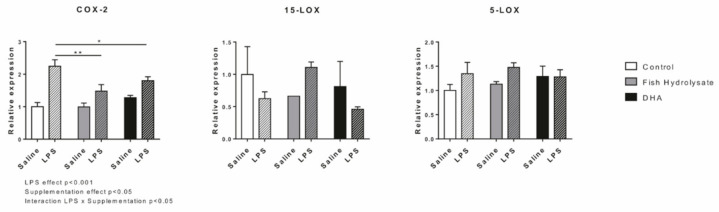
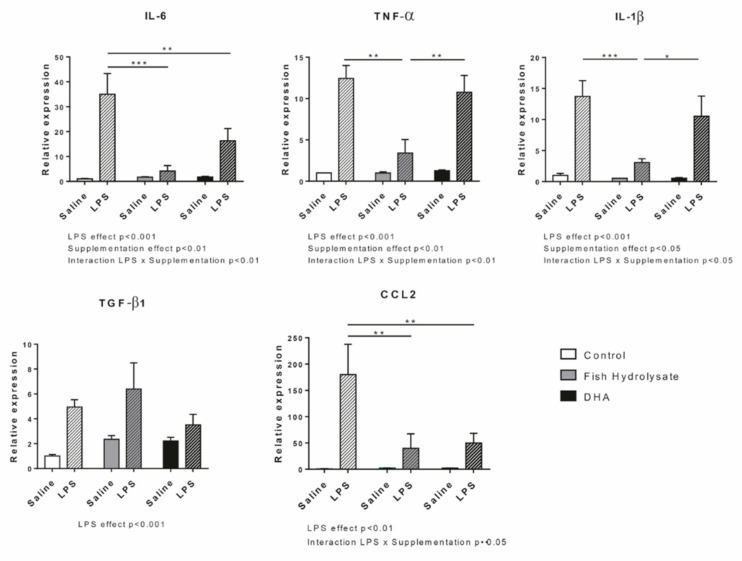
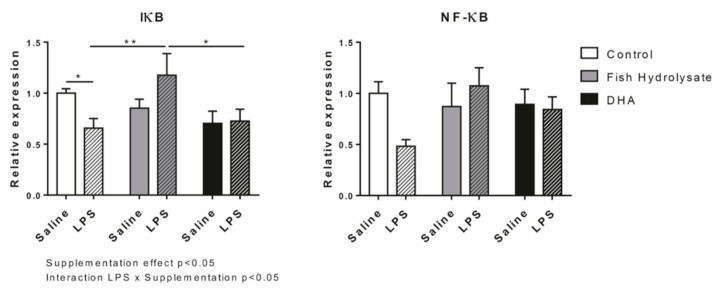
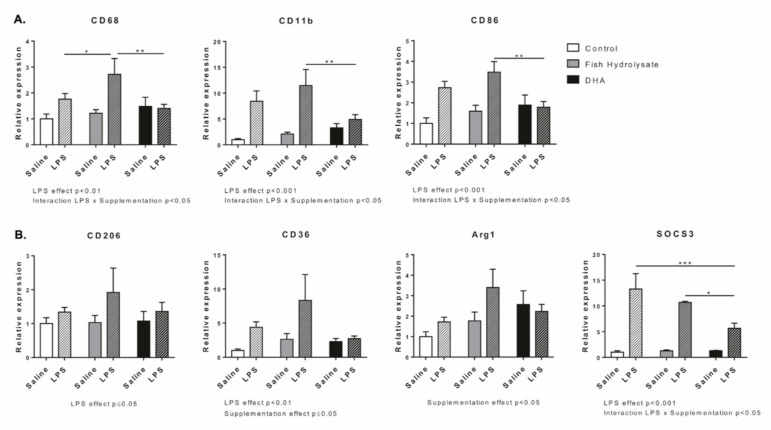
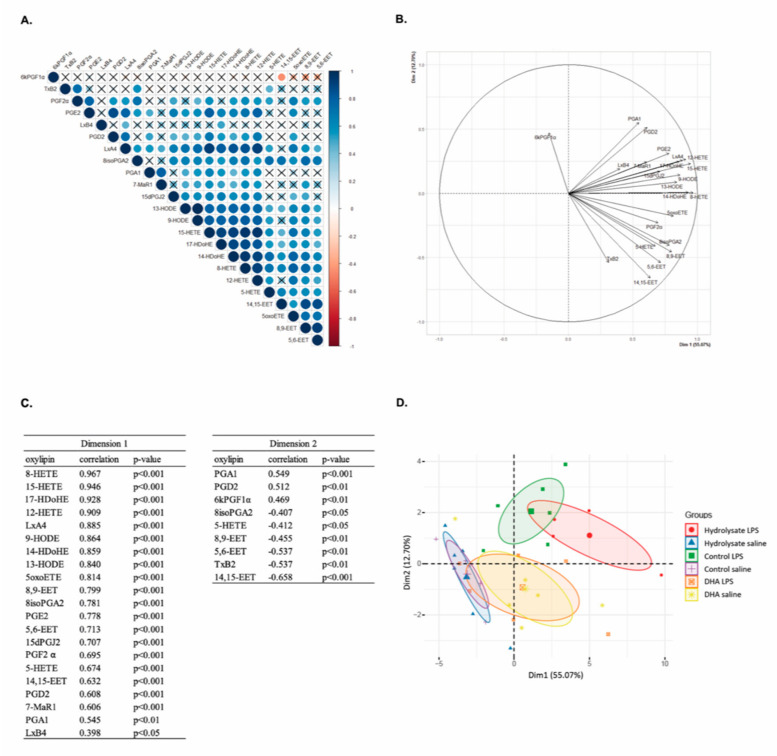
Neuroinflammation constitutes a normal part of the brain immune response orchestrated by microglial cells. However, a sustained and uncontrolled production of proinflammatory factors together with microglial activation contribute to the onset of a chronic low-grade inflammation, leading to neuronal damage and cognitive as well as behavioral impairments. Hence, limiting brain inflammatory response and improving the resolution of inflammation could be particularly of interest to prevent these alterations. Dietary n-3 long chain polyunsaturated fatty acids (LC-PUFAs) and low molecular weight peptides are good candidates because of their immunomodulatory and proresolutive properties. These compounds are present in a fish hydrolysate derived from marine-derived byproducts. In this study, we compared the effect of an 18-day supplementation with this fish hydrolysate to a supplementation with docosahexaenoic acid (DHA) on lipopolysaccharide (LPS)-induced inflammation in mice. In response to peripherally injected LPS, the fish hydrolysate supplementation decreased the hippocampal mRNA expression of the proinflammatory cytokines IL-6 ( < 0.001), IL-1β ( = 0.0008) and TNF-α ( < 0.0001), whereas the DHA supplementation reduced only the expression of IL-6 ( = 0.004). This decline in proinflammatory cytokine expressions was associated with an increase in the protein expression of IκB ( = 0.014 and = 0.0054 as compared to the DHA supplementation and control groups, respectively) and to a modulation of microglial activation markers in the hippocampus. The beneficial effects of the fish hydrolysate could be due in part to the switch of the hippocampal oxylipin profile towards a more anti-inflammatory profile as compared to the DHA supplementation. Thus, the valorization of fish byproducts seems very attractive to prevent and counteract neuroinflammation.
神经炎症构成了由小胶质细胞协调的大脑免疫反应的正常部分。然而,促炎因子的持续和不受控制的产生以及小胶质细胞的激活导致慢性低度炎症的发生,导致神经元损伤以及认知和行为障碍。因此,限制大脑炎症反应并改善炎症消退可能特别有助于预防这些改变。膳食 n-3 长链多不饱和脂肪酸 (LC-PUFA) 和低分子量肽是很好的候选物,因为它们具有免疫调节和促分解特性。这些化合物存在于源自海洋副产物的鱼水解物中。在这项研究中,我们比较了用这种鱼水解物补充 18 天与用二十二碳六烯酸 (DHA) 补充对 LPS 诱导的小鼠炎症的影响。在对 LPS 进行外周注射后,鱼水解物补充降低了海马中促炎细胞因子 IL-6( < 0.001)、IL-1β( = 0.0008) 和 TNF-α( < 0.0001) 的 mRNA 表达,而 DHA 补充仅降低了 IL-6 的表达( = 0.004)。促炎细胞因子表达的这种下降与 IκB 蛋白表达的增加相关(与 DHA 补充和对照组相比,分别为 = 0.014 和 = 0.0054),以及海马中小胶质细胞激活标志物的调节。鱼水解物的有益作用可能部分归因于与 DHA 补充相比,海马中氧化脂谱向更抗炎谱的转变。因此,对鱼副产物的利用似乎非常有吸引力,可以预防和对抗神经炎症。