Ferrantelli Flavia, Chiozzini Chiara, Manfredi Francesco, Giovannelli Andrea, Leone Patrizia, Federico Maurizio
National Center for Global Health, Istituto Superiore di Sanità, Viale Regina Elena 299, 00161 Rome, Italy.
National Center for Animal Experimentation and Welfare, Istituto Superiore di Sanità, Viale Regina Elena 299, 00161 Rome, Italy.
Vaccines (Basel). 2021 Mar 10;9(3):240. doi: 10.3390/vaccines9030240.
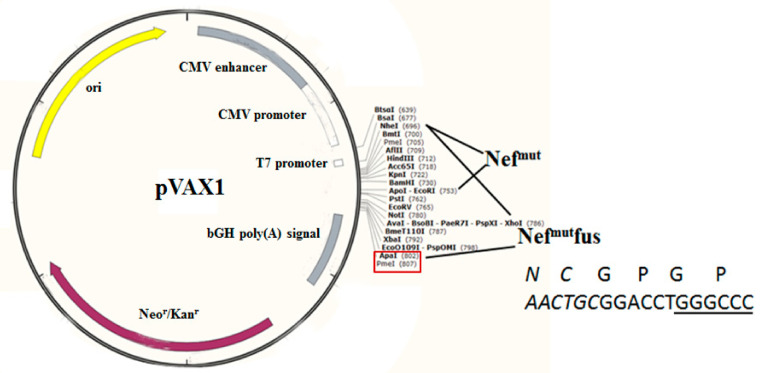
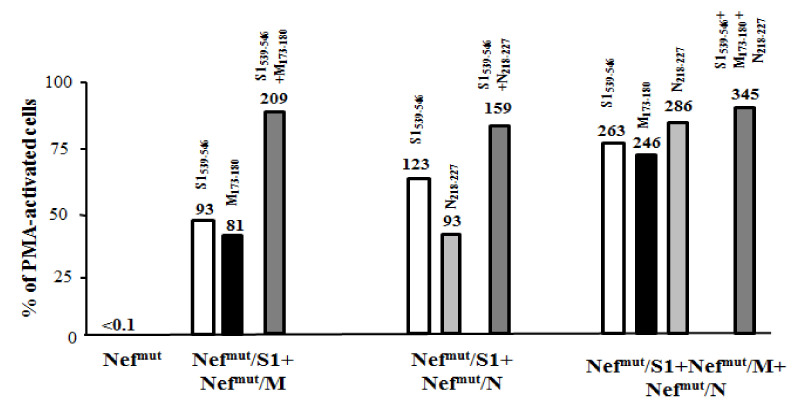
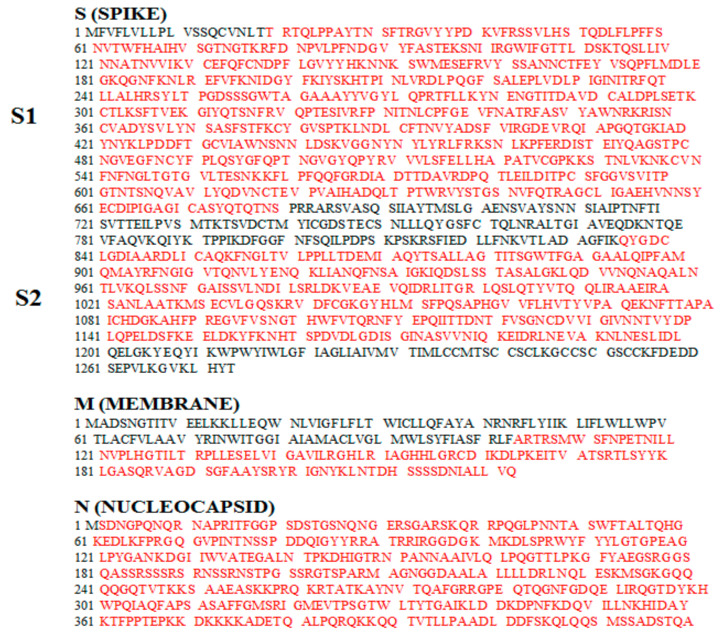
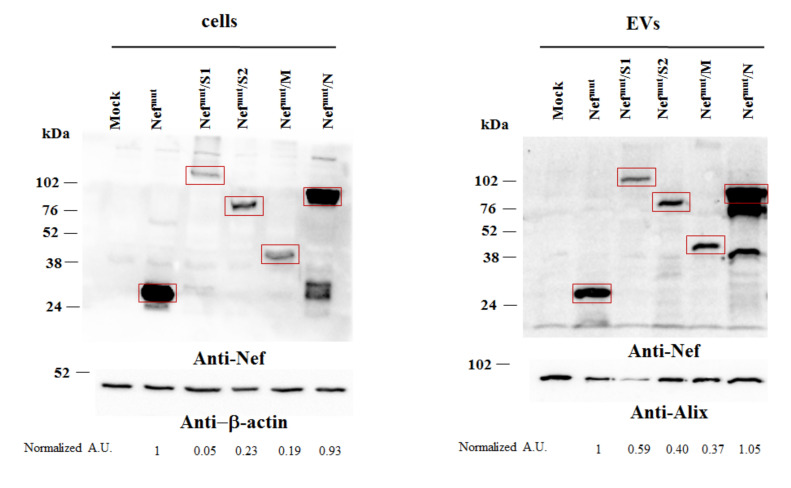
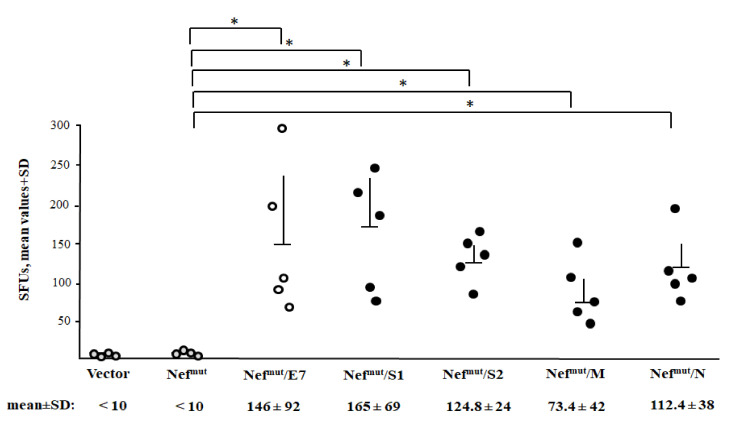
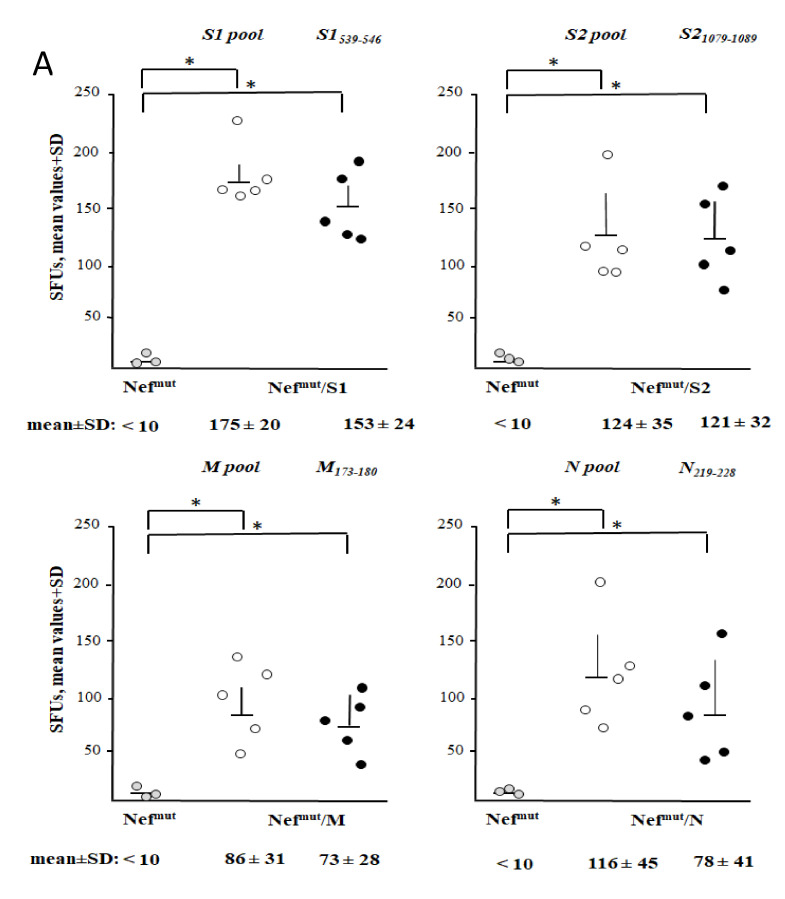
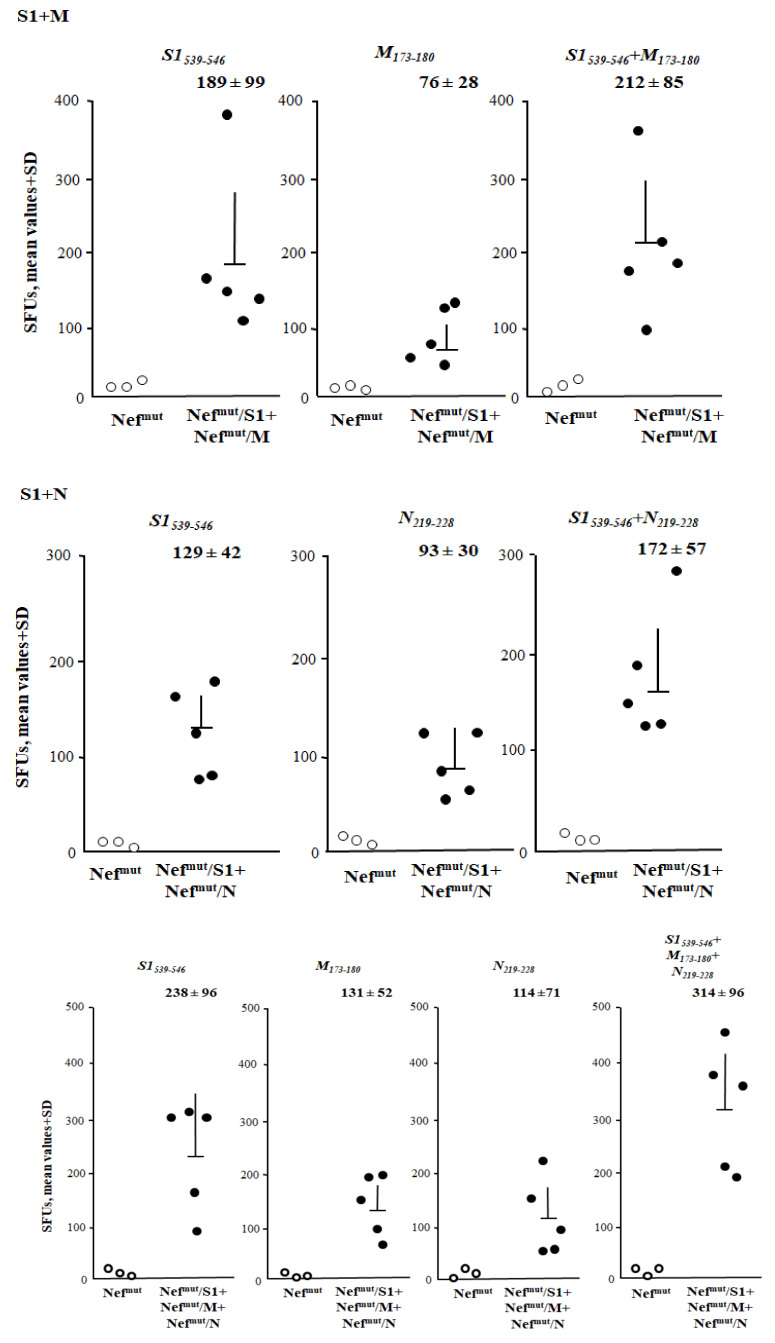
Most advanced vaccines against severe acute respiratory syndrome coronavirus (SARS-CoV)-2 are designed to induce antibodies against spike (S) protein. Differently, we developed an original strategy to induce CD8 T cytotoxic lymphocyte (CTL) immunity based on in vivo engineering of extracellular vesicles (EVs). This is a new vaccination approach based on intramuscular injection of DNA expression vectors coding for a biologically inactive HIV-1 Nef protein (Nef) with an unusually high efficiency of incorporation into EVs, even when foreign polypeptides are fused to its C-terminus. Nanovesicles containing Nef-fused antigens released by muscle cells can freely circulate into the body and are internalized by antigen-presenting cells. Therefore, EV-associated antigens can be cross-presented to prime antigen-specific CD8 T-cells. To apply this technology to a strategy of anti-SARS-CoV-2 vaccine, we designed DNA vectors expressing the products of fusion between Nef and different viral antigens, namely N- and C-terminal moieties of S (referred to as S1 and S2), M, and N. We provided evidence that all fusion products are efficiently uploaded in EVs. When the respective DNA vectors were injected in mice, a strong antigen-specific CD8 T cell immunity became detectable in spleens and, most important, in lung airways. Co-injection of DNA vectors expressing the diverse SARS-CoV-2 antigens resulted in additive immune responses in both spleen and lungs. Hence, DNA vectors expressing Nef-based fusion proteins can be proposed for new anti-SARS-CoV-2 vaccine strategies.
大多数针对严重急性呼吸综合征冠状病毒2(SARS-CoV-2)的先进疫苗旨在诱导针对刺突(S)蛋白的抗体。与之不同的是,我们基于细胞外囊泡(EVs)的体内工程开发了一种诱导CD8 T细胞毒性淋巴细胞(CTL)免疫的原创策略。这是一种基于肌肉注射编码无生物活性HIV-1 Nef蛋白(Nef)的DNA表达载体的新型疫苗接种方法,即使将外源多肽融合到其C末端,该载体也能以异常高的效率掺入EVs。肌肉细胞释放的含有Nef融合抗原的纳米囊泡可以在体内自由循环并被抗原呈递细胞内化。因此,与EV相关的抗原可以交叉呈递以启动抗原特异性CD8 T细胞。为了将该技术应用于抗SARS-CoV-2疫苗策略,我们设计了表达Nef与不同病毒抗原融合产物的DNA载体,即S蛋白的N端和C端部分(分别称为S1和S2)、M蛋白和N蛋白。我们提供的证据表明,所有融合产物都能有效地加载到EVs中。当将相应的DNA载体注射到小鼠体内时,在脾脏中,最重要的是在肺气道中,都能检测到强烈的抗原特异性CD8 T细胞免疫。共注射表达不同SARS-CoV-2抗原的DNA载体在脾脏和肺中均产生了累加的免疫反应。因此,表达基于Nef的融合蛋白的DNA载体可用于新的抗SARS-CoV-2疫苗策略。