School of Life Sciences, Joseph Banks Laboratories, University of Lincoln, Lincoln LN6 7DL, UK.
Ciana Therapeutics, Ved Hegnet 2, 2960 Rungsted Kyst, Copenhagen, Denmark.
Int J Mol Sci. 2021 Mar 10;22(6):2809. doi: 10.3390/ijms22062809.
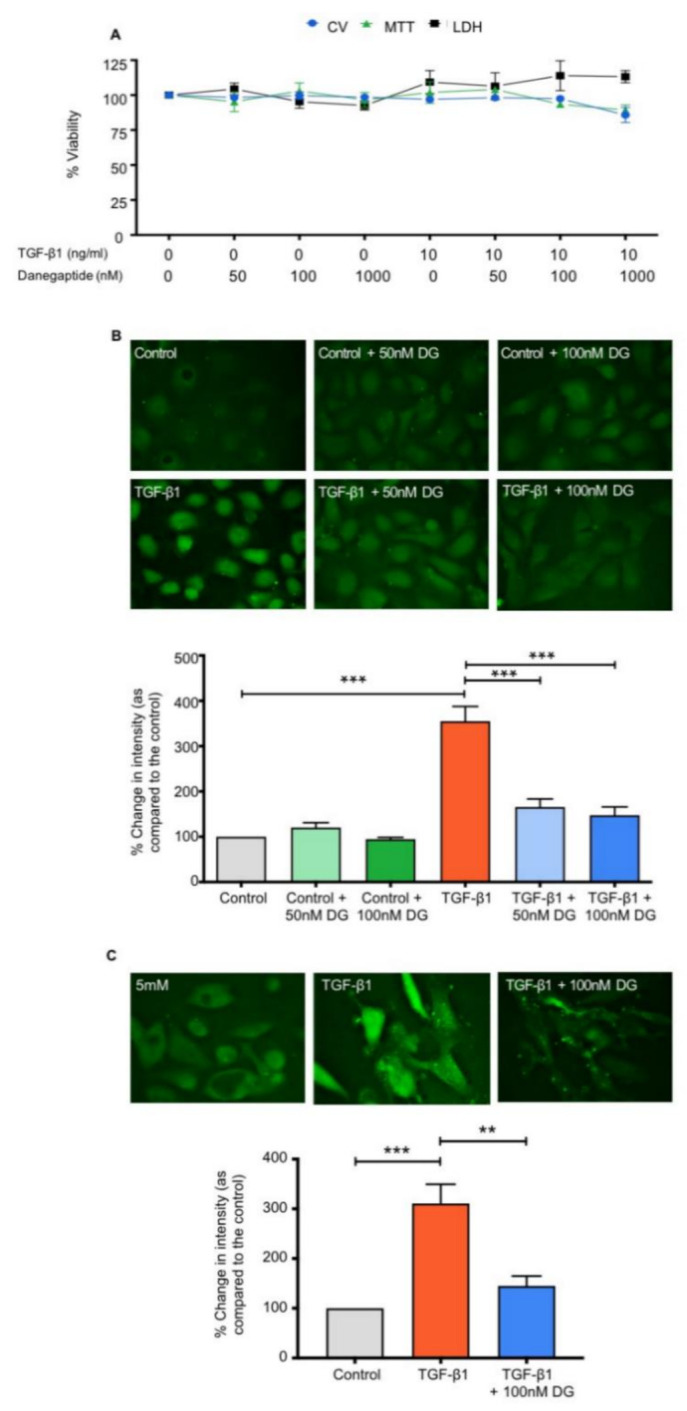
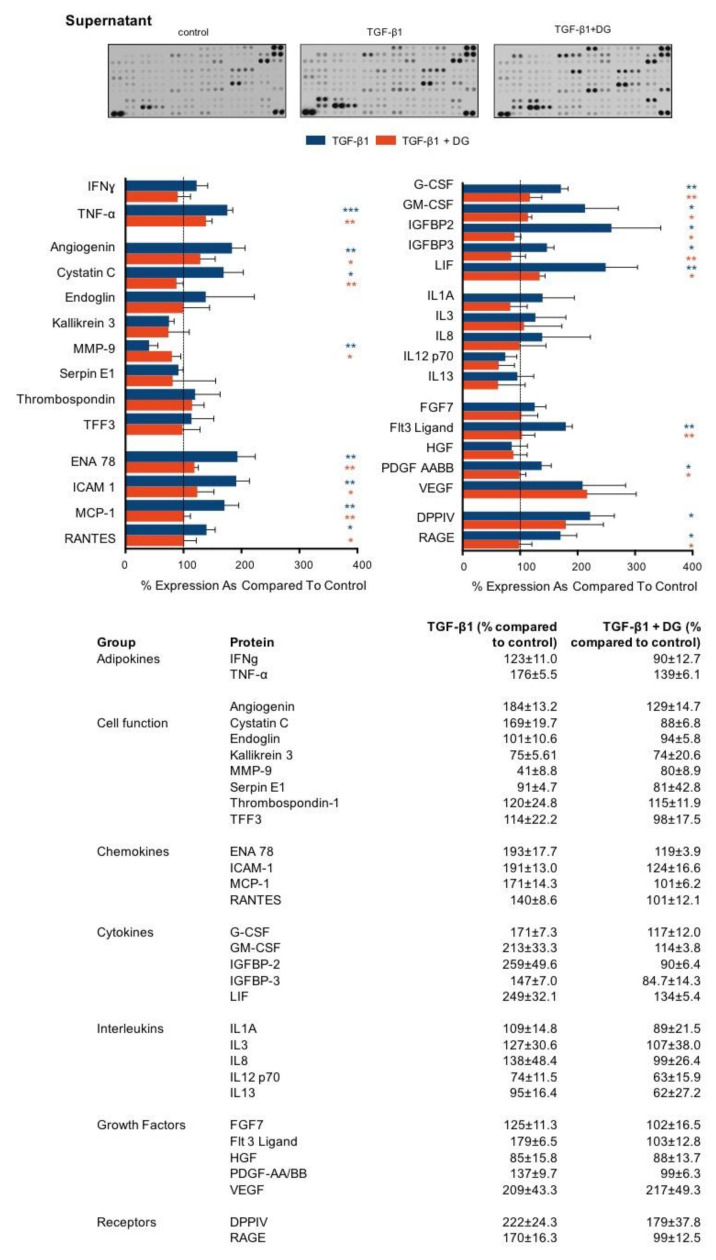
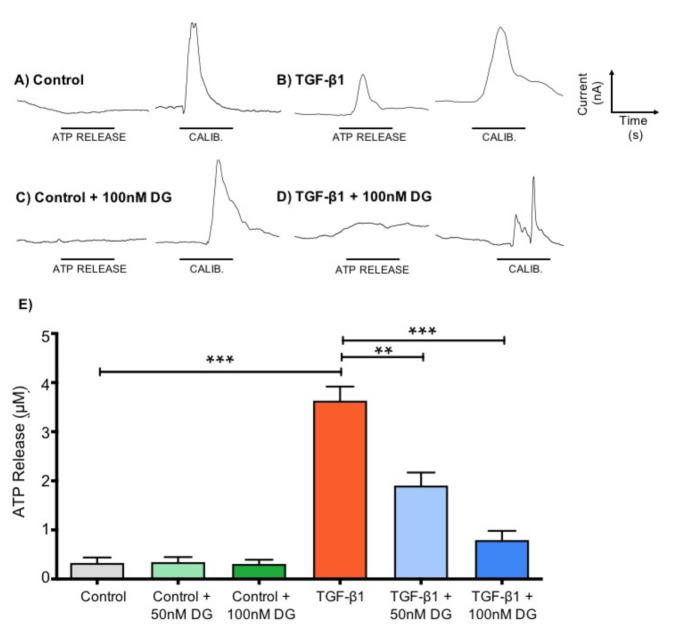
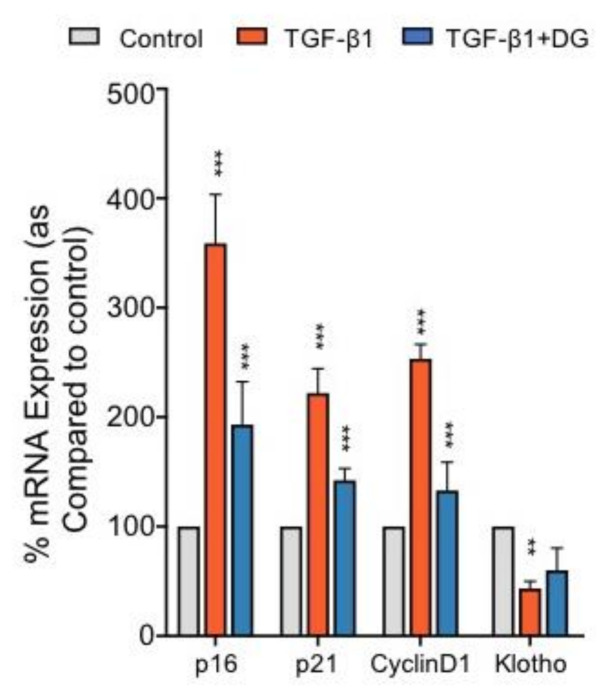
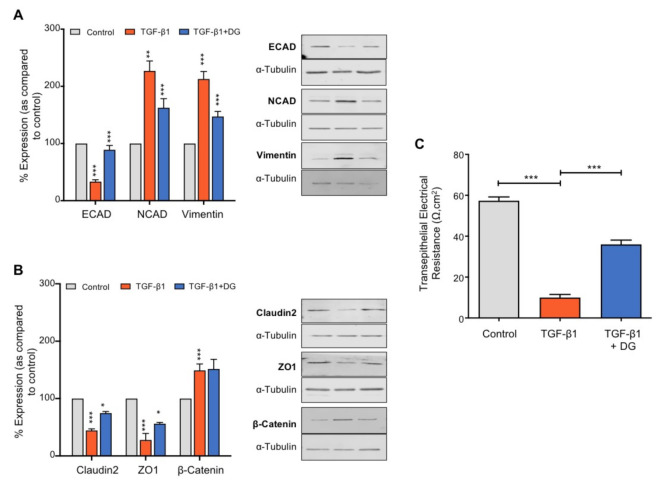
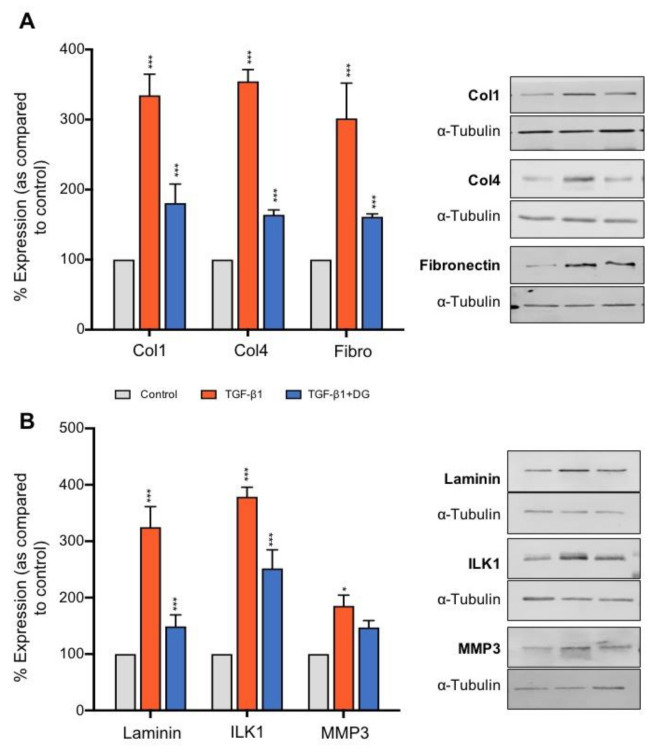
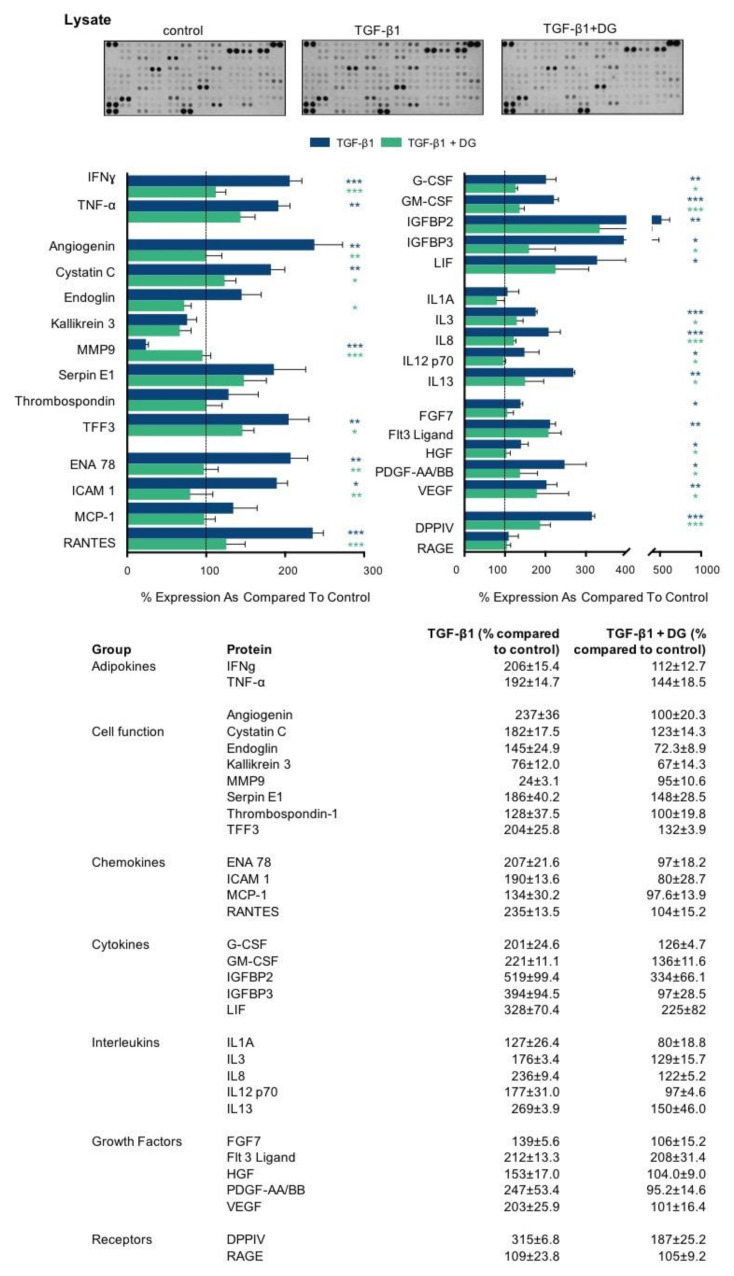
Chronic kidney disease (CKD) is a global health problem associated with a number of comorbidities. Recent evidence implicates increased hemichannel-mediated release of adenosine triphosphate (ATP) in the progression of tubulointerstitial fibrosis, the main underlying pathology of CKD. Here, we evaluate the effect of danegaptide on blocking hemichannel-mediated changes in the expression and function of proteins associated with disease progression in tubular epithelial kidney cells. Primary human proximal tubule epithelial cells (hPTECs) were treated with the beta1 isoform of the pro-fibrotic cytokine transforming growth factor (TGFβ1) ± danegaptide. qRT-PCR and immunoblotting confirmed mRNA and protein expression, whilst a cytokine antibody array assessed the expression/secretion of proinflammatory and profibrotic cytokines. Carboxyfluorescein dye uptake and ATP biosensing measured hemichannel activity and ATP release, whilst transepithelial electrical resistance was used to assess paracellular permeability. Danegaptide negated carboxyfluorescein dye uptake and ATP release and protected against protein changes associated with tubular injury. Blocking Cx43-mediated ATP release was paralleled by partial restoration of the expression of cell cycle inhibitors, adherens and tight junction proteins and decreased paracellular permeability. Furthermore, danegaptide inhibited TGFβ1-induced changes in the expression and secretion of key adipokines, cytokines, chemokines, growth factors and interleukins. The data suggest that as a gap junction modulator and hemichannel blocker, danegaptide has potential in the future treatment of CKD.
慢性肾脏病(CKD)是一个全球性的健康问题,与许多合并症有关。最近的证据表明,三磷酸腺苷(ATP)的半通道介导释放增加与 CKD 的主要潜在病理学——肾小管间质纤维化的进展有关。在这里,我们评估了达那格肽对阻断半通道介导的与疾病进展相关的蛋白质表达和功能变化的影响,这些蛋白质在肾小管上皮细胞中。用纤维化细胞因子转化生长因子(TGFβ1)的β1 同工型处理原代人近端肾小管上皮细胞(hPTEC)±达那格肽。qRT-PCR 和免疫印迹证实了 mRNA 和蛋白质的表达,而细胞因子抗体阵列评估了促炎和促纤维化细胞因子的表达/分泌。羧基荧光素染料摄取和 ATP 生物传感测量半通道活性和 ATP 释放,而跨上皮电阻用于评估细胞旁通透性。达那格肽消除了羧基荧光素染料摄取和 ATP 释放,并防止了与肾小管损伤相关的蛋白质变化。阻断 Cx43 介导的 ATP 释放与细胞周期抑制剂、黏附连接和紧密连接蛋白的表达部分恢复以及细胞旁通透性降低平行。此外,达那格肽抑制了 TGFβ1 诱导的关键脂肪因子、细胞因子、趋化因子、生长因子和白细胞介素表达和分泌的变化。数据表明,作为间隙连接调节剂和半通道阻断剂,达那格肽在未来的 CKD 治疗中有潜力。