Carmona Andres, Guerrero Fatima, Jimenez Maria Jose, Ariza Francisco, Agüera Marisa L, Obrero Teresa, Noci Victoria, Muñoz-Castañeda Juan Rafael, Rodríguez Mariano, Soriano Sagrario, Moreno Juan Antonio, Martin-Malo Alejandro, Aljama Pedro
Maimonides Biomedical Research Institute of Cordoba (IMIBIC), Reina Sofia University Hospital, Córdoba, Spain.
Department of Medicine, University of Córdoba, Córdoba, Spain.
Front Cell Dev Biol. 2020 Aug 6;8:739. doi: 10.3389/fcell.2020.00739. eCollection 2020.
Patients with chronic kidney disease (CKD) show a chronic microinflammatory state that promotes premature aging of the vascular system. Currently, there is a growth interest in the search of novel biomarkers related to vascular aging to identify CKD patients at risk to develop cardiovascular complications.
Forty-five CKD patients were divided into three groups according to CKD-stages [predialysis (CKD4-5), hemodialysis (HD) and kidney transplantation (KT)]. In all these patients, we evaluated the quantitative changes in microRNAs (miRNAs), CD14+C16++ monocytes number, and microvesicles (MV) concentration [both total MV, and monocytes derived MV (CD14+Annexin V+CD16+)]. To understand the molecular mechanism involved in senescence and osteogenic transdifferentation of vascular smooth muscle cells (VSMC), these cells were stimulated with MV isolated from THP-1 monocytes treated with uremic toxins (txMV).
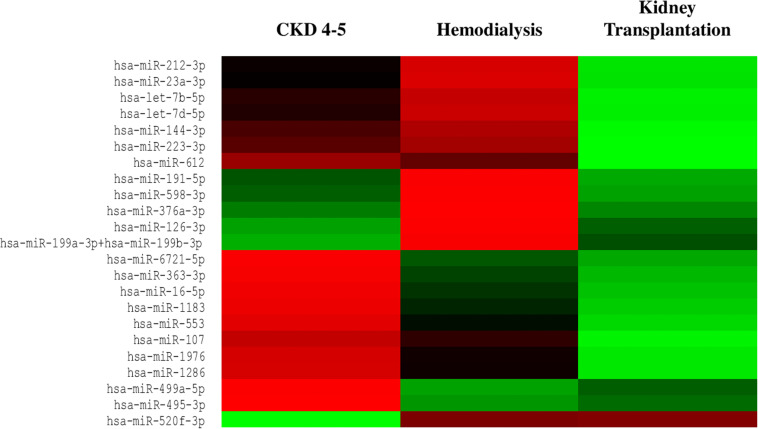
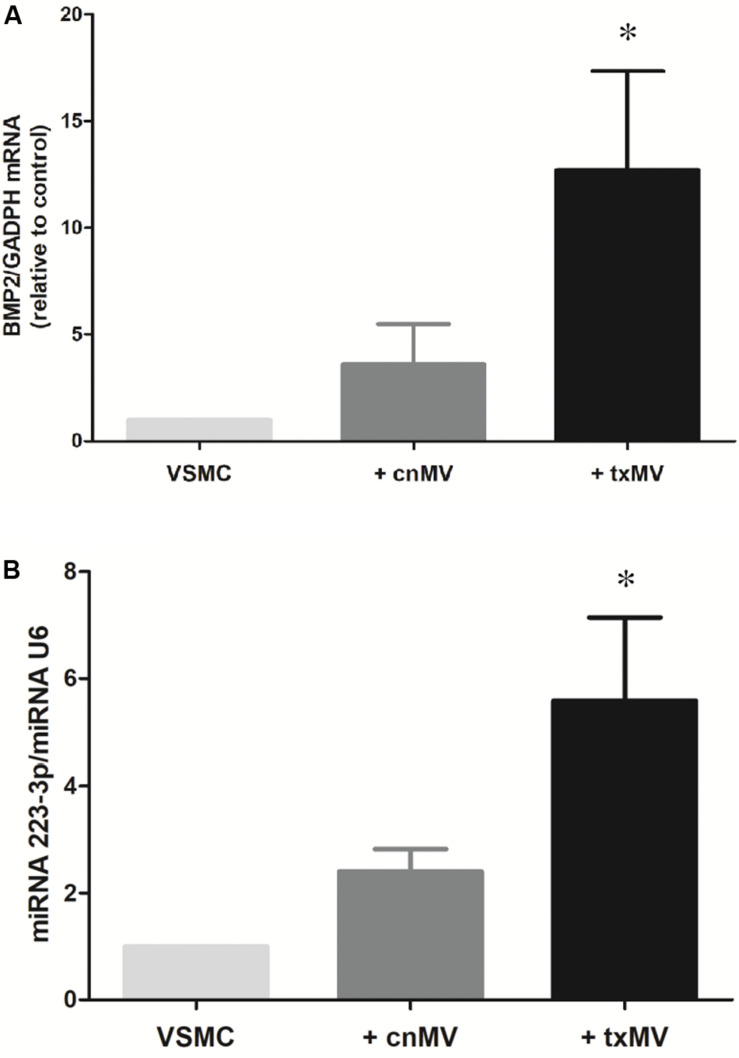
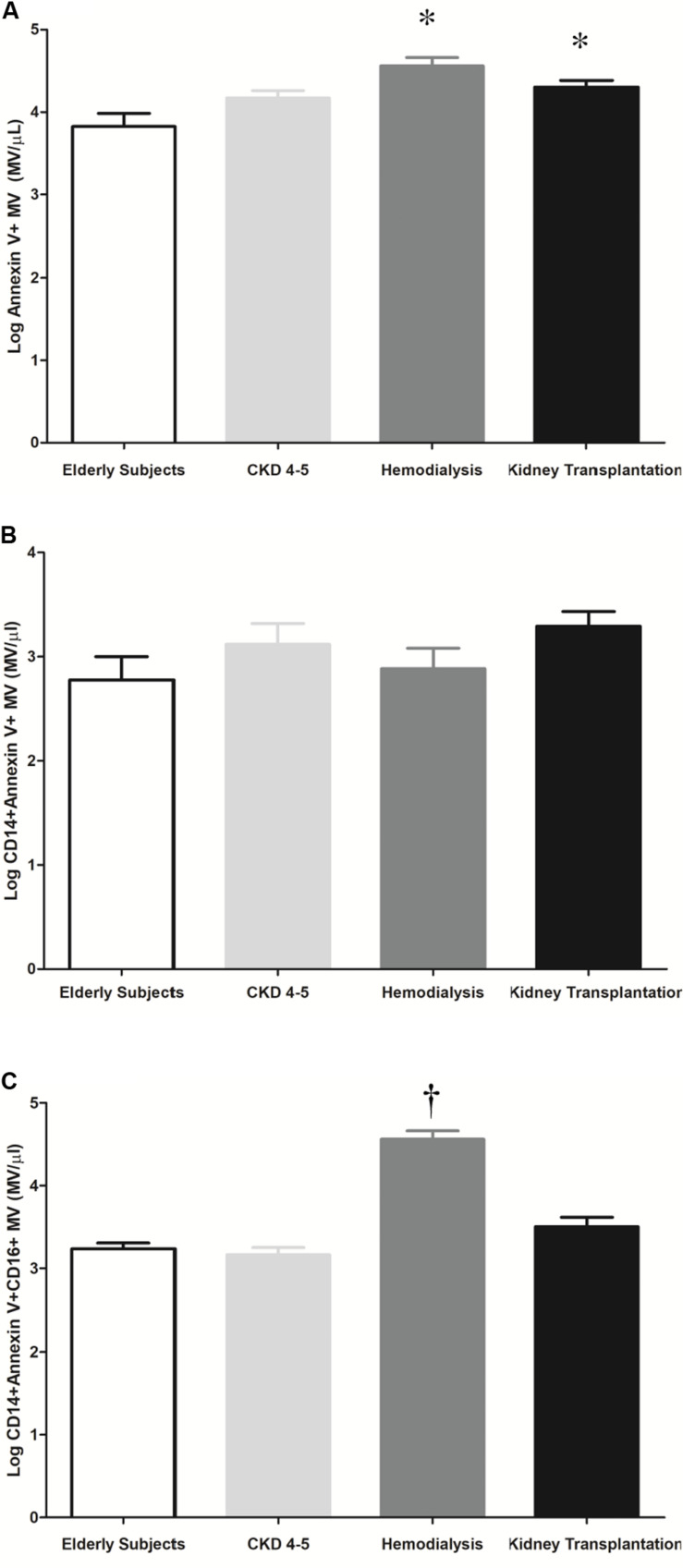
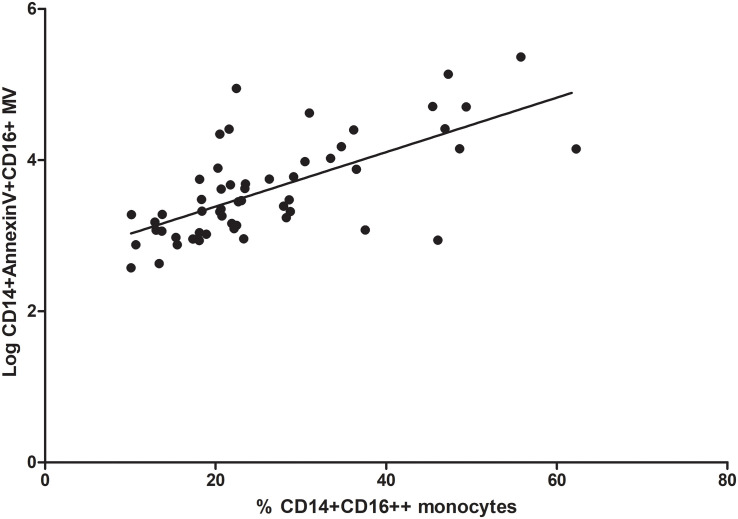
A miRNA array was used to investigate serum miRNAs profile in CKD patients. Reduced expression levels of miRNAs-126-3p, -191-5p and -223-3p were observed in CKD4-5 and HD patients as compared to KT. This down-regulation disappeared after KT, even when lower glomerular filtration rates (eGFR) persisted. Moreover, HD patients had higher percentage of proinflammatory monocytes (CD14+CD16++) and MV derived of proinflammatory monocytes (CD14+Annexin V+CD16+) than the other groups. studies showed increased expression of osteogenic markers (BMP2 and miRNA-223-3p), expression of cyclin D1, β-galactosidase activity and VSMC size in those cells treated with txMV.
CKD patients present a specific circulating miRNAs expression profile associated with the microinflammatory state. Furthermore, microvesicles generated by monocytes treated with uremic toxins induce early senescence and osteogenic markers (BMP2 and miRNA-223-3p) in VSMC.
慢性肾脏病(CKD)患者呈现慢性微炎症状态,这种状态会促进血管系统过早衰老。目前,人们对寻找与血管衰老相关的新型生物标志物以识别有发生心血管并发症风险的CKD患者的兴趣与日俱增。
45例CKD患者根据CKD分期分为三组[透析前(CKD4 - 5)、血液透析(HD)和肾移植(KT)]。在所有这些患者中,我们评估了微小RNA(miRNA)的定量变化、CD14 + C16 ++单核细胞数量以及微泡(MV)浓度[包括总MV和单核细胞衍生的MV(CD14 +膜联蛋白V + CD16 +)]。为了解血管平滑肌细胞(VSMC)衰老和成骨转分化所涉及的分子机制,用从经尿毒症毒素处理的THP - 1单核细胞中分离出的MV刺激这些细胞。
使用miRNA阵列研究CKD患者的血清miRNA谱。与KT患者相比,在CKD4 - 5和HD患者中观察到miRNAs - 126 - 3p、 - 191 - 5p和 - 223 - 3p的表达水平降低。即使较低的肾小球滤过率(eGFR)持续存在,肾移植后这种下调也消失了。此外,HD患者的促炎单核细胞(CD14 + CD16 ++)和促炎单核细胞衍生的MV(CD14 +膜联蛋白V + CD16 +)百分比高于其他组。研究表明,在用尿毒症毒素处理的细胞中,成骨标志物(BMP2和miRNA - 223 - 3p)的表达增加、细胞周期蛋白D1的表达增加、β - 半乳糖苷酶活性增加以及VSMC大小增加。
CKD患者呈现出与微炎症状态相关的特定循环miRNA表达谱。此外,经尿毒症毒素处理的单核细胞产生的微泡可诱导VSMC早期衰老和成骨标志物(BMP2和miRNA - 223 - 3p)。