Collaboration for Evidence, Research and Impact in Public Health, School of Population Health, Curtin University, Bentley 6102, Australia.
College of Medicine & Health, University of Exeter, Devon EX4 4PY, UK.
Int J Environ Res Public Health. 2021 Mar 3;18(5):2469. doi: 10.3390/ijerph18052469.
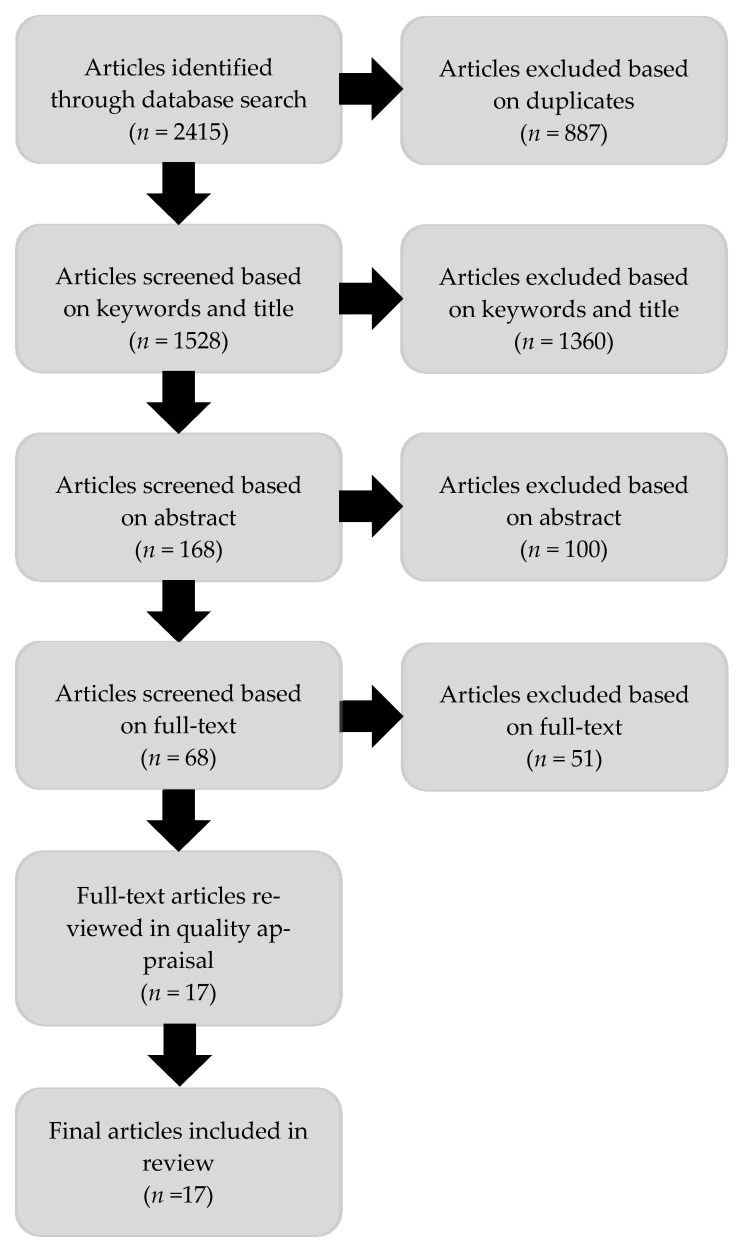
Migrant health has been identified as one of the most pressing issues of the 21st century. Migration experiences are influenced by gender and gender norms and have important implications for the sexual health of migrant women. This systematic review explored socioecological factors influencing sexual health experiences and health outcomes of migrant Asian women living in "Western" high-income countries. PRISMA guidelines were followed and this study was registered with PROSPERO. Five academic databases were searched for peer-reviewed articles published between 2000 and 2019. Of 2415 studies retrieved, 17 met the selection criteria: 12 qualitative, 4 quantitative, and 1 mixed-methods study. The four levels of Bronfenbrenner's socioecological model were applied to examine the individual, interpersonal, institutional, and societal factors of influence. Most studies ( = 13) reported individual level factors, focusing on knowledge and use of contraceptives. At a societal level, host country sociocultural factors, including gender and cultural norms, influenced knowledge, ability to access and utilise contraceptives, and access to health services. Findings suggest that the public health policy, practice, and research to improve the sexual health of migrant women requires greater consideration of the intersecting factors of gender, culture, and the migration process.
移民健康已被确定为 21 世纪最紧迫的问题之一。移民经历受到性别和性别规范的影响,并对移民妇女的性健康产生重要影响。本系统评价探讨了影响生活在“西方”高收入国家的亚洲移民妇女性健康体验和健康结果的社会生态因素。本研究遵循 PRISMA 指南,并在 PROSPERO 上进行了注册。在五个学术数据库中搜索了 2000 年至 2019 年期间发表的同行评议文章。在检索到的 2415 项研究中,有 17 项符合选择标准:12 项定性研究、4 项定量研究和 1 项混合方法研究。应用布伦芬布伦纳的社会生态模型的四个层次来考察影响的个体、人际、制度和社会因素。大多数研究(n=13)报告了个体层面的因素,重点是对避孕药具的知识和使用。在社会层面,东道国的社会文化因素,包括性别和文化规范,影响了知识、获取和使用避孕药具的能力以及获得卫生服务的机会。研究结果表明,改善移民妇女性健康的公共卫生政策、实践和研究需要更多地考虑性别、文化和移民过程的交叉因素。