Dziąbowska-Grabias Katarzyna, Sztanke Małgorzata, Zając Przemysław, Celejewski Michał, Kurek Katarzyna, Szkutnicki Stanisław, Korga Patryk, Bulikowski Włodzimierz, Sztanke Krzysztof
Department of Gastroenterology, 1st Military Research Hospital, and Polyclinic of Lublin, 20-049 Lublin, Poland.
Department of Medical Chemistry, Medical University of Lublin, 20-093 Lublin, Poland.
Antioxidants (Basel). 2021 Mar 9;10(3):412. doi: 10.3390/antiox10030412.
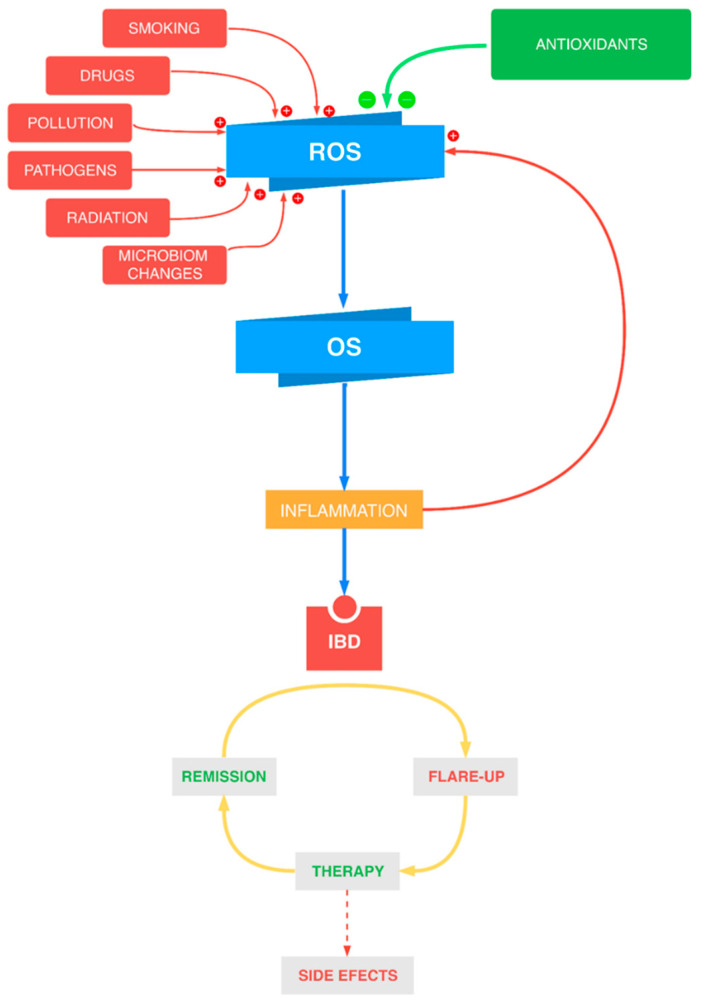
Inflammatory bowel diseases (IBD) are a group of chronic, incurable diseases of the digestive tract, the etiology of which remains unclear to this day. IBD result in significant repercussions on the quality of patients' life. There is a continuous increase in the incidence and prevalence of IBD worldwide, and it is becoming a significant public health burden. Pharmaceuticals commonly used in IBD management, for example, mesalamine, sulfasalazine, corticosteroids, and others, expose patients to diverse, potentially detrimental side effects and frequently do not provide sufficient disease control. The chronic inflammation underlies the etiology of IBD and closely associates with oxidative/nitrosative stress and a vast generation of reactive oxygen/nitrogen species. Relative to this, several substances with antioxidant and anti-inflammatory properties are now intensively researched as possible adjunctive or independent treatment options in IBD. Representatives of several different groups, including natural and chemical compounds will be characterized in this dissertation.
炎症性肠病(IBD)是一组慢性、无法治愈的消化道疾病,其病因至今仍不清楚。IBD对患者的生活质量产生重大影响。全球范围内,IBD的发病率和患病率持续上升,正成为一项重大的公共卫生负担。IBD治疗中常用的药物,如美沙拉嗪、柳氮磺胺吡啶、皮质类固醇等,会使患者面临各种潜在的有害副作用,且往往无法充分控制疾病。慢性炎症是IBD病因的基础,与氧化/亚硝化应激以及大量活性氧/氮物质的产生密切相关。与此相关的是,目前正在深入研究几种具有抗氧化和抗炎特性的物质,将其作为IBD可能的辅助或独立治疗选择。本文将对包括天然化合物和化学化合物在内的几个不同类别的代表物质进行描述。