Laboratory for Molecular Systems Biology, Department of Biochemistry, Stellenbosch University, Private Bag X1, Matieland, Stellenbosch 7602, South Africa.
Focus Area for Human Metabolomics, North-West University, Private Bag X6001, Potchefstroom 2520, South Africa.
Int J Mol Sci. 2021 Mar 18;22(6):3129. doi: 10.3390/ijms22063129.
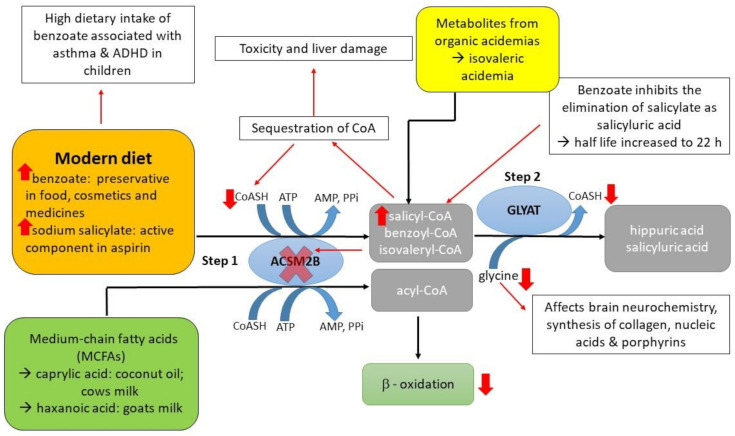
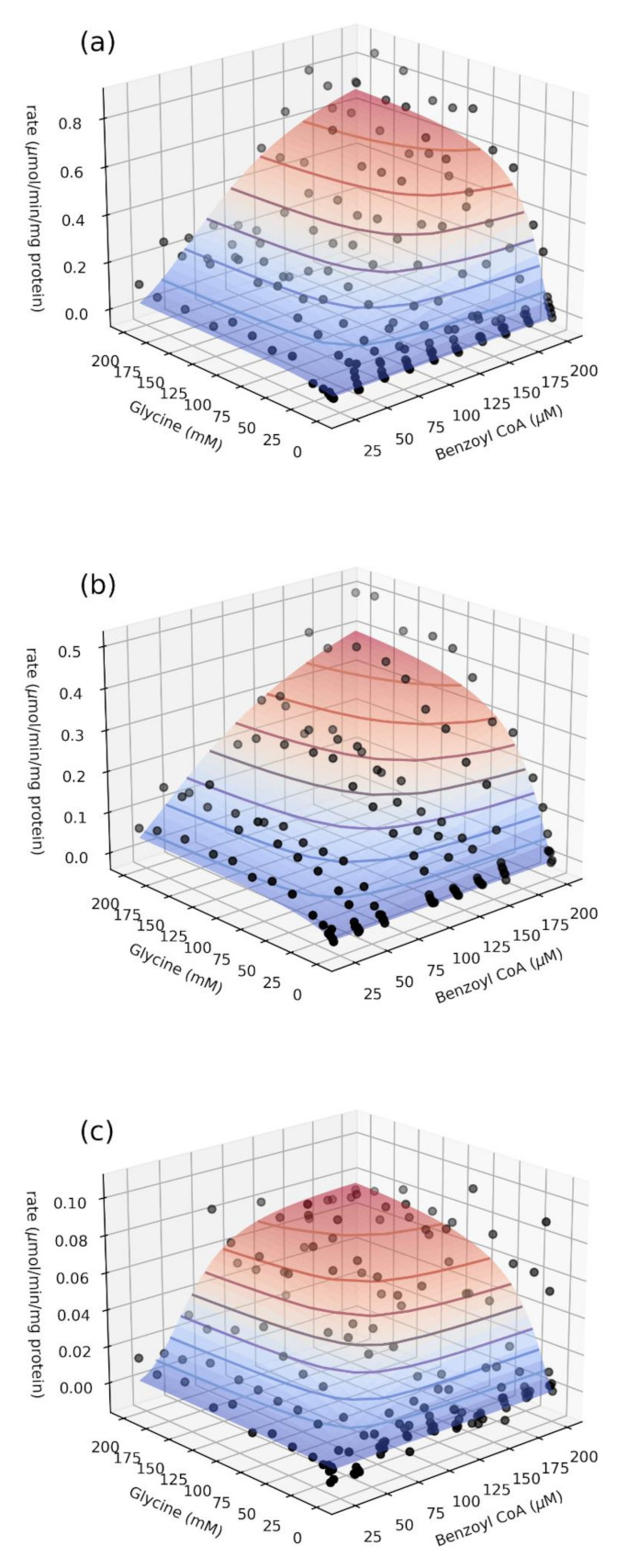
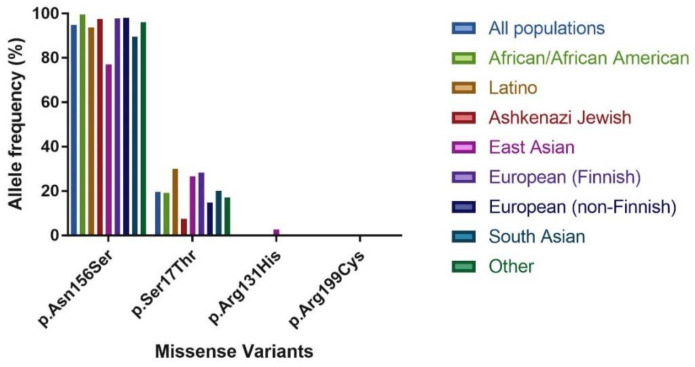
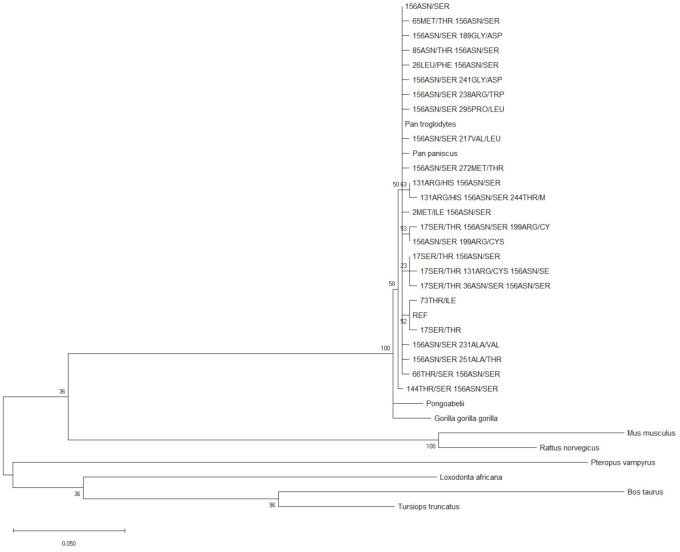
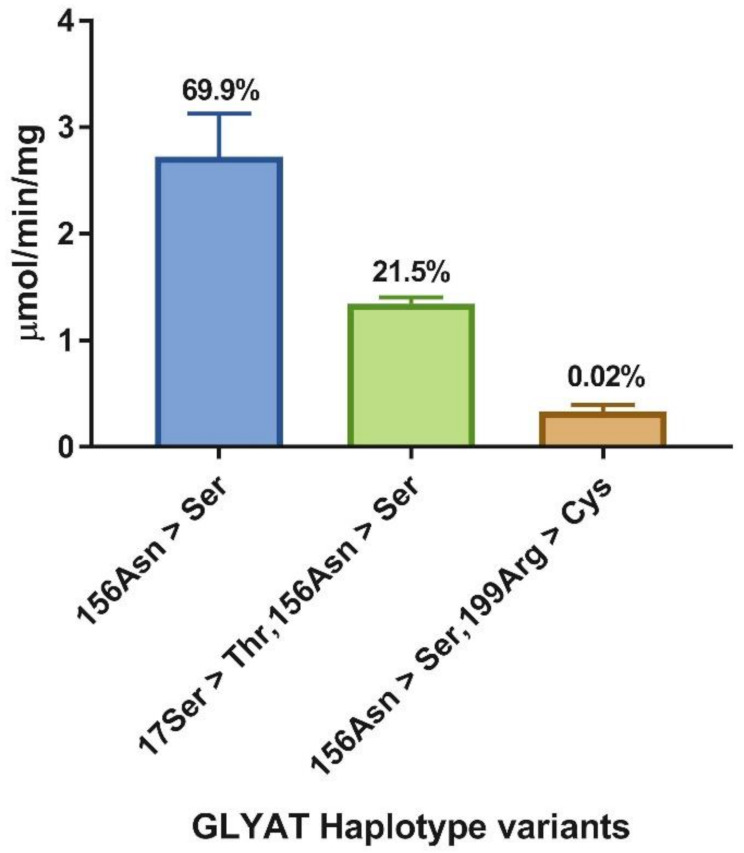
The glycine conjugation pathway in humans is involved in the metabolism of natural substrates and the detoxification of xenobiotics. The interactions between the various substrates in this pathway and their competition for the pathway enzymes are currently unknown. The pathway consists of a mitochondrial xenobiotic/medium-chain fatty acid: coenzyme A (CoA) ligase (ACSM2B) and glycine -acyltransferase (GLYAT). The catalytic mechanism and substrate specificity of both of these enzymes have not been thoroughly characterised. In this study, the level of evolutionary conservation of GLYAT missense variants and haplotypes were analysed. From these data, haplotype variants were selected (156Asn > Ser, [17Ser > Thr,156Asn > Ser] and [156Asn > Ser,199Arg > Cys]) in order to characterise the kinetic mechanism of the enzyme over a wide range of substrate concentrations. The 156Asn > Ser haplotype has the highest frequency and the highest relative enzyme activity in all populations studied, and hence was used as the reference in this study. Cooperative substrate binding was observed, and the kinetic data were fitted to a two-substrate Hill equation. The coding region of the gene was found to be highly conserved and the rare 156Asn > Ser,199Arg > Cys variant negatively affected the relative enzyme activity. Even though the 156Asn > Ser,199Arg > Cys variant had a higher affinity for benzoyl-CoA ( = 61.2 µM), was reduced to 9.8% of the most abundant haplotype 156Asn > Ser ( = 96.6 µM), while the activity of 17Ser > Thr,156Asn > Ser ( = 118 µM) was 73% of 156Asn > Ser. The in vitro kinetic analyses of the effect of the 156Asn > Ser,199Arg > Cys variant on human GLYAT enzyme activity indicated that individuals with this haplotype might have a decreased ability to metabolise benzoate when compared to individuals with the 156Asn > Ser variant. Furthermore, the accumulation of acyl-CoA intermediates can inhibit ACSM2B leading to a reduction in mitochondrial energy production.
人体内的甘氨酸结合途径参与天然底物的代谢和外源性毒物的解毒。目前尚不清楚该途径中各种底物之间的相互作用及其对途径酶的竞争。该途径由线粒体外源性/中链脂肪酸:辅酶 A(CoA)连接酶(ACSM2B)和甘氨酸酰基转移酶(GLYAT)组成。这两种酶的催化机制和底物特异性尚未得到彻底研究。在这项研究中,分析了 GLYAT 错义变异体和单倍型的进化保守水平。根据这些数据,选择了单倍型变异体(156Asn > Ser、[17Ser > Thr、156Asn > Ser]和[156Asn > Ser、199Arg > Cys]),以便在广泛的底物浓度范围内表征酶的动力学机制。在所有研究的人群中,156Asn > Ser 单倍型的频率最高,相对酶活性最高,因此在本研究中被用作参考。观察到协同底物结合,动力学数据拟合到双底物 Hill 方程。发现 基因的编码区高度保守,罕见的 156Asn > Ser、199Arg > Cys 变体对相对酶活性有负面影响。尽管 156Asn > Ser、199Arg > Cys 变体对苯甲酰-CoA 的亲和力更高(= 61.2 µM),但 降低到最丰富的 156Asn > Ser 单倍型的 9.8%(= 96.6 µM),而 17Ser > Thr、156Asn > Ser 的活性为 156Asn > Ser 的 73%(= 118 µM)。体外动力学分析表明,与具有 156Asn > Ser 变异体的个体相比,具有 156Asn > Ser、199Arg > Cys 变异体的个体代谢苯甲酸的能力可能降低。此外,酰基辅酶 A 中间体的积累会抑制 ACSM2B,导致线粒体能量产生减少。