Chaba Anis, Fodil Sofiane, Lemiale Virginie, Mariotte Eric, Valade Sandrine, Azoulay Elie, Zafrani Lara
Medical Intensive Care Unit, Saint-Louis University Hospital, Assistance Publique-Hôpitaux de Paris (AP-HP), 1 Avenue Claude Vellefaux, 75010, Paris, France.
Department of Hematology, Saint-Louis University Hospital, Assistance Publique-Hôpitaux de Paris (AP-HP), Paris, France.
Ann Intensive Care. 2023 Oct 5;13(1):97. doi: 10.1186/s13613-023-01192-z.
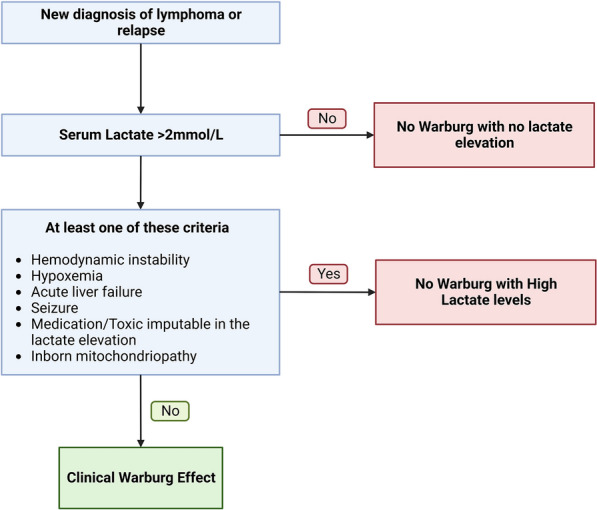
The Warburg effect, characterized by elevated lactate levels without tissue hypoxia or shock, has been described in patients with aggressive lymphoproliferative malignancies. However, the clinical characteristics and long-term outcomes in this population remain poorly understood.
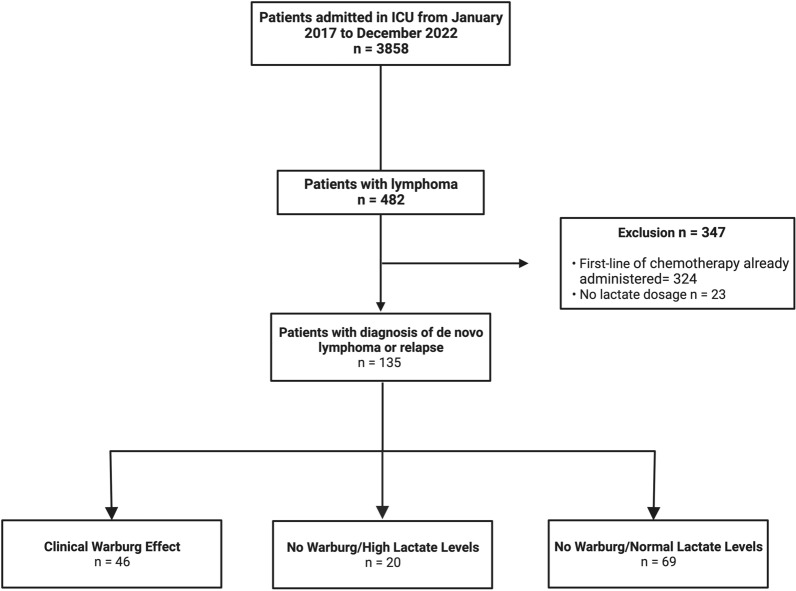
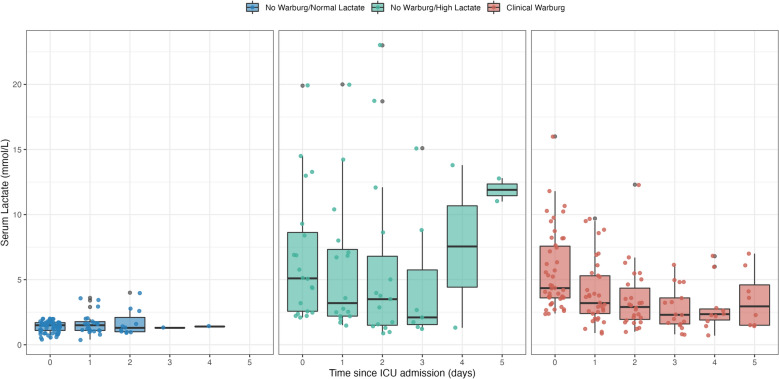
We retrospectively analyzed 135 patients with aggressive lymphoproliferative malignancies admitted to the ICU between January 2017 and December 2022. Patients were classified into three groups: Clinical Warburg Effect (CWE), No Warburg with High Lactate level (NW-HL), and No Warburg with Normal Lactate level (NW-NL). Clinical characteristics and outcomes were compared between the groups and factors associated with 1-year mortality and CWE were identified using multivariable analyses.
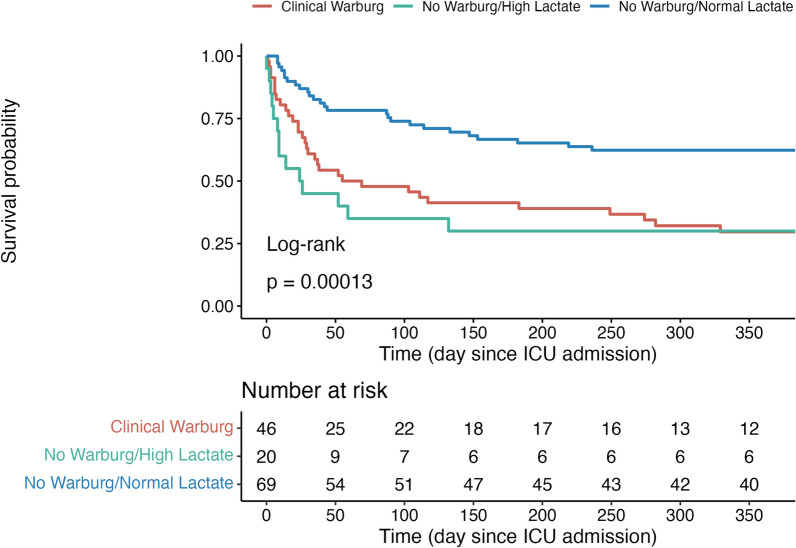
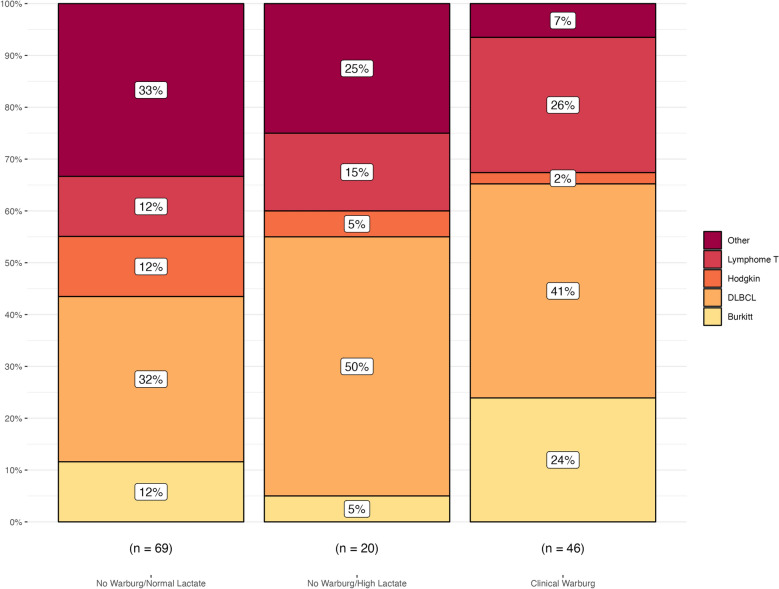
Of the 135 patients, 46 (34%) had a CWE. This group had a higher proportion of Burkitt and T cell lymphomas, greater tumor burden, and more frequent bone and cerebral involvement than the other groups. At 1 year, 72 patients (53%) died, with significantly higher mortality in the CWE and NW-HL groups (70% each) than in the NW-NL group (38%). Factors independently associated with 1-year mortality were age [HR = 1.02 CI 95% (1.00-1.04)], total SOFA score at admission [HR = 1.19 CI 95% (1.12-1.25)], and CWE [HR = 3.87 CI 95% (2.13-7.02)]. The main factors associated with the CWE were tumor lysis syndrome [OR = 2.84 CI 95% (1.14-7.42)], bone involvement of the underlying malignancy [OR = 3.58 CI 95% (1.02-12.91)], the total SOFA score at admission [OR = 0.81 CI 95% (0.69-0.91)] and hypoglycemia at admission [OR = 14.90 CI 95% (5.42-47.18)].
CWE is associated with a higher tumor burden and increased 1-year mortality compared to patients without this condition. Our findings underscore the importance of recognizing patients with CWE as a high-risk cohort, as their outcomes closely resemble those of individuals with lymphoma and shock, despite not requiring advanced organ support. Clinicians should recognize the urgency of managing these patients and consider early intervention to improve their prognosis.
瓦伯格效应的特征是在无组织缺氧或休克的情况下乳酸水平升高,已在侵袭性淋巴增殖性恶性肿瘤患者中有所描述。然而,该人群的临床特征和长期预后仍知之甚少。
我们回顾性分析了2017年1月至2022年12月期间入住重症监护病房(ICU)的135例侵袭性淋巴增殖性恶性肿瘤患者。患者被分为三组:临床瓦伯格效应(CWE)组、高乳酸水平无瓦伯格效应(NW-HL)组和正常乳酸水平无瓦伯格效应(NW-NL)组。比较各组之间的临床特征和预后,并使用多变量分析确定与1年死亡率和CWE相关的因素。
135例患者中,46例(34%)有CWE。与其他组相比,该组伯基特淋巴瘤和T细胞淋巴瘤的比例更高,肿瘤负荷更大,骨骼和脑部受累更频繁。1年时,72例患者(53%)死亡,CWE组和NW-HL组的死亡率(均为70%)显著高于NW-NL组(38%)。与1年死亡率独立相关的因素为年龄[风险比(HR)=1.02,95%置信区间(CI)(1.00 - 1.04)]、入院时序贯器官衰竭评估(SOFA)总分[HR = 1.19,95%CI(1.12 - 1.25)]和CWE[HR = 3.87,95%CI(2.13 - 7.02)]。与CWE相关的主要因素为肿瘤溶解综合征[比值比(OR)=2.84,95%CI(1.14 - 7.42)]、潜在恶性肿瘤的骨骼受累[OR = 3.58,95%CI(1.02 - 12.91)]、入院时SOFA总分[OR = 0.81,95%CI(0.69 - 0.91)]和入院时低血糖[OR = 14.90,95%CI(5.42 - 47.18)]。
与无此情况的患者相比,CWE与更高的肿瘤负荷和1年死亡率增加相关。我们的研究结果强调了将CWE患者识别为高危人群的重要性,因为尽管他们不需要高级器官支持,但其预后与淋巴瘤和休克患者的预后非常相似。临床医生应认识到治疗这些患者的紧迫性,并考虑早期干预以改善其预后。