ABEx Bio-Research Center, East Azampur, Dhaka 1230, Bangladesh.
Center for Neuroscience, Brain Science Institute, Korea Institute of Science and Technology (KIST), Seoul 02792, Korea.
Mar Drugs. 2021 Mar 20;19(3):167. doi: 10.3390/md19030167.
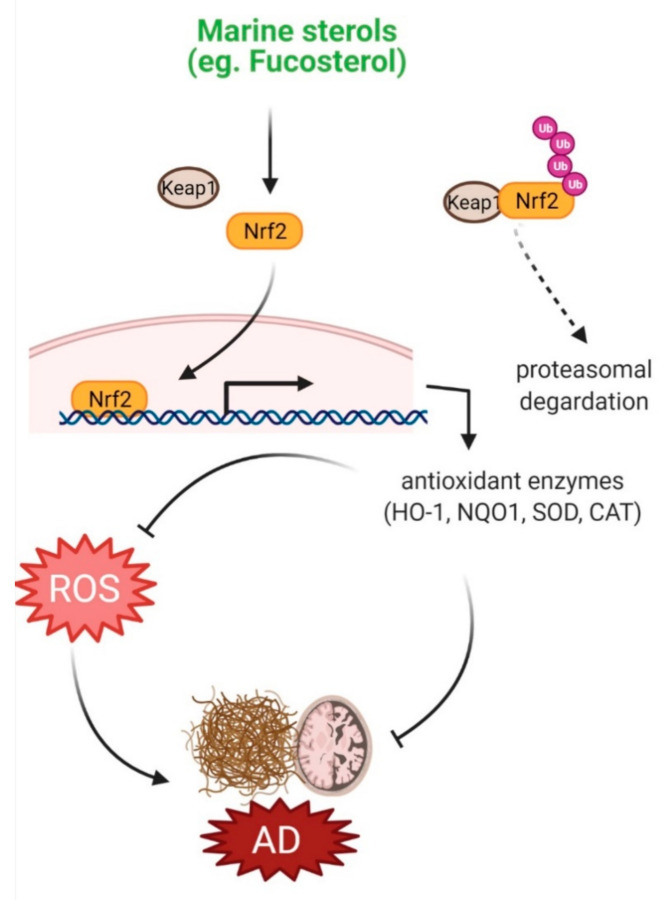
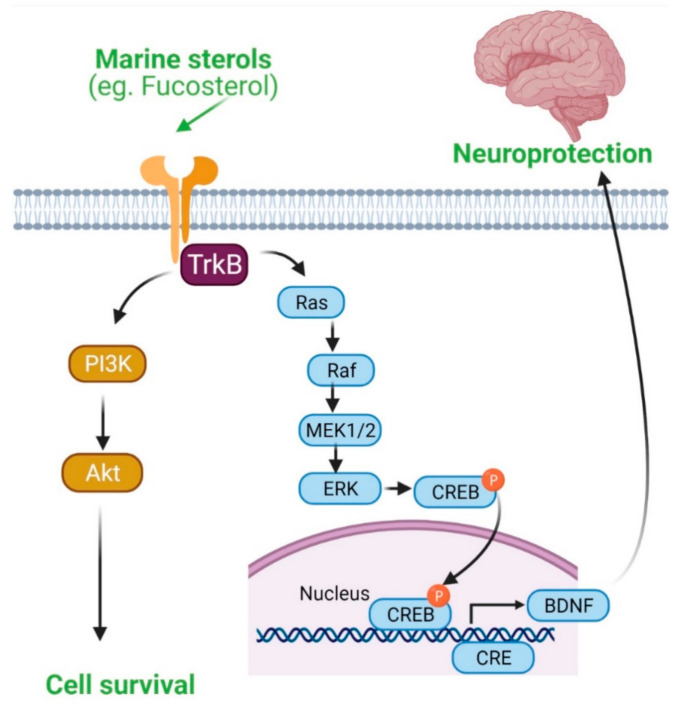
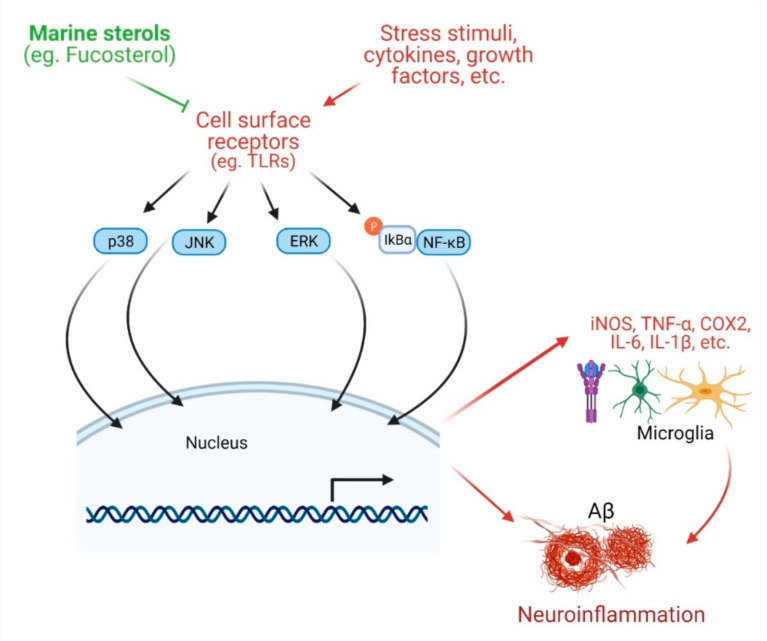
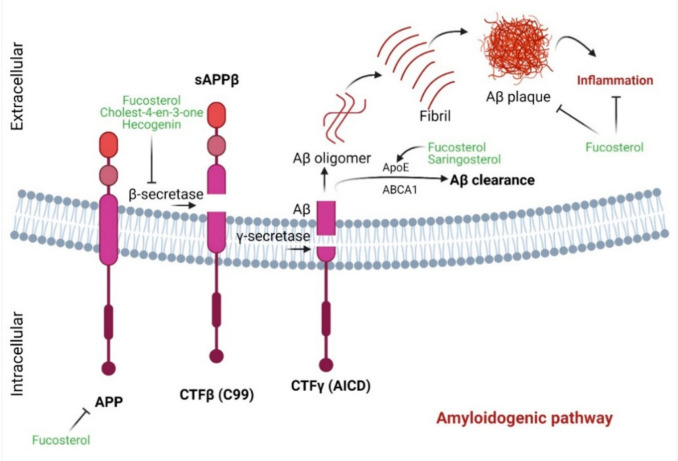
Alzheimer's disease (AD) is a degenerative brain disorder characterized by a progressive decline in memory and cognition, mostly affecting the elderly. Numerous functional bioactives have been reported in marine organisms, and anti-Alzheimer's agents derived from marine resources have gained attention as a promising approach to treat AD pathogenesis. Marine sterols have been investigated for several health benefits, including anti-cancer, anti-obesity, anti-diabetes, anti-aging, and anti-Alzheimer's activities, owing to their anti-inflammatory and antioxidant properties. Marine sterols interact with various proteins and enzymes participating via diverse cellular systems such as apoptosis, the antioxidant defense system, immune response, and cholesterol homeostasis. Here, we briefly overview the potential of marine sterols against the pathology of AD and provide an insight into their pharmacological mechanisms. We also highlight technological advances that may lead to the potential application of marine sterols in the prevention and therapy of AD.
阿尔茨海默病(AD)是一种退行性脑疾病,其特征是记忆和认知能力逐渐下降,主要影响老年人。海洋生物中已报道了许多具有生物活性的物质,而源自海洋资源的抗阿尔茨海默病药物作为治疗 AD 发病机制的一种有前途的方法引起了人们的关注。海洋甾醇由于具有抗炎和抗氧化特性,已被研究用于多种健康益处,包括抗癌、抗肥胖、抗糖尿病、抗衰老和抗阿尔茨海默病活性。海洋甾醇与各种蛋白质和酶相互作用,通过不同的细胞系统(如细胞凋亡、抗氧化防御系统、免疫反应和胆固醇稳态)参与其中。在这里,我们简要概述了海洋甾醇对 AD 病理学的潜在作用,并探讨了它们的药理机制。我们还强调了可能导致海洋甾醇在预防和治疗 AD 中潜在应用的技术进步。