SINTEF Digital, 0373 Oslo, Norway.
Department of Physics, University of Oslo, 0371 Oslo, Norway.
Sensors (Basel). 2021 Mar 24;21(7):2259. doi: 10.3390/s21072259.
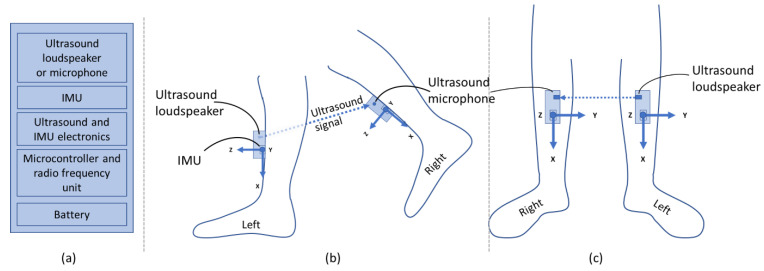
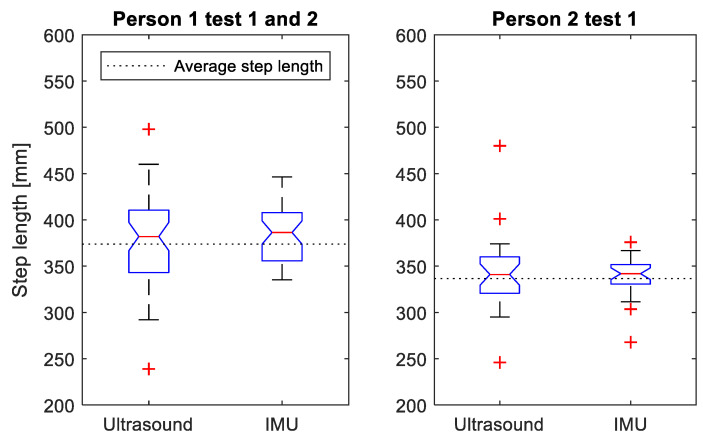
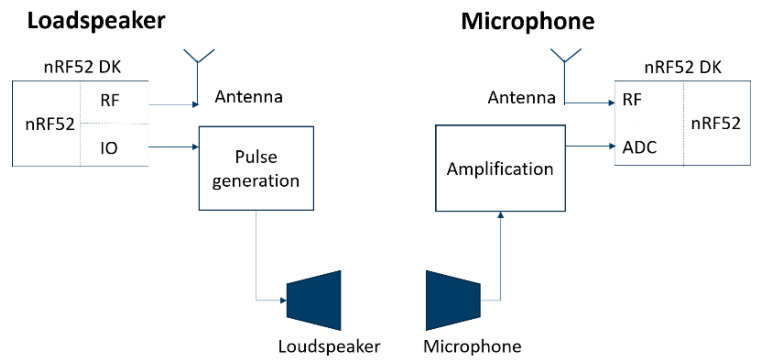
Human motion analysis is a valuable tool for assessing disease progression in persons with conditions such as multiple sclerosis or Parkinson's disease. Human motion tracking is also used extensively for sporting technique and performance analysis as well as for work life ergonomics evaluations. Wearable inertial sensors (e.g., accelerometers, gyroscopes and/or magnetometers) are frequently employed because they are easy to mount and can be used in real life, out-of-the-lab-settings, as opposed to video-based lab setups. These distributed sensors cannot, however, measure relative distances between sensors, and are also cumbersome when it comes to calibration and drift compensation. In this study, we tested an ultrasonic time-of-flight sensor for measuring relative limb-to-limb distance, and we developed a combined inertial sensor and ultrasonic time-of-flight wearable measurement system. The aim was to investigate if ultrasonic time-of-flight sensors can supplement inertial sensor-based motion tracking by providing relative distances between inertial sensor modules. We found that the ultrasonic time-of-flight measurements reflected expected walking motion patterns. The stride length estimates derived from ultrasonic time-of-flight measurements corresponded well with estimates from validated inertial sensors, indicating that the inclusion of ultrasonic time-of-flight measurements could be a feasible approach for improving inertial sensor-only systems. Our prototype was able to measure both inertial and time-of-flight measurements simultaneously and continuously, but more work is necessary to merge the complementary approaches to provide more accurate and more detailed human motion tracking.
人体运动分析是评估多发性硬化症或帕金森病等疾病患者疾病进展的一种有效工具。人体运动跟踪也被广泛用于运动技术和性能分析以及工作生活人体工程学评估。可穿戴惯性传感器(例如加速度计、陀螺仪和/或磁力计)经常被使用,因为它们易于安装,可以在现实生活中、实验室外的环境中使用,而不是在基于视频的实验室设置中使用。然而,这些分布式传感器无法测量传感器之间的相对距离,在进行校准和漂移补偿时也很麻烦。在这项研究中,我们测试了一种用于测量肢体间相对距离的超声飞行时间传感器,并开发了一种组合惯性传感器和超声飞行时间可穿戴测量系统。目的是研究超声飞行时间传感器是否可以通过提供惯性传感器模块之间的相对距离来补充基于惯性传感器的运动跟踪。我们发现,超声飞行时间测量反映了预期的步行运动模式。从超声飞行时间测量中得出的步长估计与经过验证的惯性传感器的估计非常吻合,这表明包括超声飞行时间测量可能是改进仅基于惯性传感器系统的可行方法。我们的原型能够同时连续地测量惯性和飞行时间测量,但需要做更多的工作来合并互补的方法,以提供更准确和更详细的人体运动跟踪。