Della Rocca Giorgia, Gamba Davide
Department of Veterinary Medicine, Centro di Ricerca sul Dolore Animale (CeRiDA), Università degli Studi di Perugia, 06123 Perugia, Italy.
Operational Unit of Anesthesia, Centro Veterinario Gregorio VII, 00165 Roma, Italy.
Animals (Basel). 2021 Mar 29;11(4):952. doi: 10.3390/ani11040952.
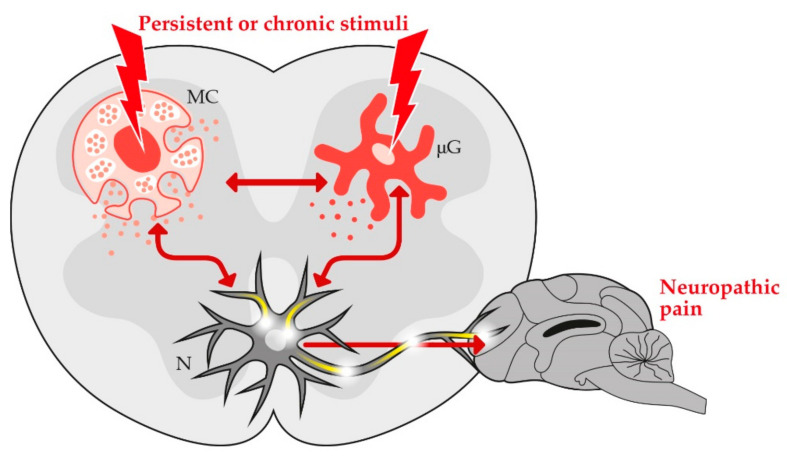
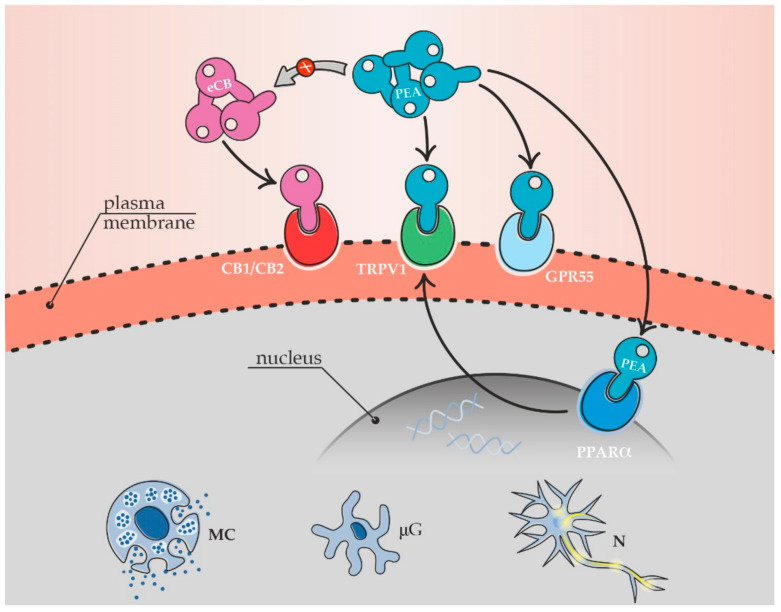
The management of chronic pain is an integral challenge of small animal veterinary practitioners. Multiple pharmacological agents are usually employed to treat maladaptive pain including opiates, non-steroidal anti-inflammatory drugs, anticonvulsants, antidepressants, and others. In order to limit adverse effects and tolerance development, they are often combined with non-pharmacologic measures such as acupuncture and dietary interventions. Accumulating evidence suggests that non-neuronal cells such as mast cells and microglia play active roles in the pathogenesis of maladaptive pain. Accordingly, these cells are currently viewed as potential new targets for managing chronic pain. Palmitoylethanolamide is an endocannabinoid-like compound found in several food sources and considered a body's own analgesic. The receptor-dependent control of non-neuronal cells mediates the pain-relieving effect of palmitoylethanolamide. Accumulating evidence shows the anti-hyperalgesic effect of supplemented palmitoylethanolamide, especially in the micronized and co-micronized formulations (i.e., micro-palmitoylethanolamide), which allow for higher bioavailability. In the present paper, the role of non-neuronal cells in pain signaling is discussed and a large number of studies on the effect of palmitoylethanolamide in inflammatory and neuropathic chronic pain are reviewed. Overall, available evidence suggests that there is place for micro-palmitoylethanolamide in the dietary management of chronic pain in dogs and cats.
慢性疼痛的管理是小动物兽医从业者面临的一项重要挑战。通常会使用多种药物来治疗适应性不良疼痛,包括阿片类药物、非甾体抗炎药、抗惊厥药、抗抑郁药等。为了限制不良反应和耐受性的发展,它们常常与非药物措施如针灸和饮食干预相结合。越来越多的证据表明,肥大细胞和小胶质细胞等非神经元细胞在适应性不良疼痛的发病机制中发挥着积极作用。因此,这些细胞目前被视为管理慢性疼痛的潜在新靶点。棕榈酰乙醇胺是一种在内源性大麻素样化合物,存在于多种食物来源中,被认为是人体自身的止痛剂。非神经元细胞的受体依赖性控制介导了棕榈酰乙醇胺的止痛作用。越来越多的证据表明,补充棕榈酰乙醇胺具有抗痛觉过敏作用,尤其是在微粉化和共微粉化制剂(即微棕榈酰乙醇胺)中,其生物利用度更高。在本文中,讨论了非神经元细胞在疼痛信号传导中的作用,并综述了大量关于棕榈酰乙醇胺对炎症性和神经性慢性疼痛影响的研究。总体而言,现有证据表明,微棕榈酰乙醇胺在犬猫慢性疼痛的饮食管理中占有一席之地。