Department Cardiovascular Institute for Medical Research, Saitama Medical Center, Jichi Medical University, 1-847, Amanuma, Saitama-City, Saitama 330-0834, Japan.
Amine Pharma Research Institute, Innovation Plaza at Chiba University, 1-8-15 Inohana, Chuo-ku, Chiba 260-0856, Japan.
Med Sci (Basel). 2021 Mar 29;9(2):22. doi: 10.3390/medsci9020022.
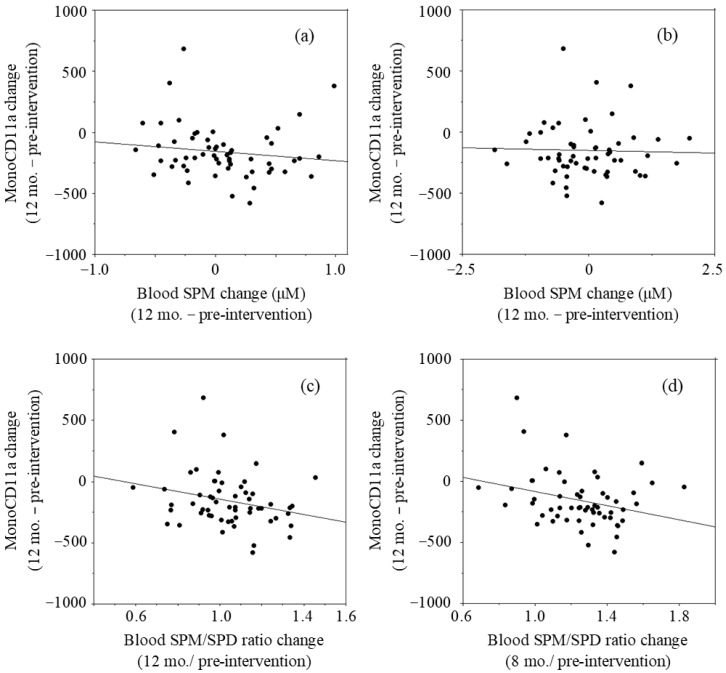
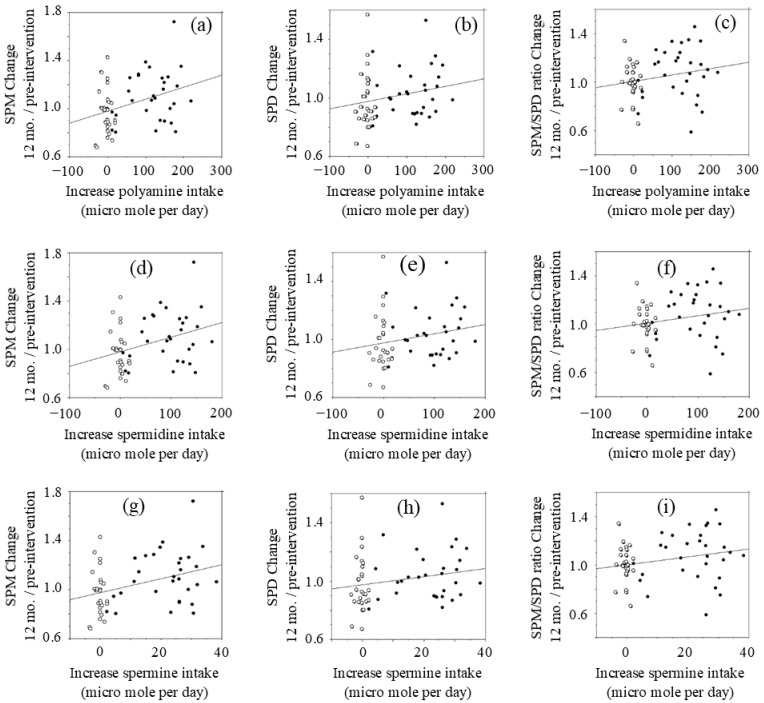
The Japanese diet and the Mediterranean diet are rich in polyamines (spermidine and spermine). Increased polyamine intake elevated blood spermine levels, inhibited aging-associated pro-inflammatory status (increases in lymphocyte function-associated antigen-1 (LFA-1) on immune cells), suppressed aberrant gene methylation and extended the lifespan of mice. To test the effects of increased polyamine intake by humans, 30 healthy male volunteers were asked to eat polyamine-rich and ready-to-eat traditional Japanese food (natto) for 12 months. Natto with high polyamine content was used. Another 27 male volunteers were asked not to change their dietary pattern as a control group. The volunteers' age of intervention and control groups ranged from 40 to 69 years (median 48.9 ± 7.9). Two subjects in the control group subsequently dropped out of the study. The estimated increases in spermidine and spermine intakes were 96.63 ± 47.70 and 22.00 ± 9.56 µmol per day in the intervention group, while no changes were observed in the control group. The mean blood spermine level in the intervention group gradually rose to 1.12 ± 0.29 times the pre-intervention level after 12 months, and were significantly higher ( = 0.019) than those in the control group. Blood spermidine did not increase in either group. LFA-1 on monocytes decreased gradually in the intervention group, and there was an inverse association between changes in spermine concentrations relative to spermidine and changes in LFA-1 levels. Contingency table analysis revealed that the odds ratio to decrease LFA-1 by increased polyamine intake was 3.927 (95% CI 1.116-13.715) ( = 0.032) when the effect of acute inflammation was excluded. The results in the study were similar to those of our animal experiments. Since methylation changes of the entire genome are associated with aging-associated pathologies and our previous studies showed that spermine-induced LFA-1 suppression was associated with the inhibition of aberrant gene methylation, the results suggest that dietary polyamine contributes to human health and longevity.
日式饮食和地中海饮食富含多胺(精脒和精胺)。多胺摄入量的增加会提高血液精脒水平,抑制与衰老相关的促炎状态(免疫细胞上淋巴细胞功能相关抗原-1(LFA-1)的增加),抑制异常基因甲基化,并延长小鼠的寿命。为了测试人类多胺摄入量增加的效果,30 名健康男性志愿者被要求食用富含多胺的即食传统日式食品(纳豆)12 个月。使用多胺含量高的纳豆。另外 27 名男性志愿者被要求不要改变他们的饮食模式作为对照组。志愿者干预组和对照组的年龄范围为 40 至 69 岁(中位数 48.9 ± 7.9)。对照组中有 2 名受试者随后退出了研究。干预组精脒和精胺的摄入量估计分别增加了 96.63 ± 47.70 和 22.00 ± 9.56 µmol/天,而对照组没有变化。干预组的平均血精脒水平在 12 个月后逐渐升高至干预前水平的 1.12 ± 0.29 倍,明显高于对照组(= 0.019)。两组血精脒均未增加。干预组单核细胞上的 LFA-1 逐渐下降,精脒与精胺浓度的变化与 LFA-1 水平的变化呈负相关。列联表分析显示,在排除急性炎症的影响后,多胺摄入增加导致 LFA-1 减少的优势比为 3.927(95%CI 1.116-13.715)(= 0.032)。该研究结果与我们的动物实验结果相似。由于整个基因组的甲基化变化与衰老相关的病理有关,我们之前的研究表明,精脒诱导的 LFA-1 抑制与异常基因甲基化的抑制有关,因此结果表明饮食多胺有助于人类健康和长寿。