Lopez-Candales Angel, Hernández Burgos Paula M, Hernandez-Suarez Dagmar F, Harris David
Cardiovascular Medicine Division, University of Puerto Rico School of Medicine, San Juan, Puerto Rico.
School of Medicine, San Juan, Puerto Rico.
J Nat Sci. 2017 Apr;3(4).
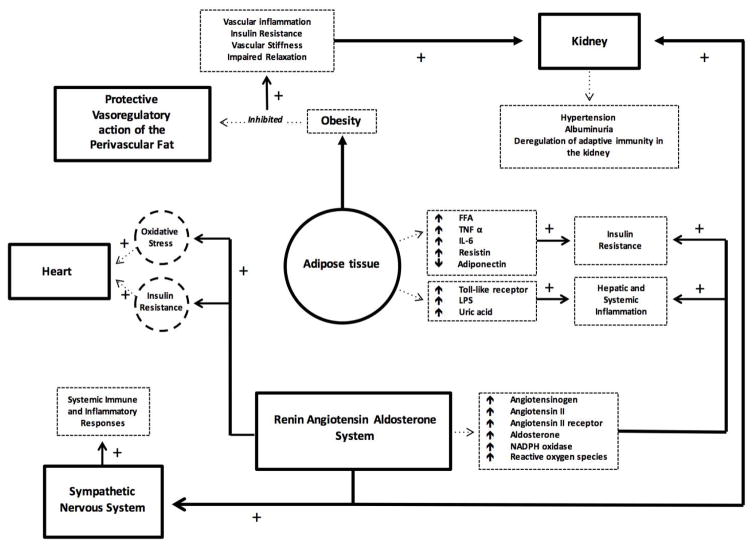
The metabolic syndrome (MetS) is a cluster of clinical disorders including an unhealthy body habitus with a large waistline, dyslipidemia, glucose intolerance and hypertension. It is known that these disorders not only increase the chances of developing type 2 diabetes mellitus (T2DM), but also cardiovascular disease (CVD). Furthermore, the co-occurrence of all these risk factors known as the MetS is linked to pathways sharing common underlying mediators and mechanisms. Though insulin resistance has been considered as the root of the problem to explain the conglomerate of metabolic abnormalities within this syndrome; new evidence points to several pro-inflammatory cytokines, reactive oxygen species and free fatty acid intermediates might play an even greater role in regulating a series of intracellular signaling pathways sustain as well as perpetuate the development of the MetS and its CVD complications. Since having a diagnosis of MetS confers not only a 5-fold increase in the risk of T2DM, but also a 2-fold risk of developing CVD over a period of 5 to 10 years; it is vital to better recognize the mechanisms by which the MetS is associated with such adverse outcomes. Therefore, it is the purpose of this review to address (1) how inflammation modifies insulin sensitivity, (2) known factors believed to contribute to this process, and (3) new concepts of inflammatory markers in regulating the development of MetS and its individual components.
代谢综合征(MetS)是一组临床病症,包括腰围较大的不健康体型、血脂异常、葡萄糖不耐受和高血压。众所周知,这些病症不仅会增加患2型糖尿病(T2DM)的几率,还会增加患心血管疾病(CVD)的风险。此外,所有这些被称为MetS的风险因素同时出现与共享共同潜在介质和机制的途径有关。尽管胰岛素抵抗被认为是解释该综合征内代谢异常聚集问题的根源;但新证据表明,几种促炎细胞因子、活性氧和游离脂肪酸中间体可能在调节一系列细胞内信号通路中发挥更大作用,这些信号通路维持并延续了MetS及其CVD并发症的发展。由于诊断出患有MetS不仅会使患T2DM的风险增加5倍,而且在5至10年期间患CVD的风险也会增加2倍;因此,更好地认识MetS与这些不良后果相关的机制至关重要。因此,本综述的目的是探讨(1)炎症如何改变胰岛素敏感性,(2)已知的促成这一过程的因素,以及(3)炎症标志物在调节MetS及其各个组成部分发展中的新概念。