Fang Pingping, Wang Yu, Wang Mengqi, Wang Feng, Chi Cheng, Zhou Yanhong, Zhou Jie, Shi Kai, Xia Xiaojian, Foyer Christine Helen, Yu Jingquan
Department of Horticulture, Zijingang Campus, Zhejiang University, 866 Yuhangtang Road, Hangzhou 310058, China.
Key Laboratory of Horticultural Plants Growth and Development, Agricultural Ministry of China, Yuhangtang Road 866, Hangzhou 310058, China.
Antioxidants (Basel). 2021 Mar 25;10(4):509. doi: 10.3390/antiox10040509.
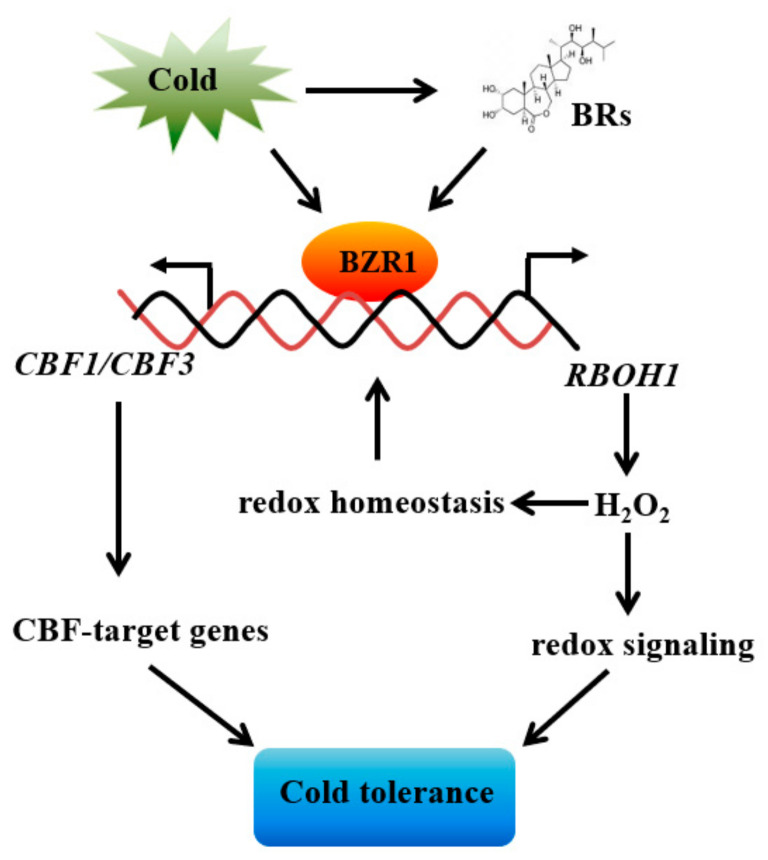
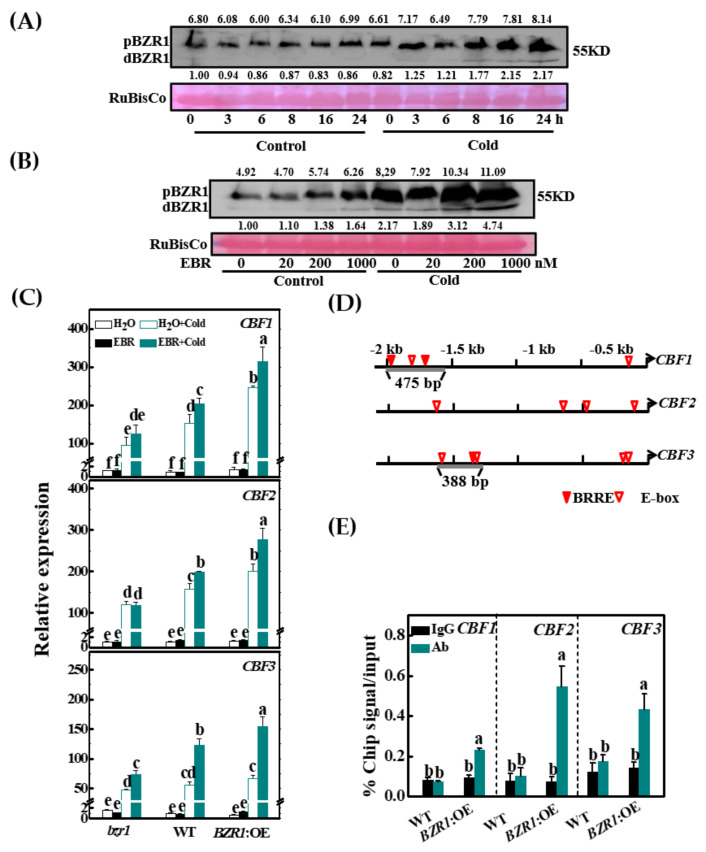
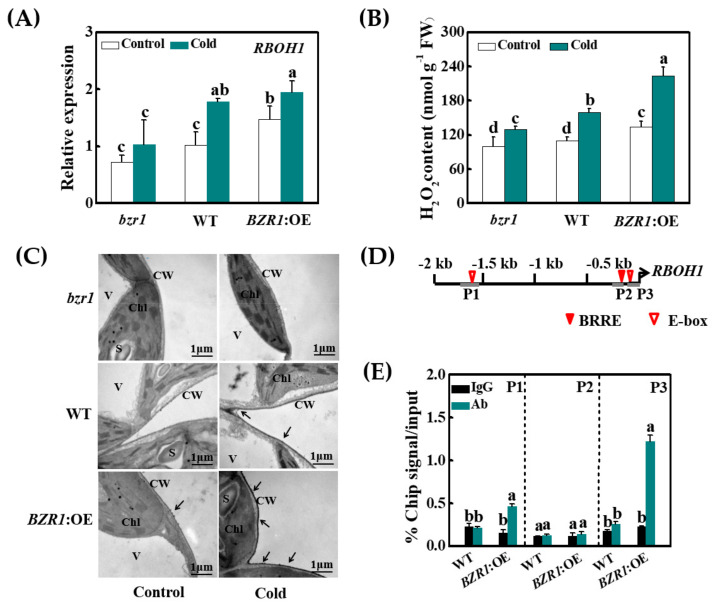
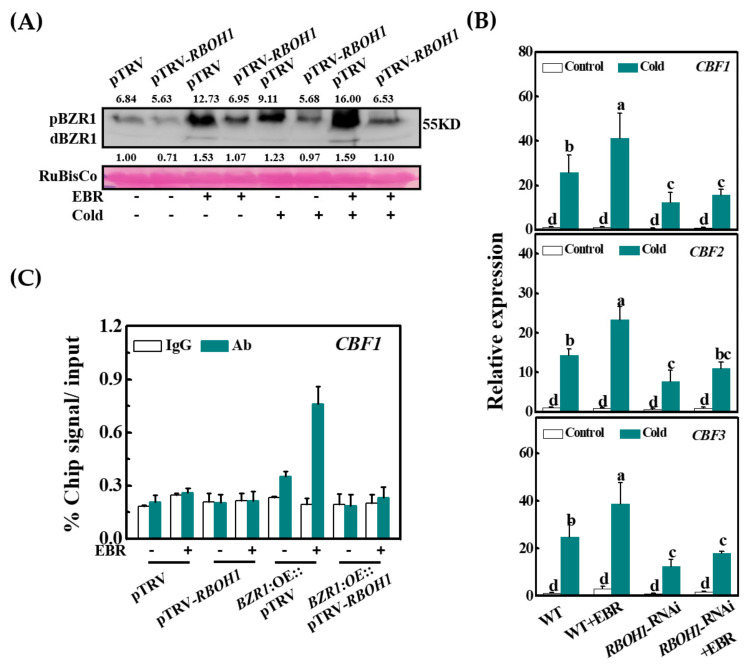
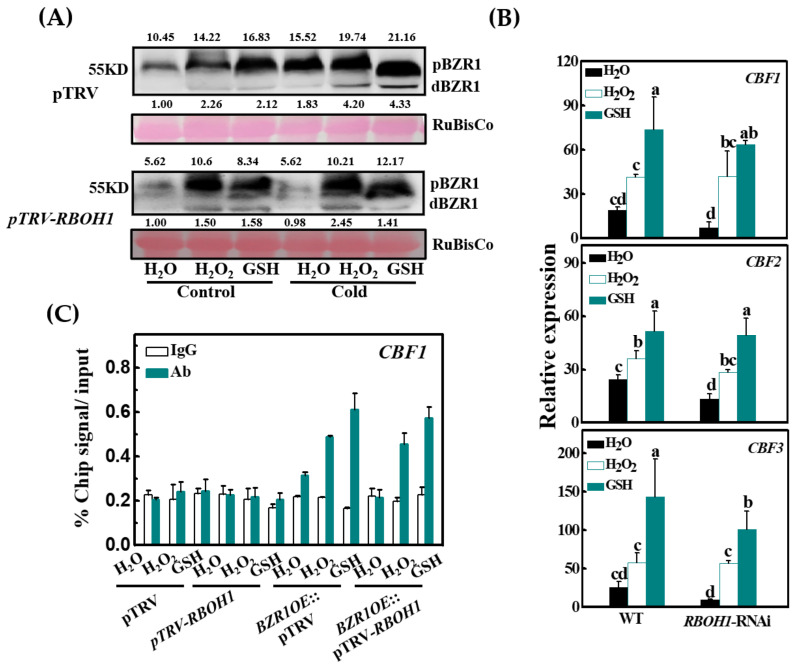
Brassinosteroids (BRs) play a critical role in plant responses to stress. However, the interplay of BRs and reactive oxygen species signaling in cold stress responses remains unclear. Here, we demonstrate that a partial loss of function in the BR biosynthesis gene resulted in lower whilst overexpression of led to increased levels of () transcripts. Exposure to cold stress increased BR synthesis and led to an accumulation of brassinazole-resistant 1 (BZR1), a central component of BR signaling. Mutation of BZR1 compromised the cold- and BR-dependent increases in and ) transcripts, as well as preventing hydrogen peroxide (HO) accumulation in the apoplast. Cold- and BR-induced BZR1 bound to the promoters of , and and promoted their expression. Significantly, suppression of expression compromised cold- and BR-induced accumulation of BZR1 and related increases in CBF transcripts. Moreover, -dependent HO production regulated BZR1 accumulation and the levels of CBF transcripts by influencing glutathione homeostasis. Taken together, these results demonstrate that crosstalk between BZR1 and reactive oxygen species mediates cold- and BR-activated CBF expression, leading to cold tolerance in tomato ().
油菜素甾醇(BRs)在植物对胁迫的响应中起关键作用。然而,BRs与活性氧信号在冷胁迫响应中的相互作用仍不清楚。在此,我们证明BR生物合成基因功能的部分丧失导致(某物质)水平降低,而(该基因)的过表达导致(另一物质)()转录本水平升高。暴露于冷胁迫会增加BR合成,并导致油菜素唑抗性1(BZR1,BR信号的核心成分)积累。BZR1突变损害了冷胁迫和BR依赖性的(相关物质)和(另一相关物质)转录本增加,同时阻止了质外体中过氧化氢(H₂O₂)的积累。冷胁迫和BR诱导的BZR1与(相关基因)、(另一相关基因)和(又一相关基因)的启动子结合并促进它们的表达。值得注意的是,(某基因)表达的抑制损害了冷胁迫和BR诱导的BZR1积累以及CBF转录本的相关增加。此外,(某物质)依赖性的H₂O₂产生通过影响谷胱甘肽稳态来调节BZR1积累和CBF转录本水平。综上所述,这些结果表明BZR1与活性氧之间的串扰介导了冷胁迫和BR激活的CBF表达,从而导致番茄()的耐冷性。