Azrad Maya, Shmuel Chen, Leshem Tamar, Hamo Zohar, Baum Moti, Rokney Assaf, Agay-Shay Keren, Peretz Avi
Clinical Microbiology Laboratory, The Baruch Padeh Medical Center, Poriya, Tiberias 1528001, Israel.
Central Government Laboratories, Israel Ministry of Health, Jerusalem 9446724, Israel.
Antibiotics (Basel). 2021 Mar 23;10(3):342. doi: 10.3390/antibiotics10030342.
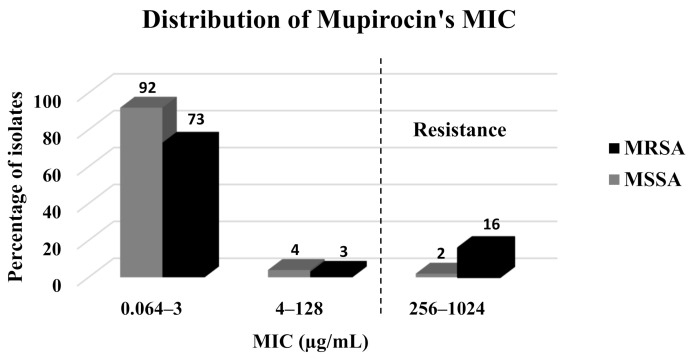
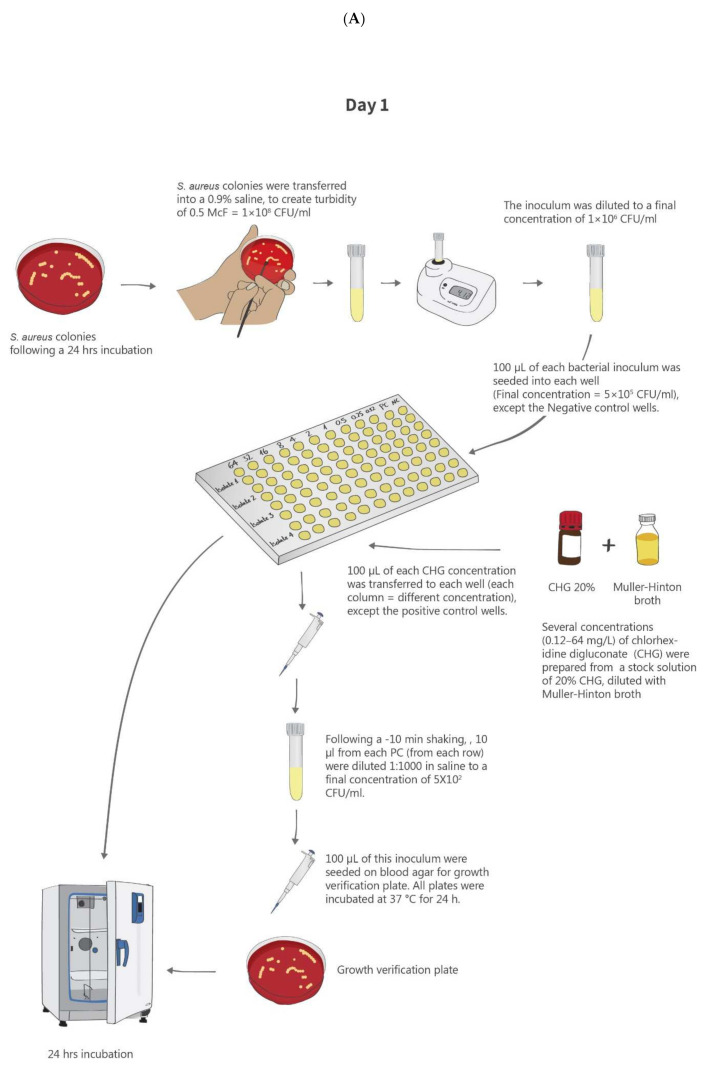
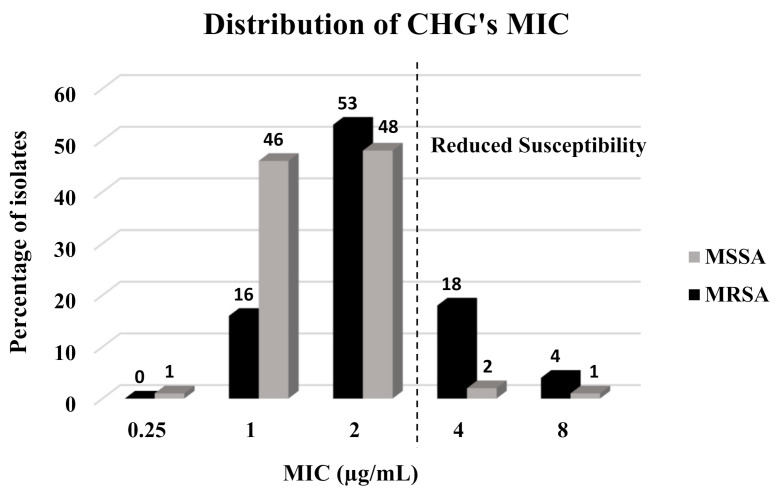
Antiseptic use for body decolonization is the main activity applied to prevent healthcare-associated infections, including those caused by . Consequentially, tolerance to several antiseptics such as chlorhexidine gluconate (CHG) has developed. This study aimed to estimate the prevalence of CHG tolerance among strains in Israel and to evaluate factors that may affect this tolerance. Furthermore, it tested the associations between phenotypic and genotypic CHG tolerance. strains ( = 190) were isolated from clinical samples of patients admitted to various medical institutions in Israel. Phenotypic susceptibility to CHG was assessed by determining minimum inhibitory concentration (MIC) and minimum bactericidal concentration (MBC). Genotypic tolerance was detected using real-time PCR for detection of A/B genes. MIC for the antibiotic mupirocin was determined using the Etest method. Presence of the Panton-Valentine Leucocidin () toxin, A and C genes was detected using an eazyplex MRSAplus kit (AmplexDiagnostics GmbH, Gars, Germany). CHG tolerance was observed in 13.15% of the isolates. An association between phenotypic and genotypic tolerance to CHG was observed. Phenotypic tolerance to CHG was associated with methicillin resistance but not with mupirocin resistance. Additionally, most of the CHG-tolerant strains were isolated from blood cultures. In conclusion, this work shed light on the prevalence of reduced susceptibility to CHG among strains in Israel and on the characteristics of tolerant strains. CHG-tolerant strains were more common than methicillin-resistant ones in samples from invasive infections. Further research should be performed to evaluate risk factors for the development of CHG tolerance.
使用防腐剂进行身体去定植是预防医疗保健相关感染(包括由……引起的感染)的主要措施。因此,对几种防腐剂(如葡萄糖酸洗必泰(CHG))的耐受性已经形成。本研究旨在评估以色列……菌株中CHG耐受性的流行情况,并评估可能影响这种耐受性的因素。此外,还测试了CHG表型耐受性与基因型耐受性之间的关联。从以色列各医疗机构收治患者的临床样本中分离出……菌株(n = 190)。通过测定最低抑菌浓度(MIC)和最低杀菌浓度(MBC)来评估对CHG的表型敏感性。使用实时PCR检测……A/B基因来检测基因型耐受性。采用Etest法测定抗生素莫匹罗星的MIC。使用eazyplex MRSAplus试剂盒(AmplexDiagnostics GmbH,德国加尔斯)检测杀白细胞素(PVL)毒素、A和C基因的存在。13.15%的分离株表现出CHG耐受性。观察到CHG表型耐受性与基因型耐受性之间存在关联。CHG表型耐受性与耐甲氧西林有关,但与耐莫匹罗星无关。此外,大多数CHG耐受菌株是从血培养中分离出来的。总之,这项工作揭示了以色列……菌株中对CHG敏感性降低的流行情况以及耐受菌株的特征。在侵袭性感染样本中,CHG耐受菌株比耐甲氧西林菌株更常见。应进一步开展研究以评估CHG耐受性形成的危险因素。