Gervasi Marco, Barbieri Elena, Capparucci Italo, Annibalini Giosuè, Sisti Davide, Amatori Stefano, Carrabs Vittoria, Valli Giacomo, Donati Zeppa Sabrina, Rocchi Marco Bruno Luigi, Stocchi Vilberto, Sestili Piero
Department of Biomolecular Sciences, University Urbino Carlo Bo, via A. Saffi 2, 61029 Urbino, Italy.
Interuniversity Institute of Myology (IIM), 06121 Perugia, Italy.
J Clin Med. 2021 Mar 31;10(7):1397. doi: 10.3390/jcm10071397.
Achilles tendinopathy (AT) affects ca. 10 million recreational runners in Europe; the practice of hyaluronic acid (HA) infiltration is being increasingly adopted. The aim of this pilot study was to monitor the effects of a three-local time-spaced injections regimen of HA in the treatment of AT in middle-aged runners combining for the first time viscoelastometric, biochemical, and functional methodologies with routine clinical examinations.
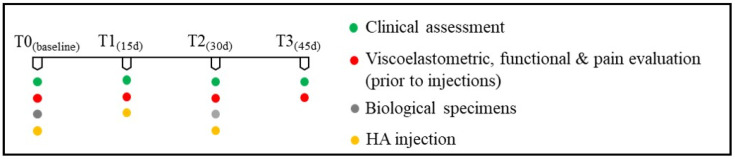
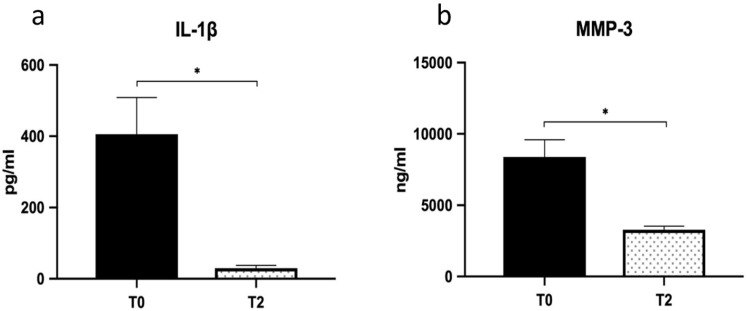
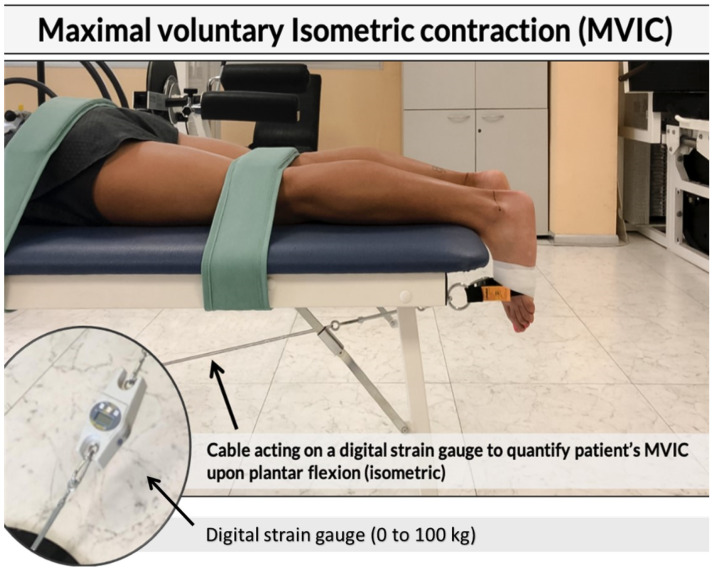
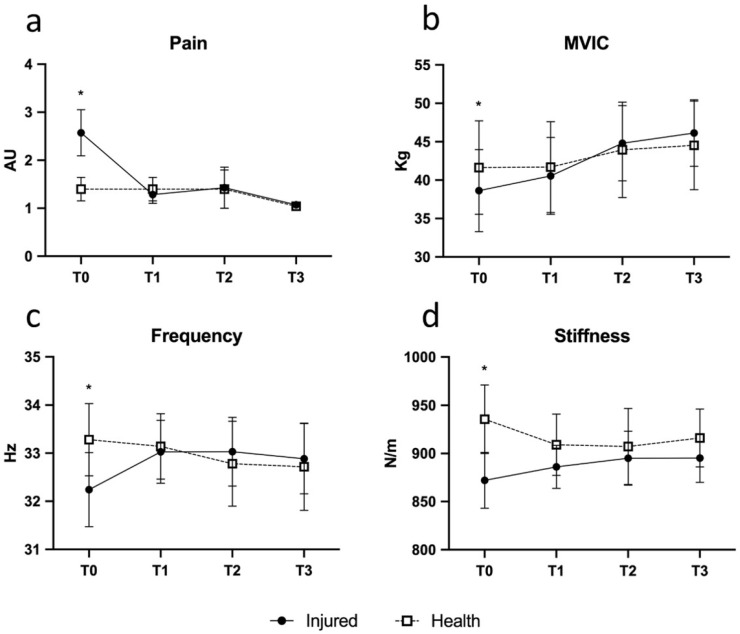
Eight male runners (Age 49.3 ± 3.9), diagnosed for unilateral AT, were given three ultrasound (US) guided peritendinous HA injections at the baseline (T0) and every fifteenth day with a follow-up on the forty-fifth day (T1, T2, and T3). At all-time points patients were assessed for viscoelastic tone and stiffness, maximal voluntary isometric contraction (MVIC), and pain level (Likert scale 0-5). The peritendinous effusions of the injured tendon were collected at T0 and T2 to quantify the volume variations and the IL-1β and MMP-3 levels.
At T0 MVIC and pain score were significantly lower and higher, respectively, in injured tendons. The volume, IL-1β and MMP-3 levels decreased in the course of treatment and the clinical endpoints ameliorated over time. Tone, stiffness, and functional performance also varied significantly at T2 and T3, as compared to T0.
The sequential peritendinous injections of HA were effective in the amelioration of the clinical symptoms, as well as of the functional and viscoelastic state associated with AT. The determination of the viscoelastometric state may help to precisely evaluate the healing process in AT patients.
跟腱病(AT)影响着欧洲约1000万休闲跑步者;透明质酸(HA)注射疗法的应用越来越广泛。本初步研究的目的是首次将粘弹性、生化和功能方法与常规临床检查相结合,监测HA三次局部间隔注射方案治疗中年跑步者AT的效果。
八名被诊断为单侧AT的男性跑步者(年龄49.3±3.9岁)在基线时(T0)接受三次超声引导下的腱周HA注射,每15天注射一次,在第45天进行随访(T1、T2和T3)。在所有时间点评估患者的粘弹性张力和硬度、最大自主等长收缩(MVIC)和疼痛程度(0-5级李克特量表)。在T0和T2收集受伤肌腱的腱周积液,以量化体积变化以及白细胞介素-1β(IL-1β)和基质金属蛋白酶-3(MMP-3)水平。
在T0时,受伤肌腱的MVIC和疼痛评分分别显著更低和更高。在治疗过程中,积液量、IL-1β和MMP-3水平下降,临床终点随时间改善。与T0相比,T2和T3时的张力、硬度和功能表现也有显著变化。
HA连续腱周注射对改善AT相关的临床症状、功能和粘弹性状态有效。粘弹性状态的测定可能有助于精确评估AT患者的愈合过程。