Siraj Md Afjalus, Rahman Md Sajjadur, Tan Ghee T, Seidel Veronique
Department of Pharmaceutical Sciences, Daniel K. Inouye College of Pharmacy, University of Hawaii at Hilo, Hilo, HI 96720, USA.
Department of Chemistry and Biochemistry, South Dakota State University, Brookings, SD 57007, USA.
Int J Mol Sci. 2021 Mar 30;22(7):3595. doi: 10.3390/ijms22073595.
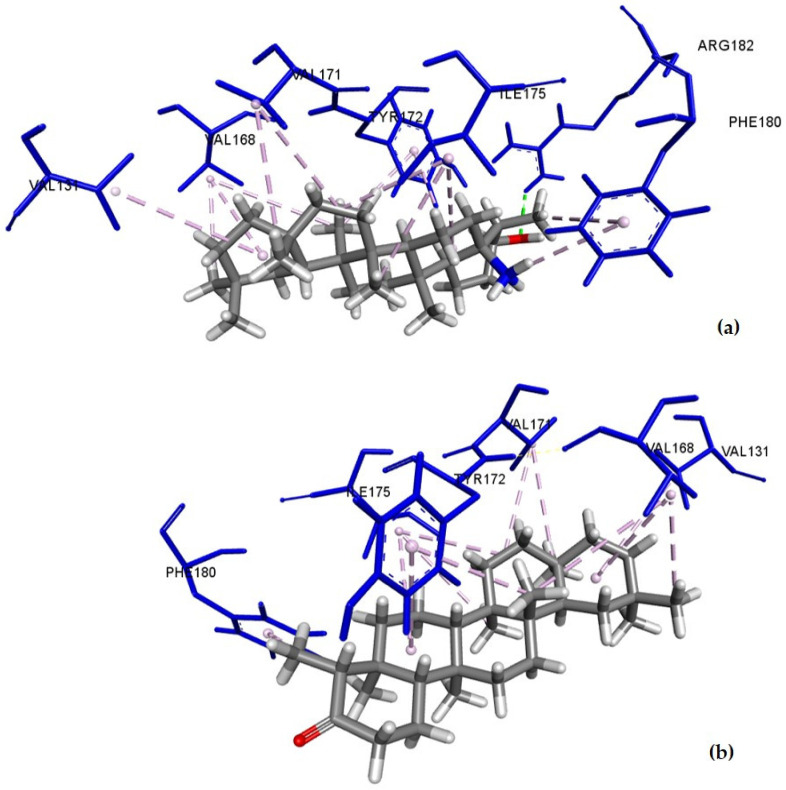
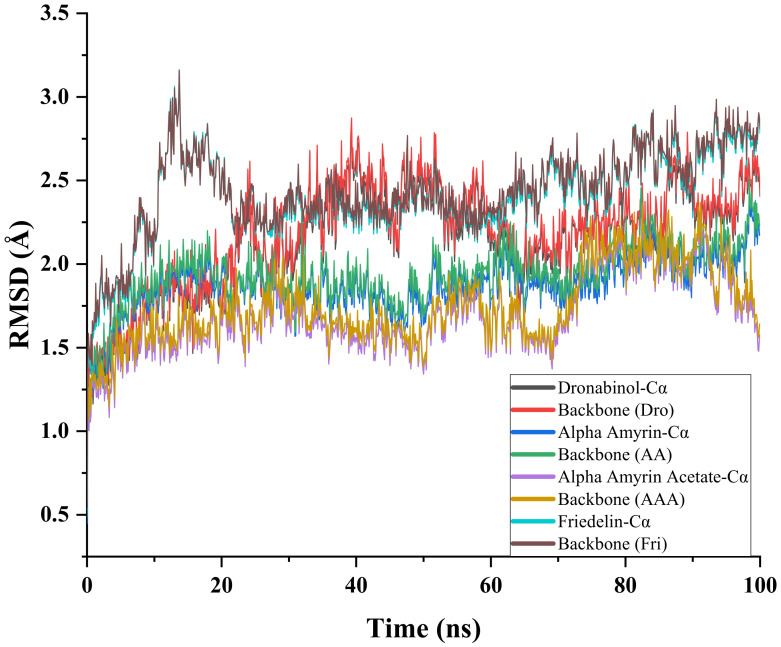
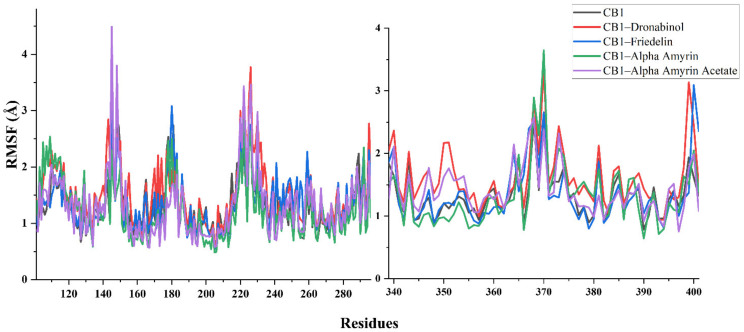
A molecular docking approach was employed to evaluate the binding affinity of six triterpenes, namely epifriedelanol, friedelin, α-amyrin, α-amyrin acetate, β-amyrin acetate, and bauerenyl acetate, towards the cannabinoid type 1 receptor (CB1). Molecular docking studies showed that friedelin, α-amyrin, and epifriedelanol had the strongest binding affinity towards CB1. Molecular dynamics simulation studies revealed that friedelin and α-amyrin engaged in stable non-bonding interactions by binding to a pocket close to the active site on the surface of the CB1 target protein. The studied triterpenes showed a good capacity to penetrate the blood-brain barrier. These results help to provide some evidence to justify, at least in part, the previously reported antinociceptive and sedative properties of .
采用分子对接方法评估六种三萜类化合物,即表去氢枞醇、去氢枞醇、α-香树脂醇、α-香树脂醇乙酸酯、β-香树脂醇乙酸酯和鲍尔烯醇乙酸酯,对1型大麻素受体(CB1)的结合亲和力。分子对接研究表明,去氢枞醇、α-香树脂醇和表去氢枞醇对CB1具有最强的结合亲和力。分子动力学模拟研究表明,去氢枞醇和α-香树脂醇通过与CB1靶蛋白表面靠近活性位点的一个口袋结合,参与稳定的非键相互作用。所研究的三萜类化合物显示出良好的穿透血脑屏障的能力。这些结果有助于至少部分地为先前报道的……的抗伤害感受和镇静特性提供一些证据。