Brodzki Adam, Łopuszyński Wojciech, Millan Yolanda, Tatara Marcin R, Brodzki Piotr, Kulpa Katarzyna, Minakow Natalia
Department and Clinic of Animal Surgery, Faculty of Veterinary Medicine, University of Life Sciences in Lublin, 20-612 Lublin, Poland.
Sub-Department of Pathomorphology and Forensic Veterinary Medicine, Department and Clinic of Animal Internal Diseases, University of Life Sciences in Lublin, 20-612 Lublin, Poland.
Animals (Basel). 2021 Mar 19;11(3):875. doi: 10.3390/ani11030875.
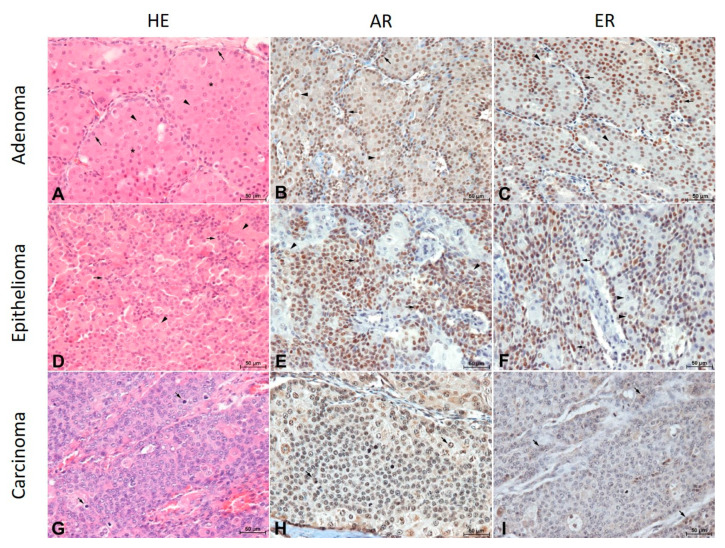
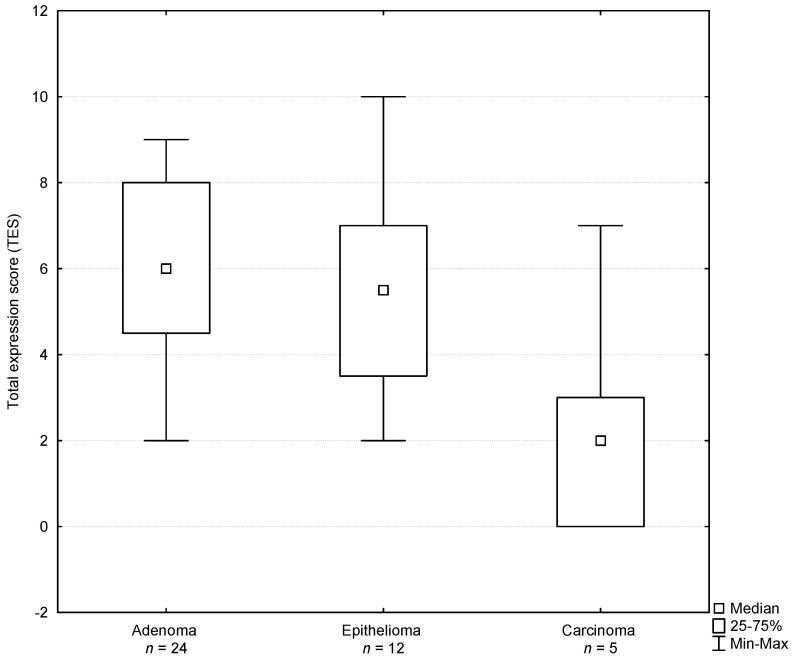
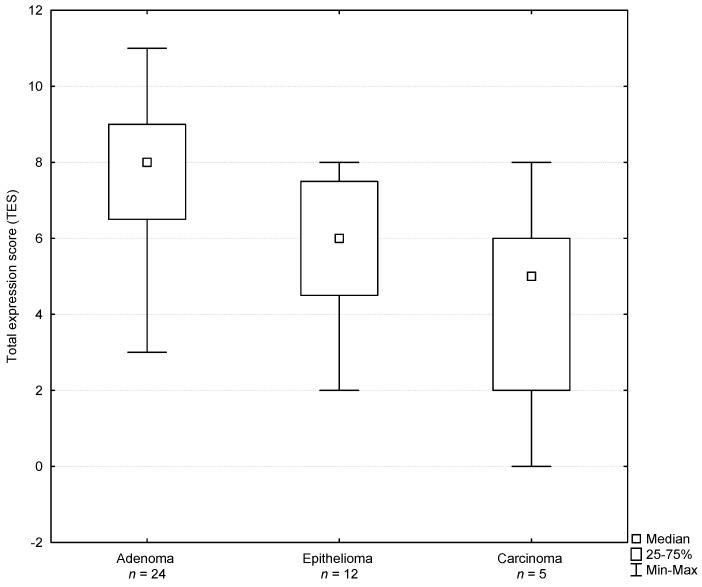
Perianal gland tumors are modified sebaceous glands present in the skin of the perianal region in the dog. Hormonal stimulation may induce hyperplasia of the perianal glands or their neoplastic progression. The presence of androgen (AR) and estrogen (ER) receptors have been demonstrated both in normal perianal glands as well as in perianal tumors. The aim of the study was an immunohistochemical assessment of the expression of estrogen and androgen receptors in perianal gland tumors in dogs as an applicatory marker for antihormonal treatment. Biopsy samples of perianal masses were collected from 41 male dogs. A histopathological examination revealed 24 adenomas, 12 epitheliomas and five carcinomas. The immunohistochemical staining showed a mainly nuclear expression of AR and ER in the neoplastic cells. Both the androgen and estrogen receptors were expressed in adenoma, epithelioma and carcinoma cases; however, the highest expression of the receptors was stated in the adenoma and epithelioma. In the case of the carcinoma, the expression of sex hormone receptors was very weak. The differences of the number of cells expressing AR and ER as well as the observed differentiated intensity of staining in the studies demonstrated that the determination of the expression of the sex hormone receptors may be useful to elaborate a diagnostic and therapeutic algorithm.
肛周腺肿瘤是犬肛周区域皮肤中存在的一种特殊皮脂腺。激素刺激可能会诱发肛周腺增生或其肿瘤进展。雄激素(AR)和雌激素(ER)受体在正常肛周腺以及肛周肿瘤中均有表达。本研究旨在通过免疫组织化学方法评估犬肛周腺肿瘤中雌激素和雄激素受体的表达情况,作为抗激素治疗的应用标志物。从41只雄性犬收集肛周肿物的活检样本。组织病理学检查发现24例腺瘤、12例上皮瘤和5例癌。免疫组织化学染色显示肿瘤细胞中AR和ER主要呈核表达。雄激素和雌激素受体在腺瘤、上皮瘤和癌病例中均有表达;然而,受体的最高表达见于腺瘤和上皮瘤。在癌的病例中,性激素受体的表达非常微弱。研究中表达AR和ER的细胞数量差异以及观察到的染色分化强度表明,性激素受体表达的测定可能有助于制定诊断和治疗方案。