The Rheumatism Research Center, Catholic Reasearch Institute of Medical Science, The Catholic University of Korea, Seoul 06591, Korea.
Department of Biomedicine & Health Sciences, College of Medicine, The Catholic University of Korea, 222, Banpo-daero, Seocho-gu, Seoul 06591, Korea.
Cells. 2021 Mar 19;10(3):681. doi: 10.3390/cells10030681.
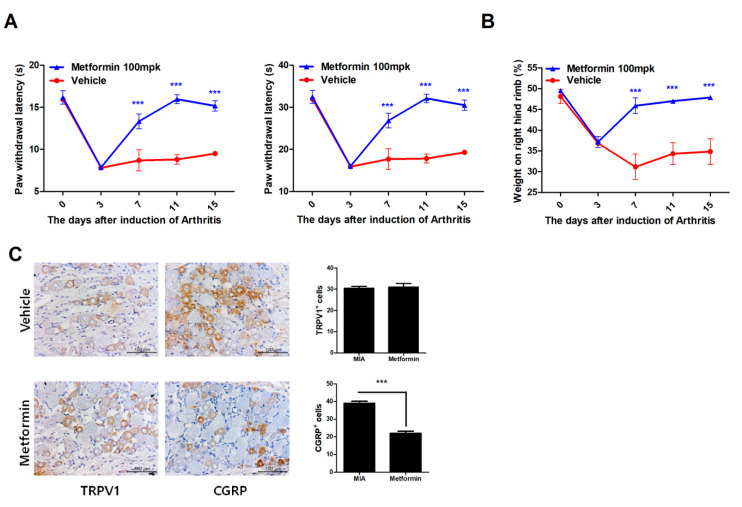
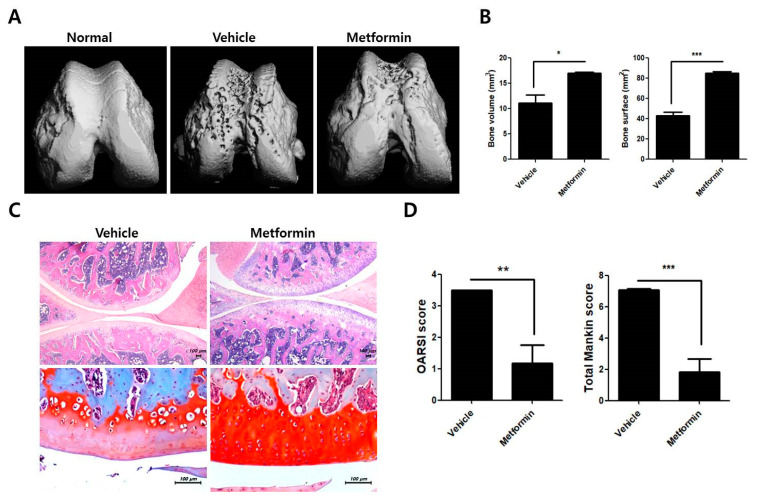
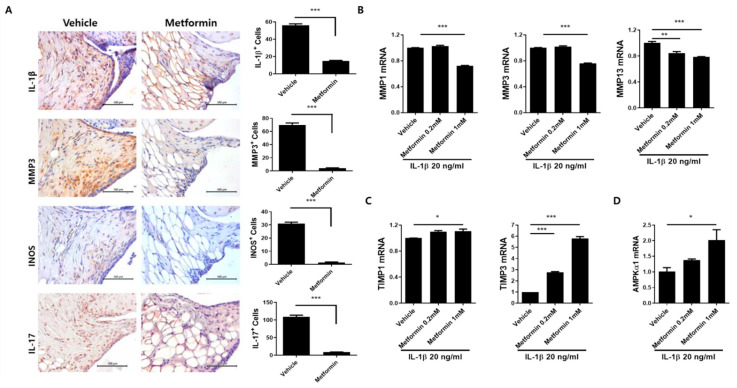
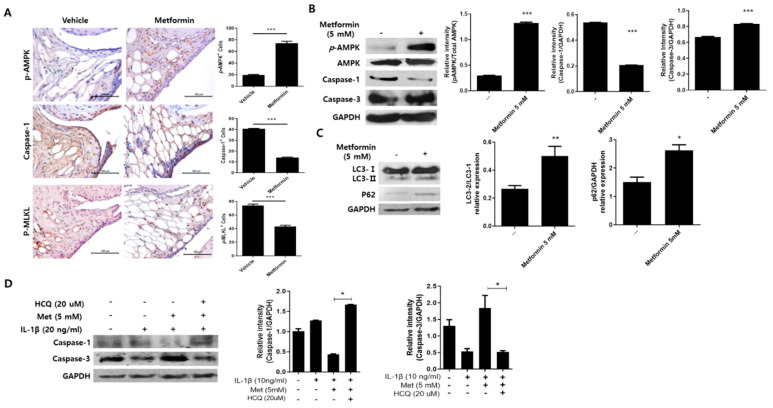
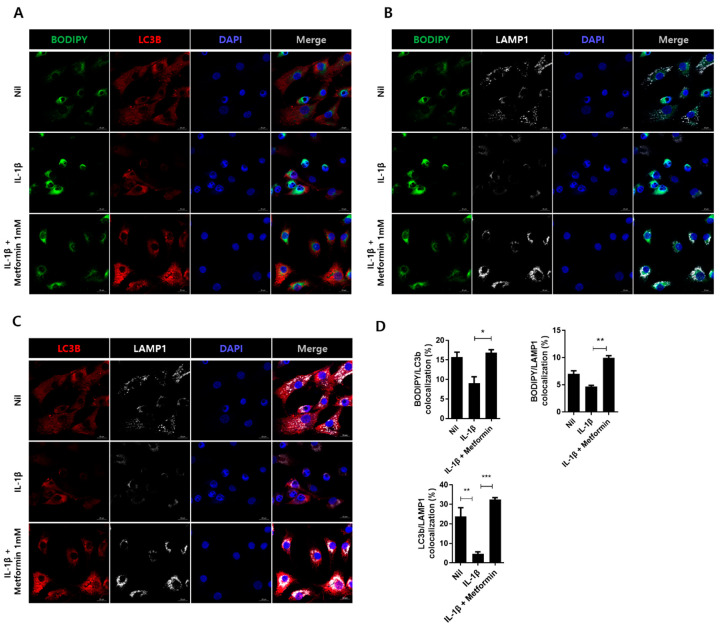
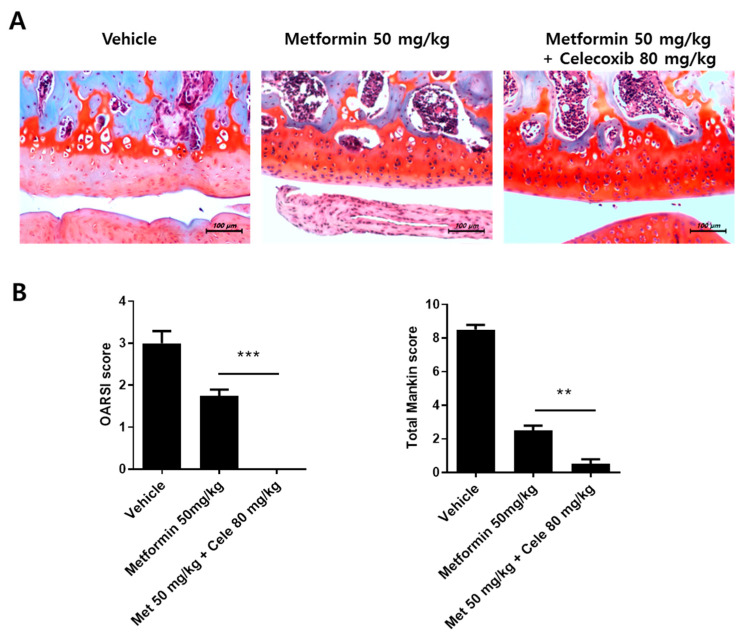
Osteoarthritis (OA) is the most common degenerative arthritis associated with pain and cartilage destruction in the elderly; it is known to be involved in inflammation as well. A drug called celecoxib is commonly used in patients with osteoarthritis to control pain. Metformin is used to treat type 2 diabetes but also exhibits regulation of the autophagy pathway. The purpose of this study is to investigate whether metformin can treat monosodium iodoacetate (MIA)-induced OA in rats. Metformin was administered orally every day to rats with OA. Paw-withdrawal latency and threshold were used to assess pain severity. Cartilage damage and pain mediators in dorsal root ganglia were evaluated by histological analysis and a scoring system. Relative mRNA expression was measured by real-time PCR. Metformin reduced the progression of experimental OA and showed both antinociceptive properties and cartilage protection. The combined administration of metformin and celecoxib controlled cartilage damage more effectively than metformin alone. In chondrocytes from OA patients, metformin reduced catabolic factor gene expression and inflammatory cell death factor expression, increased LC3Ⅱb, p62, and LAMP1 expression, and induced an autophagy-lysosome fusion phenotype. We investigated if metformin treatment reduces cartilage damage and inflammatory cell death of chondrocytes. The results suggest the potential for the therapeutic use of metformin in OA patients based on its ability to suppress pain and protect cartilage.
骨关节炎(OA)是与老年人疼痛和软骨破坏相关的最常见退行性关节炎;已知它也与炎症有关。一种名为塞来昔布的药物常用于治疗骨关节炎患者的疼痛。二甲双胍用于治疗 2 型糖尿病,但也表现出对自噬途径的调节作用。本研究旨在探讨二甲双胍是否可以治疗大鼠的单碘乙酸盐(MIA)诱导的 OA。二甲双胍每天通过口服给予 OA 大鼠。通过评估爪回缩潜伏期和阈值来评估疼痛严重程度。通过组织学分析和评分系统评估软骨损伤和背根神经节中的疼痛介质。通过实时 PCR 测量相对 mRNA 表达。二甲双胍减缓了实验性 OA 的进展,表现出镇痛和软骨保护作用。与单独使用二甲双胍相比,二甲双胍和塞来昔布联合给药更能有效控制软骨损伤。在 OA 患者的软骨细胞中,二甲双胍降低了分解代谢因子基因表达和炎性细胞死亡因子表达,增加了 LC3Ⅱb、p62 和 LAMP1 表达,并诱导了自噬溶酶体融合表型。我们研究了二甲双胍治疗是否可以减轻软骨细胞的软骨损伤和炎性细胞死亡。结果表明,基于其抑制疼痛和保护软骨的能力,二甲双胍有可能用于 OA 患者的治疗。