Department of Traumatology, Maastricht University Medical Centre+, 6229 HX Maastricht, The Netherlands.
Department of Surgery, NUTRIM School of Nutrition and Translational Research in Metabolism, Maastricht University Medical Centre+, 6229 HX Maastricht, The Netherlands.
Sensors (Basel). 2021 Mar 16;21(6):2083. doi: 10.3390/s21062083.
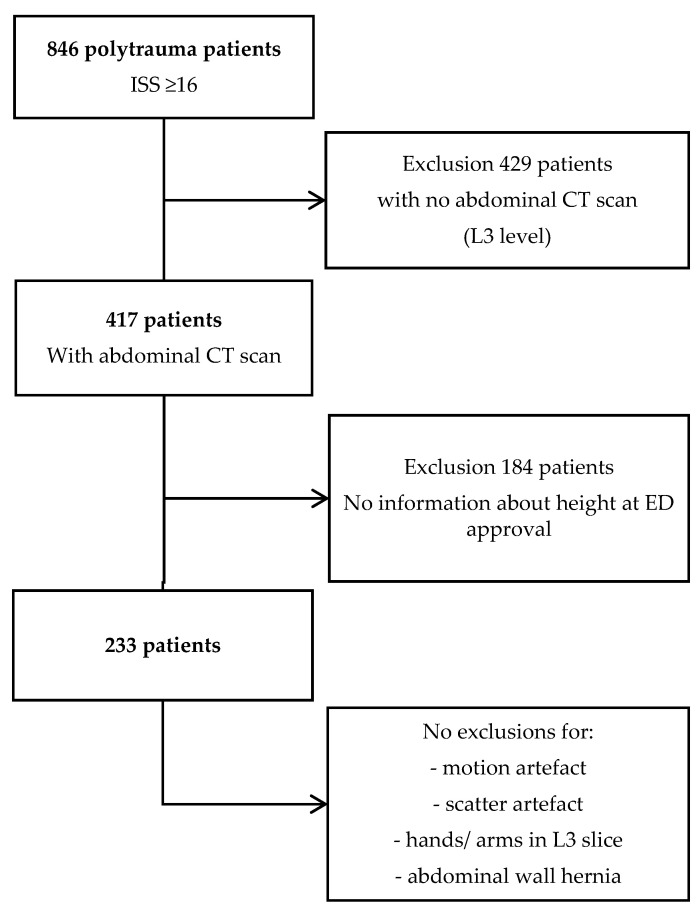
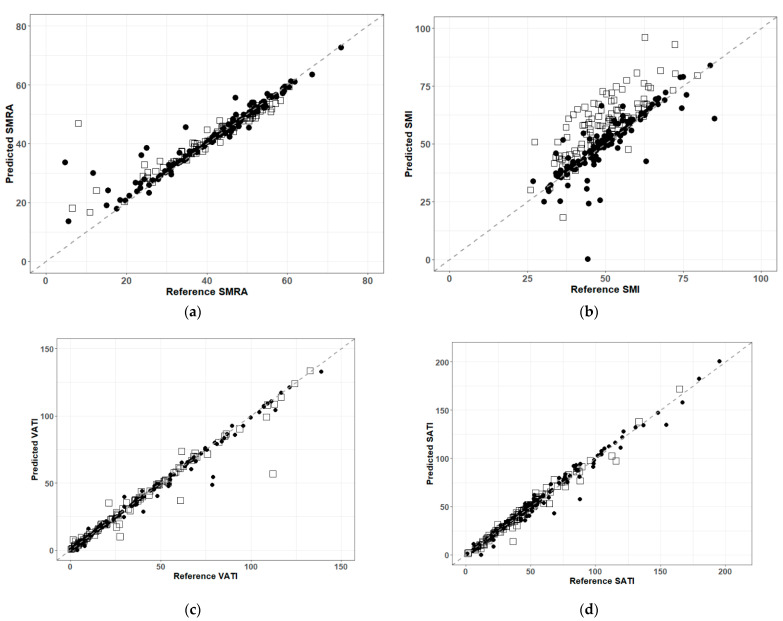
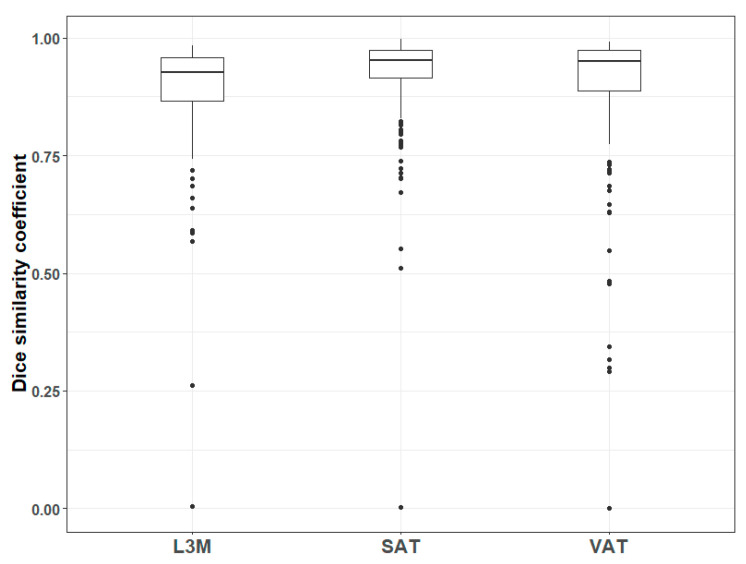
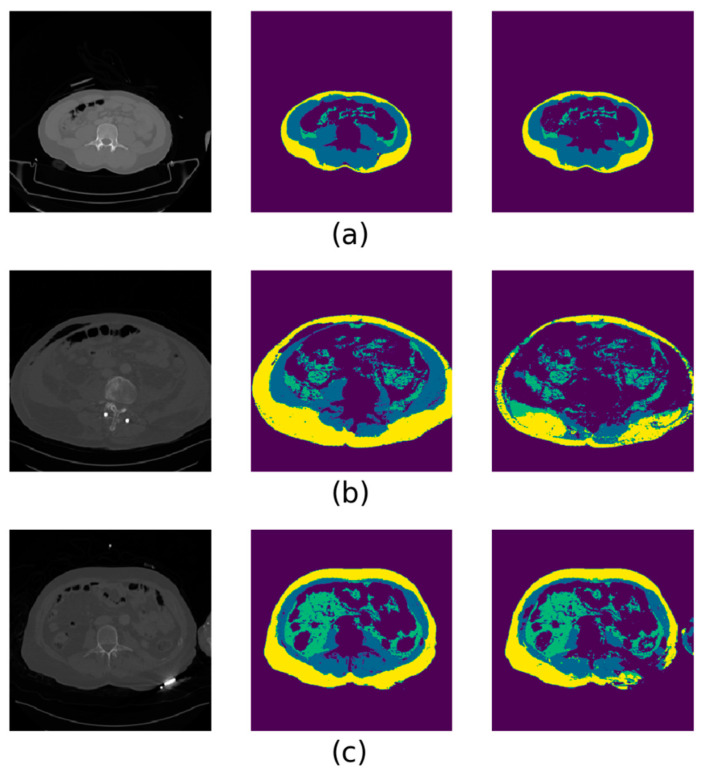
Manual segmentation of muscle and adipose compartments from computed tomography (CT) axial images is a potential bottleneck in early rapid detection and quantification of sarcopenia. A prototype deep learning neural network was trained on a multi-center collection of 3413 abdominal cancer surgery subjects to automatically segment truncal muscle, subcutaneous adipose tissue and visceral adipose tissue at the L3 lumbar vertebral level. Segmentations were externally tested on 233 polytrauma subjects. Although after severe trauma abdominal CT scans are quickly and robustly delivered, with often motion or scatter artefacts, incomplete vertebral bodies or arms that influence image quality, the concordance was generally very good for the body composition indices of Skeletal Muscle Radiation Attenuation (SMRA) (Concordance Correlation Coefficient (CCC) = 0.92), Visceral Adipose Tissue index (VATI) (CCC = 0.99) and Subcutaneous Adipose Tissue Index (SATI) (CCC = 0.99). In conclusion, this article showed an automated and accurate segmentation system to segment the cross-sectional muscle and adipose area L3 lumbar spine level on abdominal CT. Future perspectives will include fine-tuning the algorithm and minimizing the outliers.
从计算机断层扫描 (CT) 轴位图像手动分割肌肉和脂肪隔室是早期快速检测和定量肌少症的潜在瓶颈。一个原型深度学习神经网络在一个包含 3413 例腹部癌症手术患者的多中心采集上进行了训练,以自动分割 L3 腰椎水平的躯干肌肉、皮下脂肪组织和内脏脂肪组织。分割结果在 233 例多发伤患者中进行了外部测试。尽管严重创伤后腹部 CT 扫描迅速且稳健地进行,但常伴有运动或散射伪影、不完整的椎体或手臂,影响图像质量,但对于骨骼肌辐射衰减 (SMRA) 的体成分指数(一致性相关系数 (CCC) = 0.92)、内脏脂肪组织指数 (VATI) (CCC = 0.99) 和皮下脂肪组织指数 (SATI) (CCC = 0.99),一致性通常非常好。总之,本文展示了一种自动且准确的分割系统,可对腹部 CT 上的 L3 腰椎水平进行横断面肌肉和脂肪区域分割。未来的研究方向包括调整算法和减少异常值。