School of Engineering Science, Simon Fraser University, Canada.
School of Engineering Science, Simon Fraser University, Canada.
Comput Med Imaging Graph. 2020 Oct;85:101776. doi: 10.1016/j.compmedimag.2020.101776. Epub 2020 Aug 14.
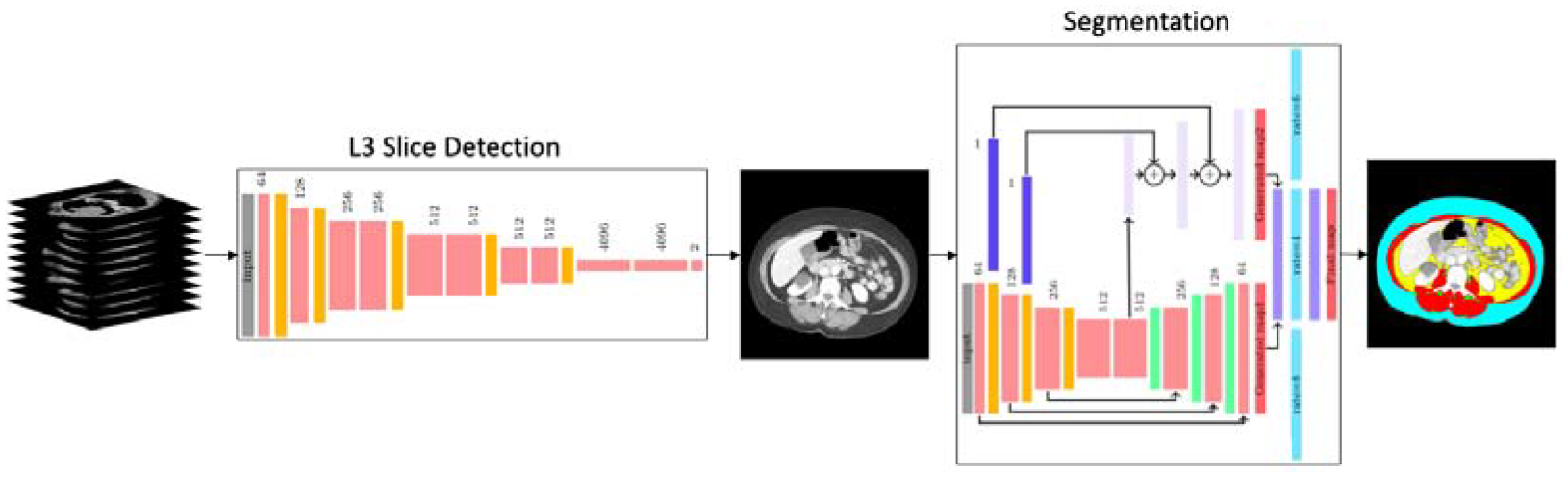
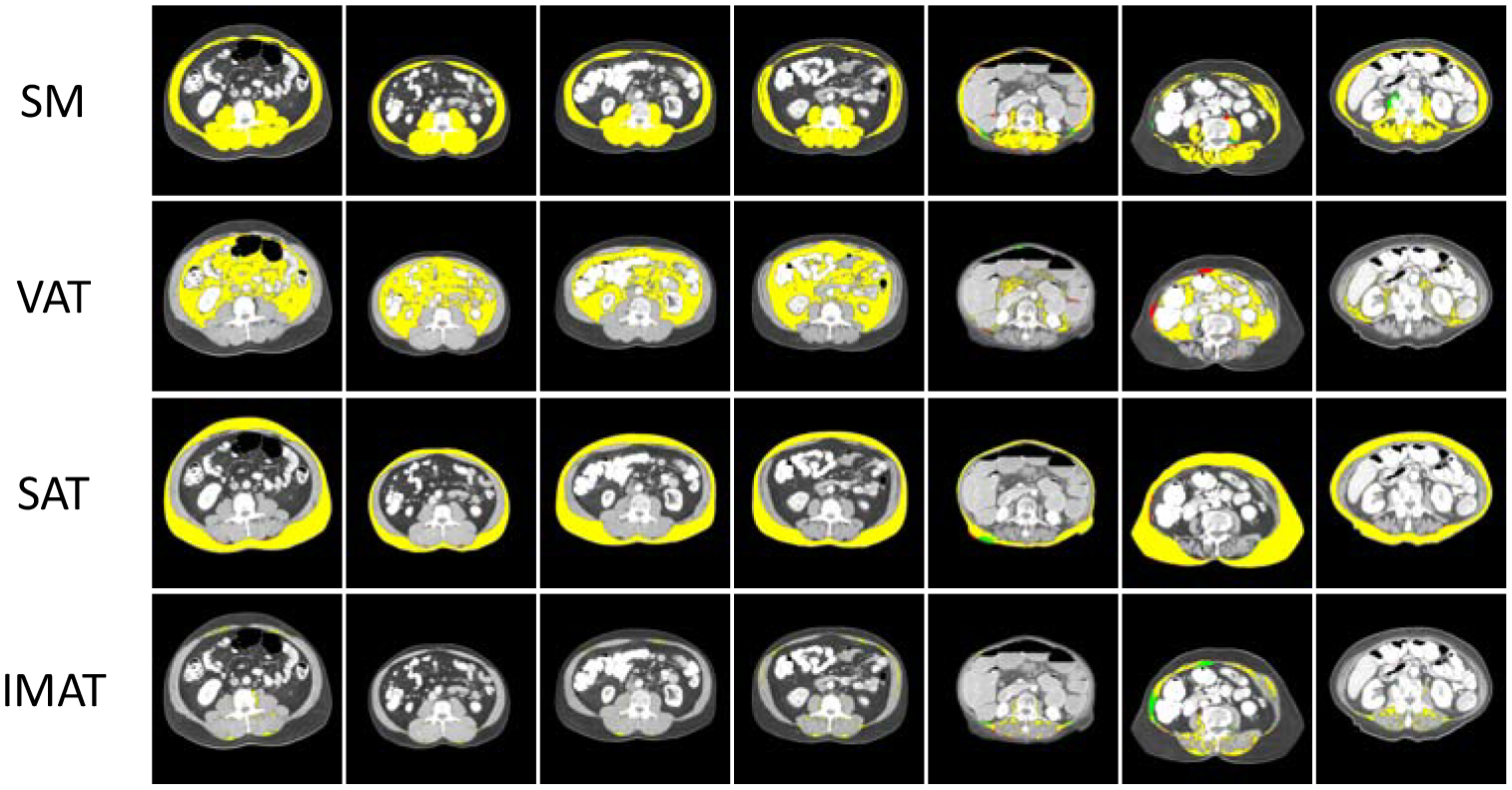
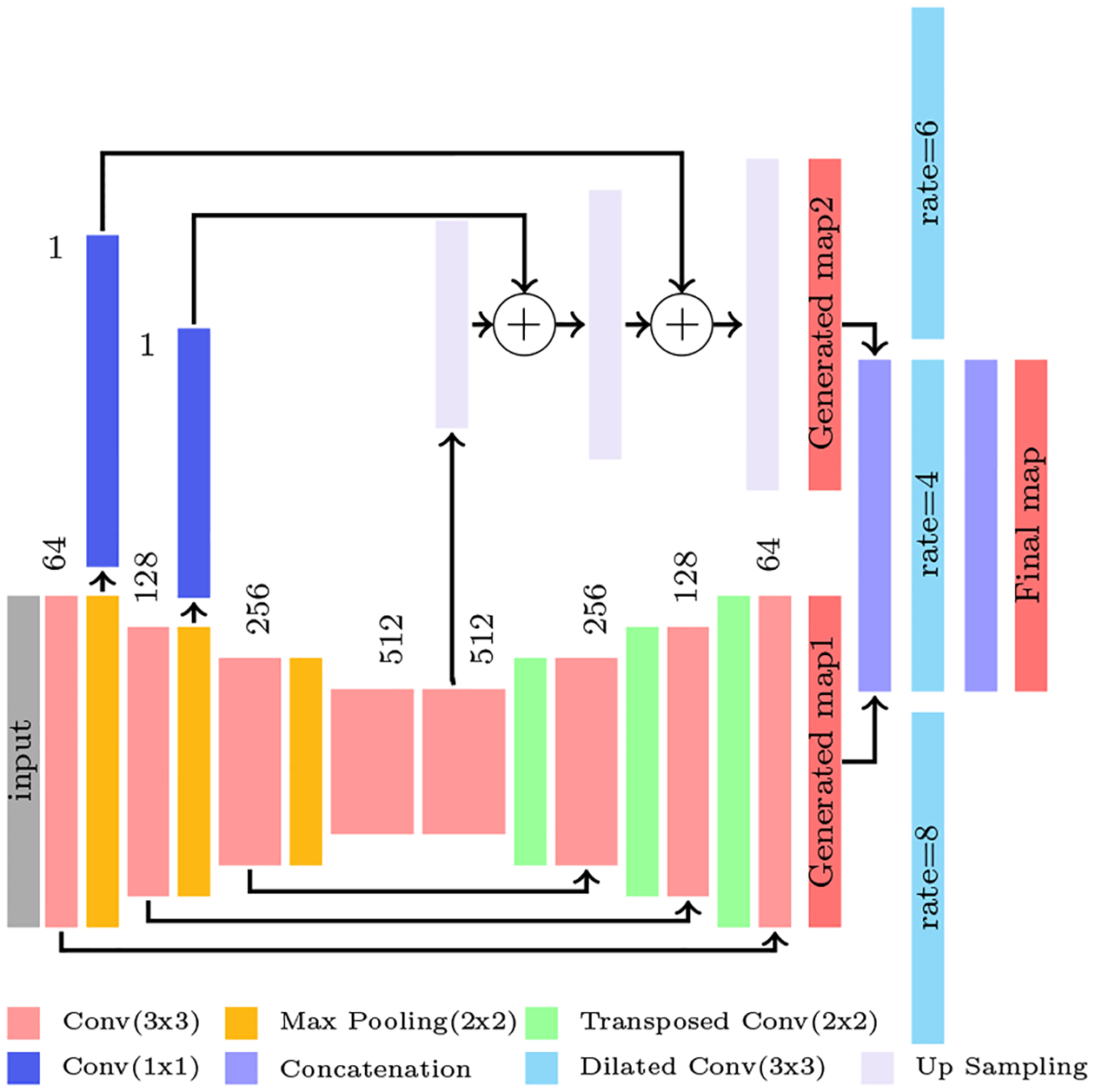
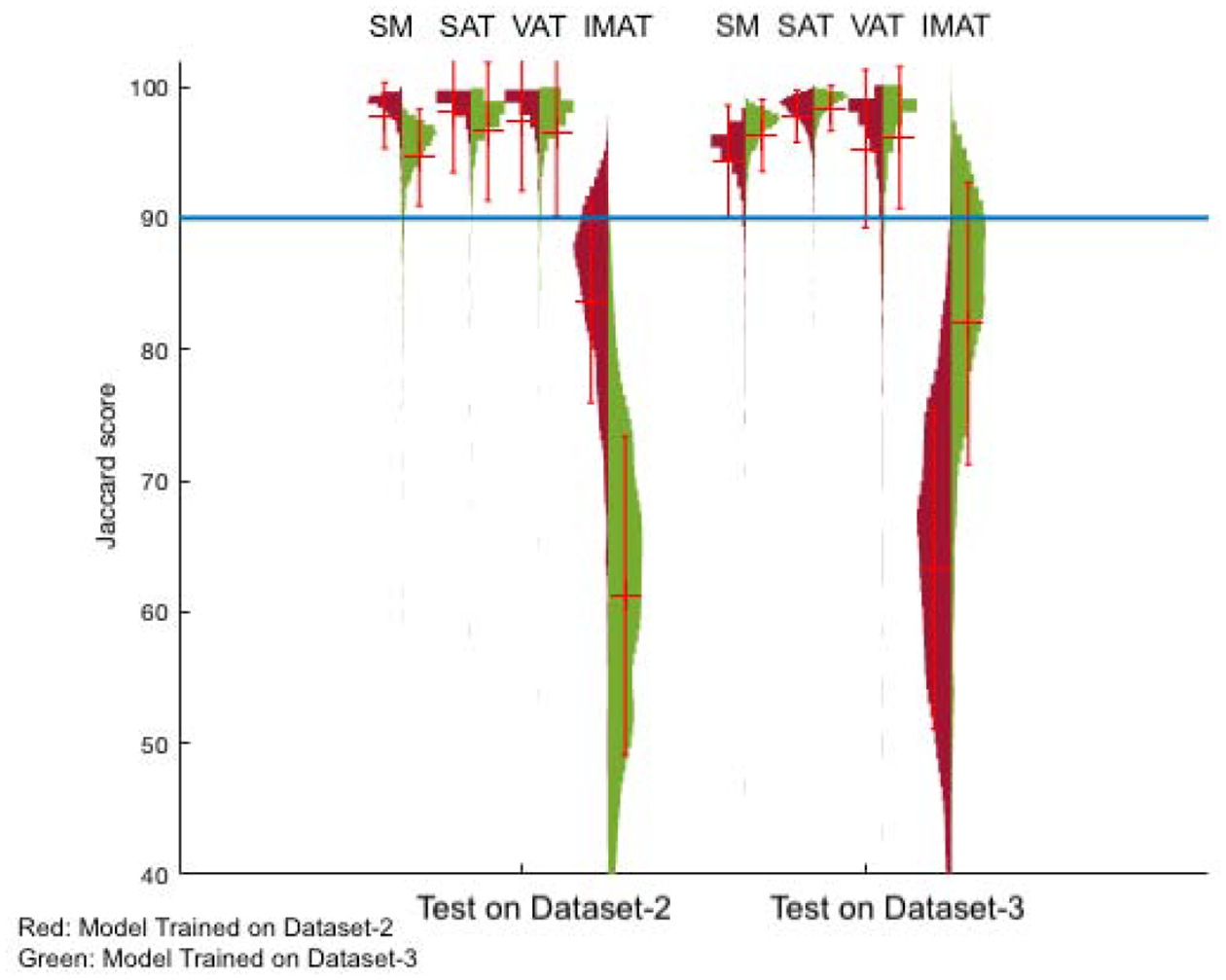
Computed Tomography (CT) imaging is widely used for studying body composition, i.e., the proportion of muscle and fat tissues with applications in areas such as nutrition or chemotherapy dose design. In particular, axial CT slices from the 3rd lumbar (L3) vertebral location are commonly used for body composition analysis. However, selection of the third lumbar vertebral slice and the segmentation of muscle/fat in the slice is a tedious operation if performed manually. The objective of this study is to automatically find the middle axial slice at L3 level from a full or partial body CT scan volume and segment the skeletal muscle (SM), subcutaneous adipose tissue (SAT), visceral adipose tissue (VAT) and intermuscular adipose tissue (IMAT) on that slice. The proposed algorithm includes an L3 axial slice localization network followed by a muscle-fat segmentation network. The localization network is a fully convolutional classifier trained on more than 12,000 images. The segmentation network is a convolutional neural network with an encoder-decoder architecture. Three datasets with CT images taken for patients with different types of cancers are used for training and validation of the networks. The mean slice error of 0.87±2.54 was achieved for L3 slice localization on 1748 CT scan volumes. The performance of five class tissue segmentation network evaluated on two datasets with 1327 and 1202 test samples. The mean Jaccard score of 97% was achieved for SM and VAT tissue segmentation on 1327 images. The mean Jaccard scores of 98% and 83% are corresponding to SAT and IMAT tissue segmentation on the same dataset. The localization and segmentation network performance indicates the potential for fully automated body composition analysis with high accuracy.
计算机断层扫描(CT)成像广泛用于研究身体成分,即肌肉和脂肪组织的比例,其应用领域包括营养或化疗剂量设计。特别是,从第三腰椎(L3)椎骨位置的轴向 CT 切片常用于身体成分分析。然而,如果手动执行,选择第三腰椎切片和对切片中的肌肉/脂肪进行分割是一项繁琐的操作。本研究的目的是从完整或部分身体 CT 扫描体积中自动找到 L3 水平的中间轴向切片,并对该切片上的骨骼肌(SM)、皮下脂肪组织(SAT)、内脏脂肪组织(VAT)和肌间脂肪组织(IMAT)进行分割。所提出的算法包括 L3 轴向切片定位网络和肌肉-脂肪分割网络。定位网络是一个基于超过 12000 张图像的全卷积分类器进行训练的。分割网络是一个具有编码器-解码器架构的卷积神经网络。该网络使用了三个包含不同类型癌症患者 CT 图像的数据集进行训练和验证。在 1748 个 CT 扫描体积上,L3 切片定位的平均切片误差为 0.87±2.54。在两个数据集上,使用 1327 个和 1202 个测试样本评估了五个组织分割网络的性能。在 1327 张图像上,SM 和 VAT 组织分割的平均 Jaccard 得分达到了 97%。在同一数据集上,SAT 和 IMAT 组织分割的平均 Jaccard 得分分别为 98%和 83%。定位和分割网络的性能表明,具有高精度的全自动身体成分分析具有潜力。