Centre for Automation and Robotics (CAR UPM-CSIC), Universidad Politécnica de Madrid, 28006 Madrid, Spain.
Department of Electrical, Electronical and Automatic Control Engineering and Applied Physics, Escuela Técnica Superior de Ingeniería y Diseño Industrial, Universidad Politécnica de Madrid, 28012 Madrid, Spain.
Sensors (Basel). 2021 Mar 22;21(6):2212. doi: 10.3390/s21062212.
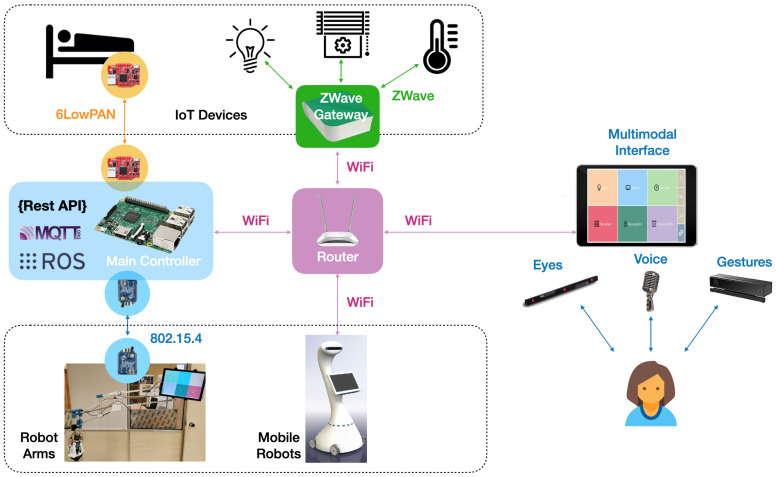
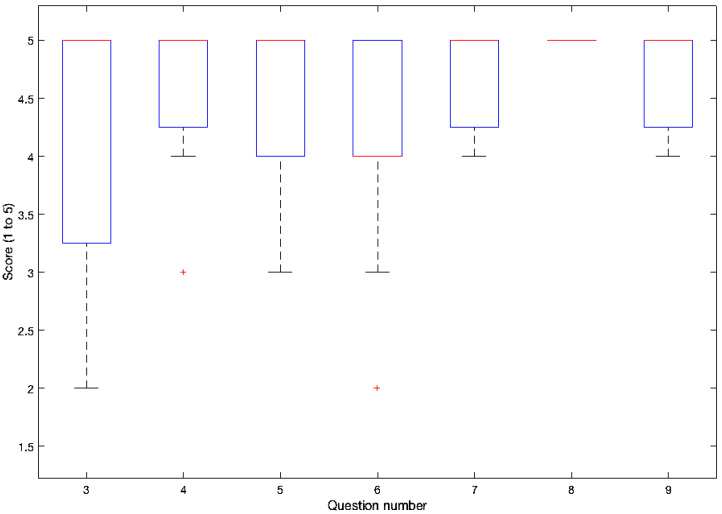
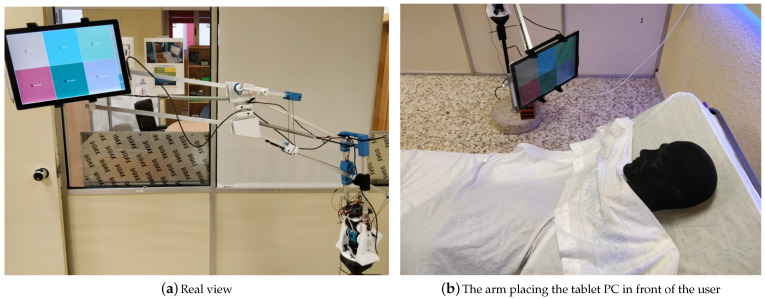
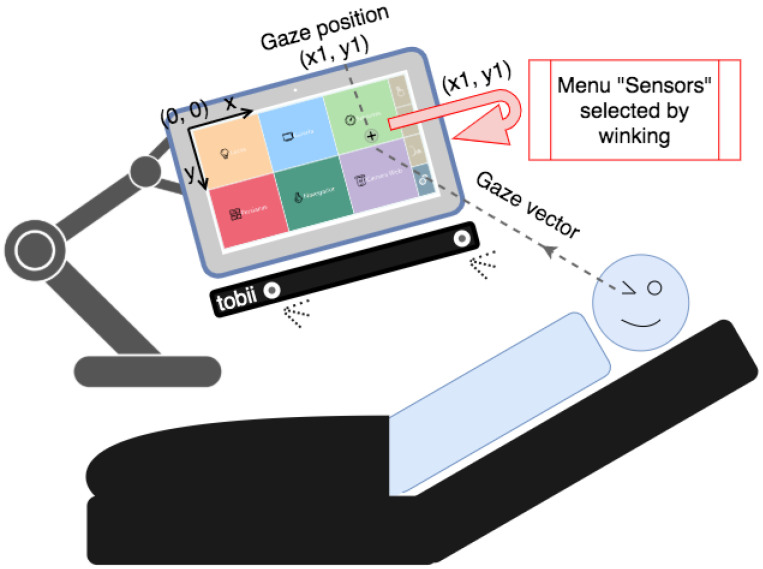
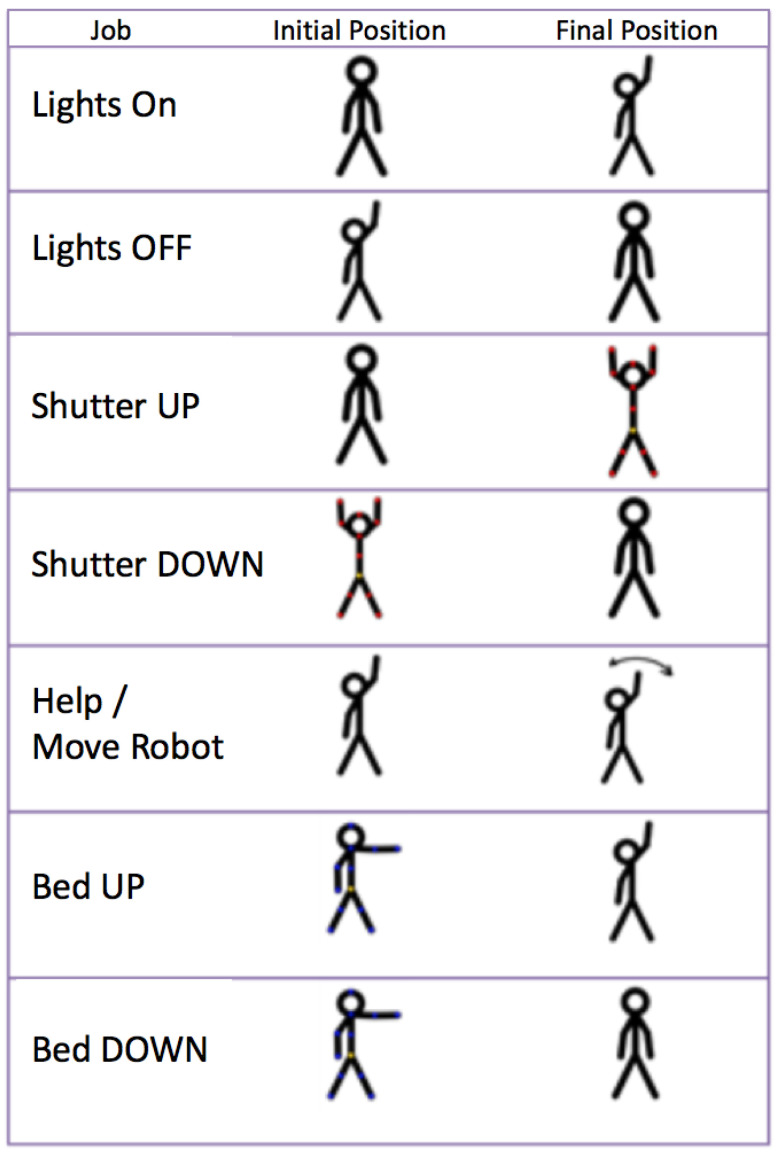
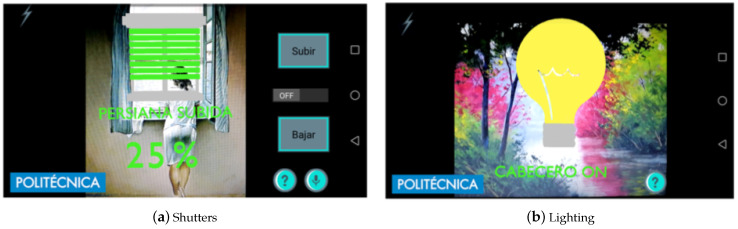
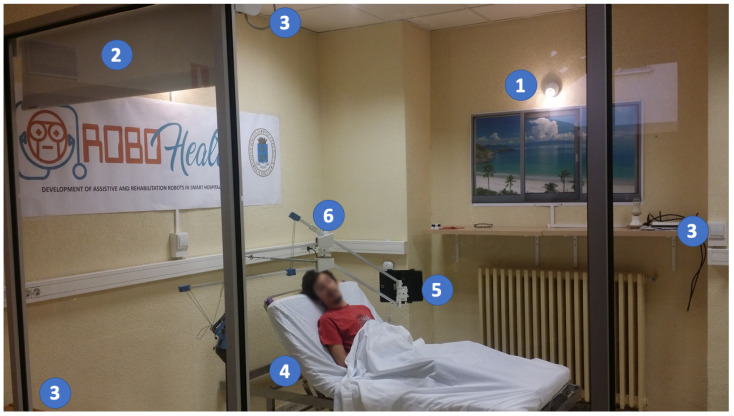
This paper presents a new architecture that integrates Internet of Things (IoT) devices, service robots, and users in a smart assistive environment. A new intuitive and multimodal interaction system supporting people with disabilities and bedbound patients is presented. This interaction system allows the user to control service robots and devices inside the room in five different ways: touch control, eye control, gesture control, voice control, and augmented reality control. The interaction system is comprised of an assistive robotic arm holding a tablet PC. The robotic arm can place the tablet PC in front of the user. A demonstration of the developed technology, a prototype of a smart room equipped with home automation devices, and the robotic assistive arm are presented. The results obtained from the use of the various interfaces and technologies are presented in the article. The results include user preference with regard to eye-base control (performing clicks, and using winks or gaze) and the use of mobile phones over augmented reality glasses, among others.
本文提出了一种新的架构,将物联网 (IoT) 设备、服务机器人和用户集成到智能辅助环境中。提出了一种新的直观的多模态交互系统,为残疾人和卧床患者提供支持。该交互系统允许用户通过五种不同方式控制房间内的服务机器人和设备:触摸控制、眼动控制、手势控制、语音控制和增强现实控制。交互系统由一个辅助机械臂和一个平板电脑组成。机械臂可以将平板电脑放在用户面前。本文介绍了所开发技术的演示、配备智能家居设备的智能房间原型以及机械辅助臂。文章中还展示了使用各种接口和技术获得的结果。结果包括用户对眼基控制(执行点击、眨眼和注视)以及使用手机而不是增强现实眼镜的偏好等。