Integrative Pharmacogenomics Institute, Universiti Teknologi MARA, Cawangan Selangor, Kampus Puncak Alam 42300, Selangor, Malaysia.
Faculty of Applied Sciences, Universiti Teknologi MARA, Shah Alam 42300, Selangor, Malaysia.
Int J Environ Res Public Health. 2021 Mar 22;18(6):3269. doi: 10.3390/ijerph18063269.
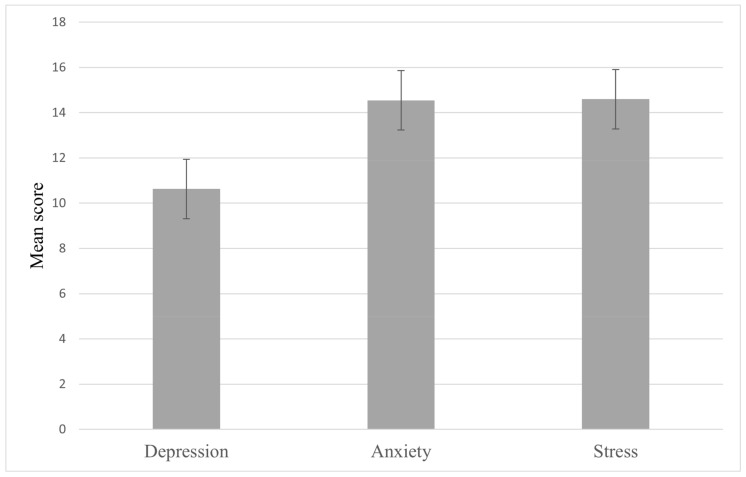
Stress, anxiety, and depression (SAD) have a negative impact on the learning and academic performance of university students. Hence, this study aimed to determine the prevalence, as well as the risk factors associated with SAD among a cohort of students pursuing undergraduate degree courses in health sciences. This is part of the strategy in building a healthy nation. A questionnaire containing socio-demographic factors and the short version of Depression, Anxiety, and Stress Scale-21 (DASS-21) was used to assess the likelihood of psychological distress. Logistic regression analysis was conducted to determine the risk factors of SAD. In total, 449 students completed the questionnaire (93.9% response rate). Of these, 65% had stress, 85.1% had anxiety and 51.4% had depression. Most cases of stress (74.6%) and depression (66.2%) were of normal-to-mild level, while 74.6% of them showed moderate-to-extremely severe anxiety. There was a statistically significant association between stress score and the year of study. In the regression analysis, poor sleep quality and fatigue were risk factors of anxiety and depression, whereas low-grade fever and frequent headaches were risk factors for stress and anxiety. Stress, anxiety, and depression scores were significantly higher among students studying medical imaging. A substantial proportion of health science students are suffering from SAD. This study recommends screening and close monitoring of the above-mentioned predictors and the formulation of comprehensive intervention strategies for students with SAD.
压力、焦虑和抑郁(SAD)会对大学生的学习和学业成绩产生负面影响。因此,本研究旨在确定健康科学本科课程学生群体中 SAD 的患病率以及相关的风险因素。这是建设健康国家战略的一部分。使用包含社会人口统计学因素和抑郁、焦虑和压力量表 21 项简表(DASS-21)的问卷评估心理困扰的可能性。进行逻辑回归分析以确定 SAD 的风险因素。共有 449 名学生完成了问卷(应答率为 93.9%)。其中,65%有压力,85.1%有焦虑,51.4%有抑郁。大多数压力病例(74.6%)和抑郁病例(66.2%)为正常至轻度,而 74.6%的焦虑为中度至极度严重。压力评分与学习年限之间存在统计学显著关联。在回归分析中,睡眠质量差和疲劳是焦虑和抑郁的风险因素,而低热和频繁头痛是压力和焦虑的风险因素。医学影像学专业学生的压力、焦虑和抑郁评分显著更高。相当一部分健康科学专业的学生患有 SAD。本研究建议对上述预测因素进行筛查和密切监测,并为患有 SAD 的学生制定综合干预策略。