Farhat Elie, Cheng Hang, Romestaing Caroline, Pamenter Matthew, Weber Jean-Michel
Biology Department, University of Ottawa, Ottawa, ON K1N 6N5, Canada.
Univ Lyon, Université Claude Bernard Lyon1, CNRS, ENTPE, UMR 5023, LEHNA, F 69622 Villeurbanne, France.
Metabolites. 2021 Mar 22;11(3):187. doi: 10.3390/metabo11030187.
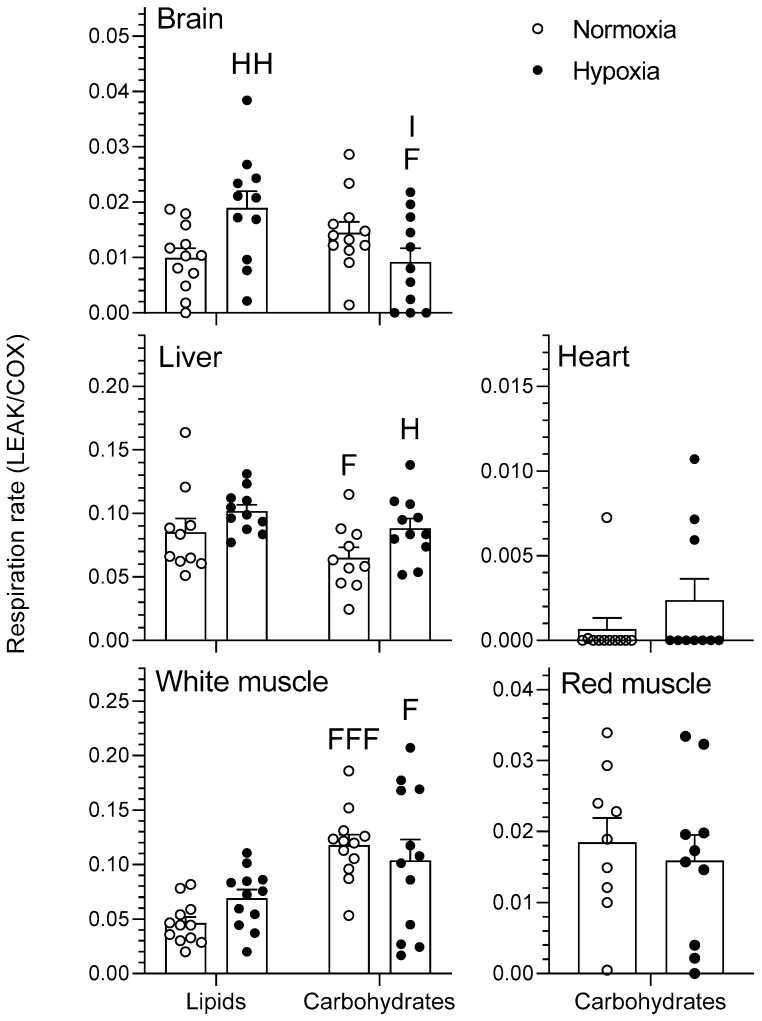
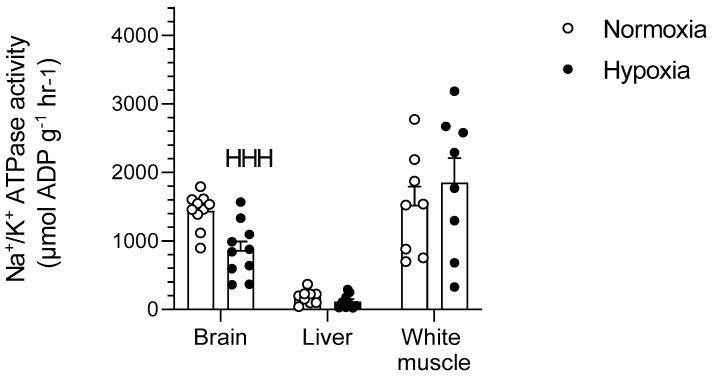
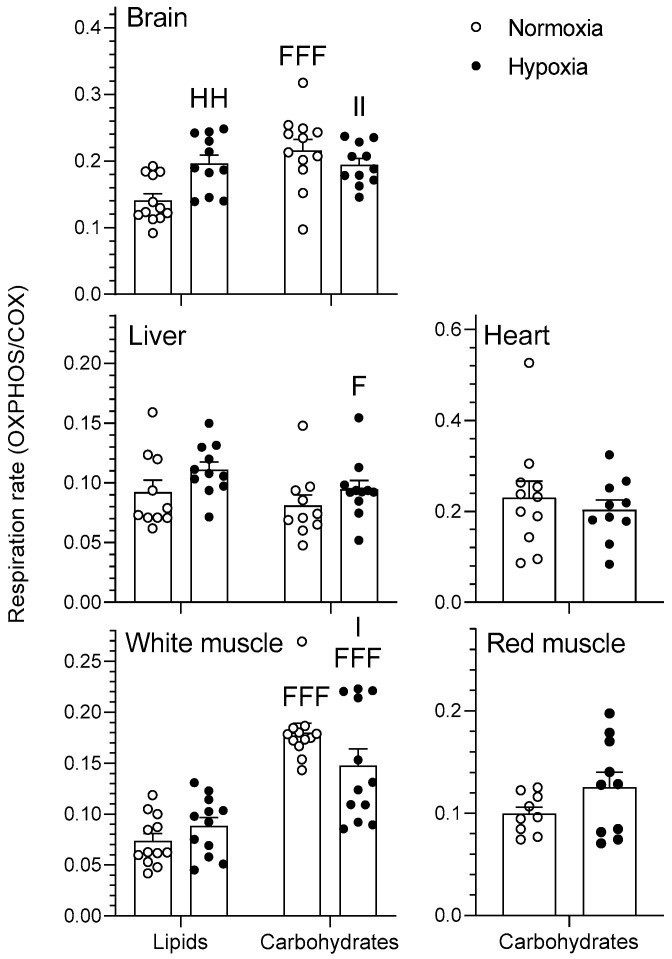
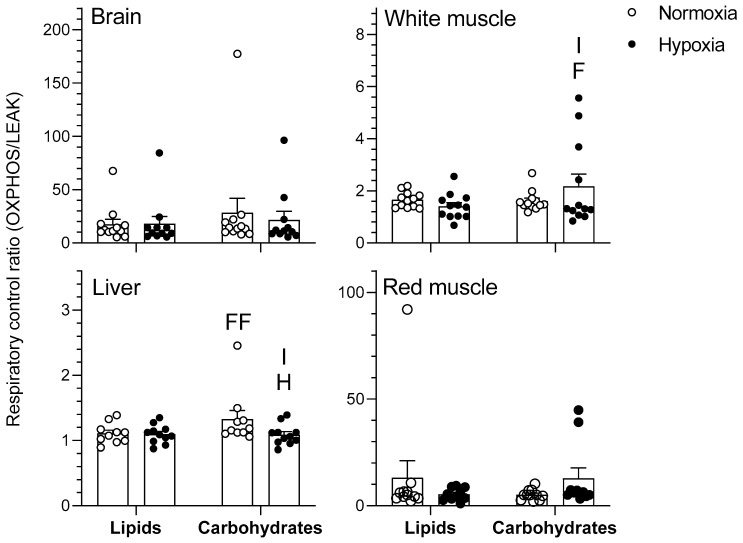
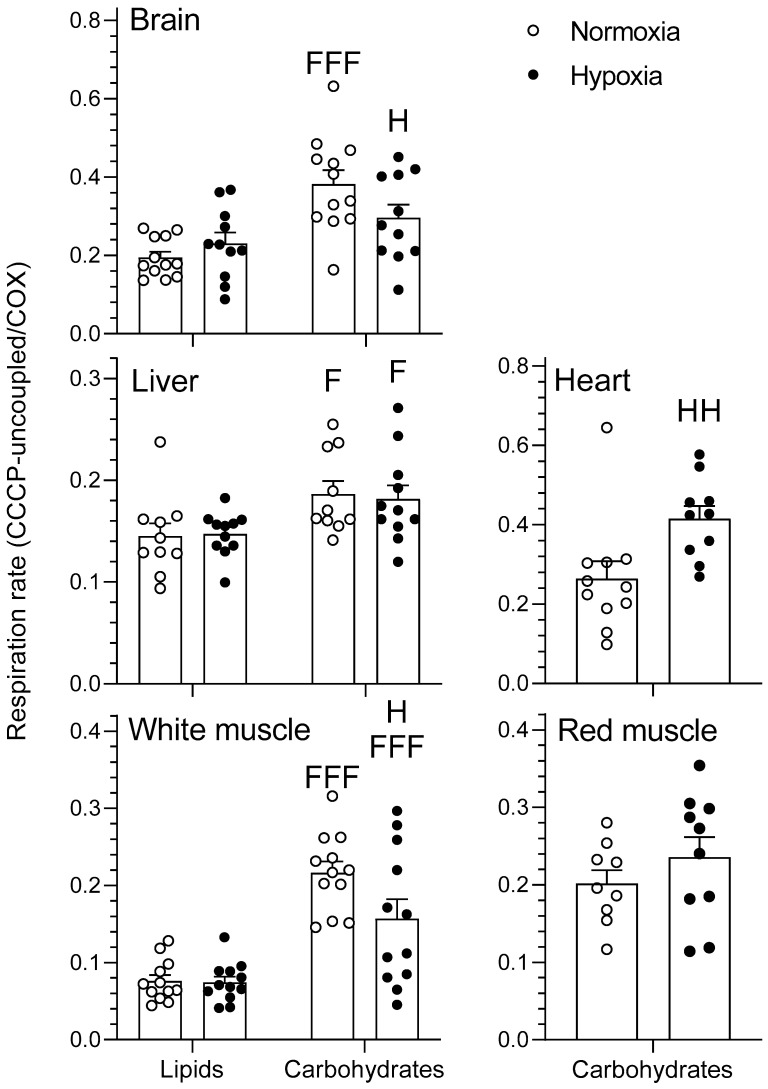
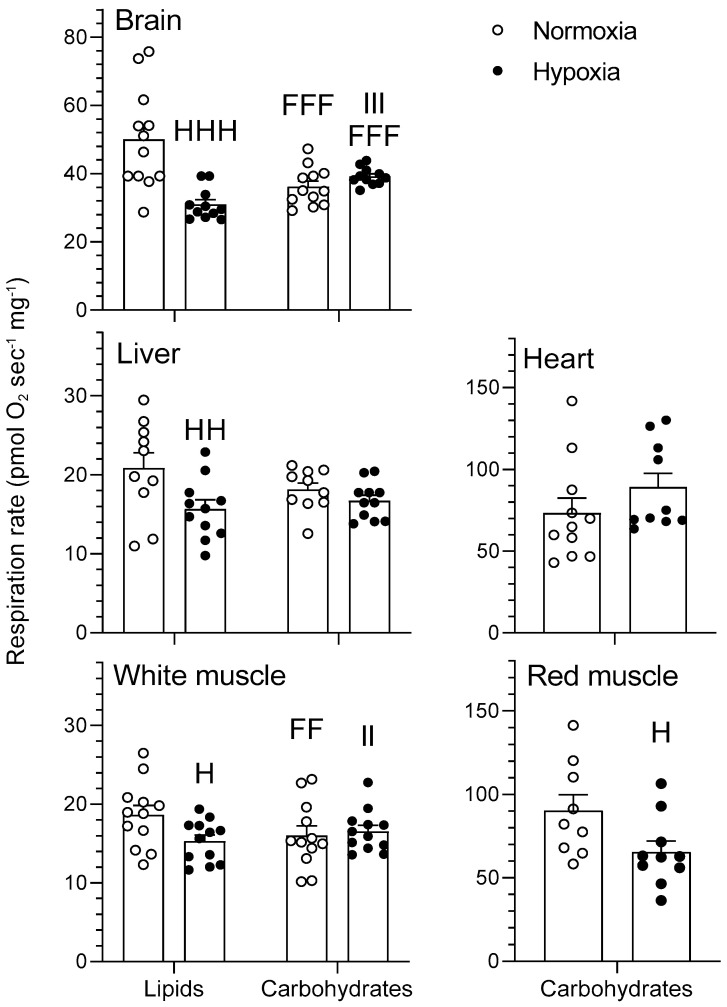
Hypometabolism is a hallmark strategy of hypoxia tolerance. To identify potential mechanisms of metabolic suppression, we have used the goldfish to quantify the effects of chronically low oxygen (4 weeks; 10% air saturation) on mitochondrial respiration capacity and fuel preference. The responses of key enzymes from glycolysis, β-oxidation and the tricarboxylic acid (TCA) cycle, and Na/K-ATPase were also monitored in various tissues of this champion of hypoxia tolerance. Results show that mitochondrial respiration of individual tissues depends on oxygen availability as well as metabolic fuel oxidized. All the respiration parameters measured in this study (LEAK, OXPHOS, Respiratory Control Ratio, CCCP-uncoupled, and COX) are affected by hypoxia, at least for one of the metabolic fuels. However, no common pattern of changes in respiration states is observed across tissues, except for the general downregulation of COX that may help metabolic suppression. Hypoxia causes the brain to switch from carbohydrates to lipids, with no clear fuel preference in other tissues. It also downregulates brain Na/K-ATPase (40%) and causes widespread tissue-specific effects on glycolysis and beta-oxidation. This study shows that hypoxia-acclimated goldfish mainly promote metabolic suppression by adjusting the glycolytic supply of pyruvate, reducing brain Na/K-ATPase, and downregulating COX, most likely decreasing mitochondrial density.
低代谢是缺氧耐受的一个标志性策略。为了确定代谢抑制的潜在机制,我们利用金鱼来量化长期低氧(4周;10%空气饱和度)对线粒体呼吸能力和燃料偏好的影响。我们还监测了这种缺氧耐受冠军鱼各种组织中糖酵解、β-氧化和三羧酸(TCA)循环的关键酶以及钠钾ATP酶的反应。结果表明,各个组织的线粒体呼吸取决于氧气供应以及所氧化的代谢燃料。本研究中测量的所有呼吸参数(基础呼吸、氧化磷酸化、呼吸控制率、CCCP解偶联呼吸和细胞色素c氧化酶)都受到缺氧的影响,至少对于一种代谢燃料是如此。然而,除了可能有助于代谢抑制的细胞色素c氧化酶普遍下调外,各组织之间未观察到呼吸状态变化的共同模式。缺氧导致大脑从碳水化合物转向脂质,其他组织中没有明确的燃料偏好。它还下调大脑钠钾ATP酶(40%),并对糖酵解和β-氧化产生广泛的组织特异性影响。这项研究表明,缺氧适应的金鱼主要通过调节丙酮酸的糖酵解供应、降低大脑钠钾ATP酶以及下调细胞色素c氧化酶来促进代谢抑制,最有可能是降低线粒体密度。