Dioguardi Mario, Laneve Enrica, Di Cosola Michele, Cazzolla Angela Pia, Sovereto Diego, Aiuto Riccardo, Laino Luigi, Leanza Teresa, Alovisi Mario, Troiano Giuseppe, Lo Muzio Lorenzo
Department of Clinical and Experimental Medicine, University of Foggia, Via Rovelli 50, 71122 Foggia, Italy.
Department of Biomedical, Surgical, and Dental Science, University of Milan, 20122 Milan, Italy.
Materials (Basel). 2021 Mar 22;14(6):1559. doi: 10.3390/ma14061559.
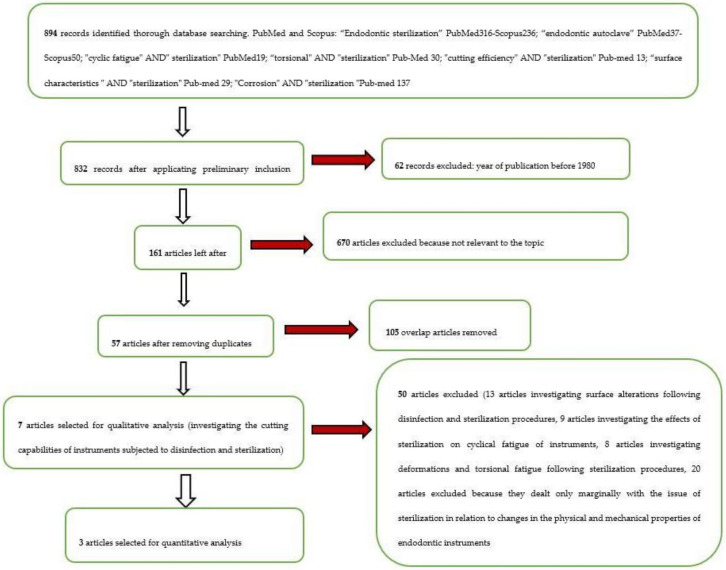
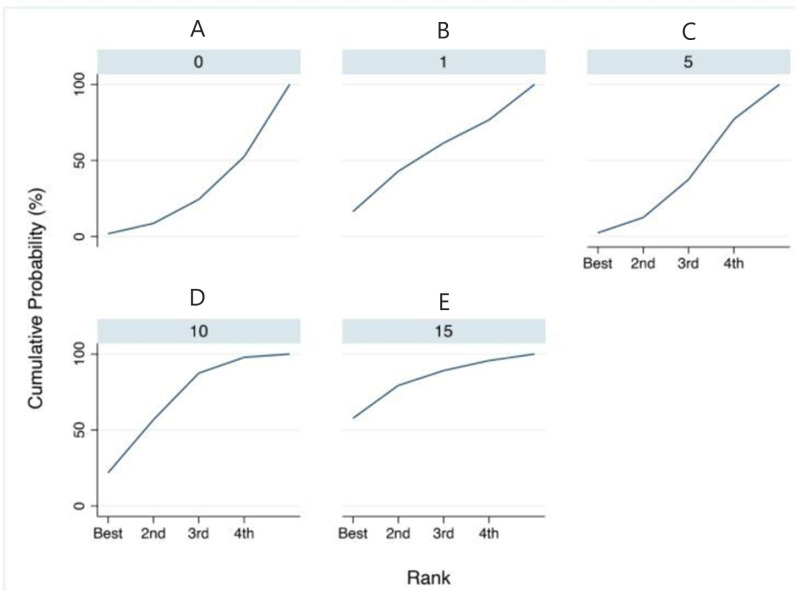
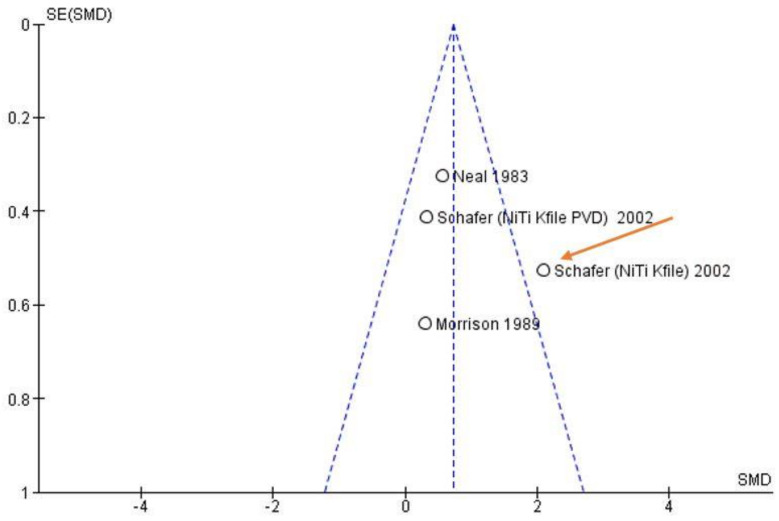
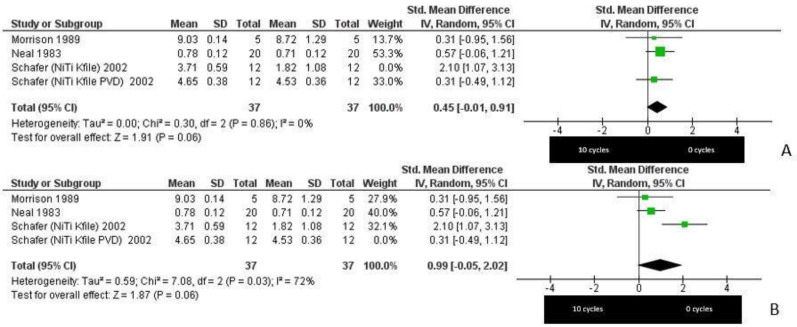
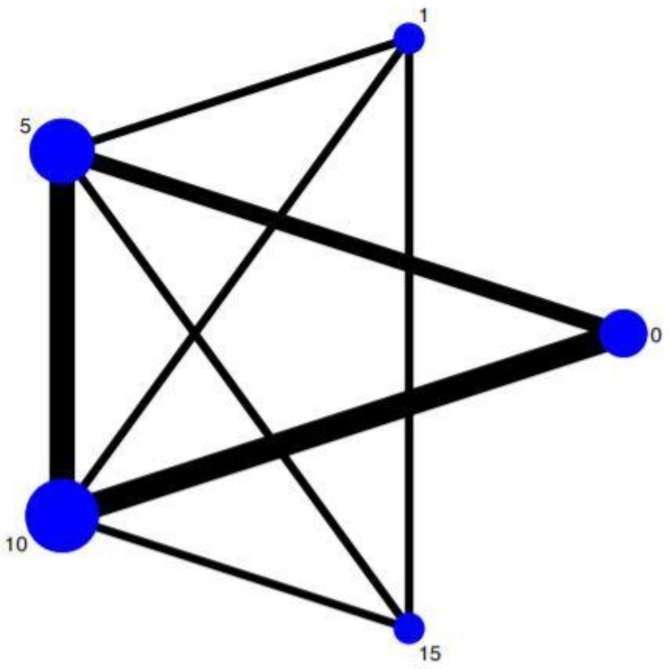
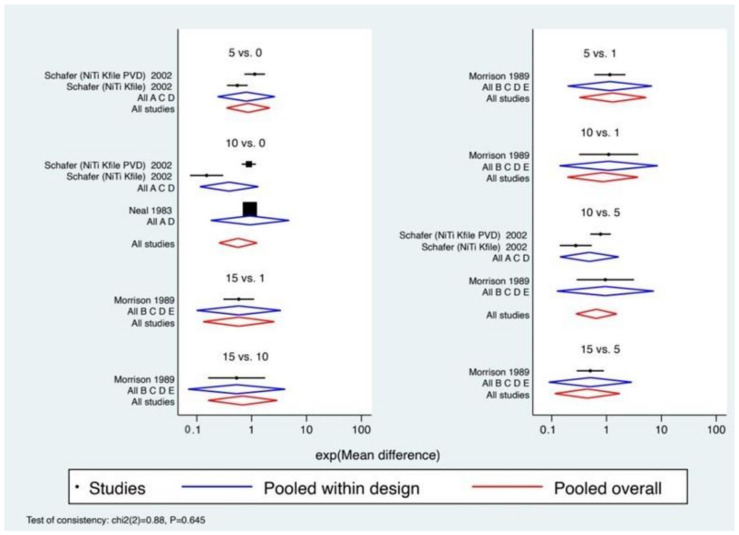
Sterilization processes guarantee the sterility of dental instruments but can negatively affect instrument features by altering their physical and mechanical properties. The endodontic instrumentation can undergo a series of alterations, ranging from corrosion to variation in the cutting angle and then changes in the torsional properties and torsional fatigue resistance. This systematic literature review and meta-analysis aims to investigate alterations to the cutting efficiency of endodontic instruments that are induced by procedures for their disinfection and sterilization. Methodologies adopted for this investigation follow the PRISMA (Preferred Reporting Items for Systematic Reviews and Meta-Analysis) guidelines. The following were used as search terms on PubMed and Scopus: "endodontic sterilization", "endodontic autoclave", "cyclic fatigue", "torsional", "cutting efficiency", "sterilization", "surface characteristics", and "corrosion". At the end of the selection process, 36 articles were identified, and seven of them are included in this systematic review. The results of a meta-analysis conducted for the use of 10 autoclaving cycles shows a standardized mean difference (SMD) of 0.80 with a -value equal to 0.04 with respect to effect on cutting efficiency. The network meta-analysis, through direct and indirect comparison between the different autoclave cycles (0, 1, 5, 10, and 15 cycles), revealed that treatment involving 15 autoclave cycles produced the most robust results in terms of having the greatest effects in terms of altered cutting efficiency with a probability of 57.7% and a SUCRA (surface under the cumulative ranking) of 80%. The alterations in the effects on cutting efficiency appear to be triggered after five cycles of sterilization by heat (autoclave). In conclusion, the meta-analysis of the data indicates that the autoclave sterilization protocol must not be repeated more than five times to preserve cutting efficiency. Within the limitations of this review, we can therefore establish that sterilization by autoclaving alone results in steel and NiTi instruments becoming less efficient in cutting after five cycles, as measured by a reduction in cutting efficiency.
灭菌过程可确保牙科器械的无菌状态,但会改变器械的物理和机械性能,从而对器械特性产生负面影响。根管治疗器械可能会经历一系列改变,从腐蚀到切割角度的变化,进而导致扭转性能和抗扭转疲劳性能的改变。本系统文献综述和荟萃分析旨在研究根管治疗器械消毒和灭菌程序对其切割效率的影响。本次调查采用的方法遵循PRISMA(系统评价和荟萃分析的首选报告项目)指南。在PubMed和Scopus上使用了以下搜索词:“根管治疗灭菌”、“根管治疗高压灭菌器”、“循环疲劳”、“扭转”、“切割效率”、“灭菌”、“表面特性”和“腐蚀”。在筛选过程结束时,共识别出36篇文章,其中7篇纳入本系统综述。对10次高压灭菌循环的使用进行荟萃分析的结果显示,在对切割效率的影响方面,标准化平均差(SMD)为0.80,P值等于0.04。通过对不同高压灭菌循环(0、1、5、10和15次循环)进行直接和间接比较的网络荟萃分析表明,就切割效率改变的影响最大而言,涉及15次高压灭菌循环的处理产生了最可靠的结果,概率为57.7%,累积排序曲线下面积(SUCRA)为80%。对切割效率的影响变化似乎在五次热(高压灭菌器)灭菌循环后触发。总之,数据的荟萃分析表明,为保持切割效率,高压灭菌方案的重复次数不得超过五次。因此,在本综述的局限性范围内,我们可以确定,仅通过高压灭菌进行灭菌会导致钢制和镍钛器械在五次循环后切割效率降低,这是通过切割效率的降低来衡量的。