Asimakis Elias, Stathopoulou Panagiota, Sapounas Apostolis, Khaeso Kanjana, Batargias Costas, Khan Mahfuza, Tsiamis George
Laboratory of Systems Microbiology and Applied Genomics, Department of Environmental Engineering, University of Patras, 2 Seferi St., 30100 Agrinio, Greece.
Laboratory of Applied Genetics and Fish Breeding, Department of Animal Production, Fisheries and Aquaculture, University of Patras, Nea Ktiria, 30200 Messolonghi, Greece.
Microorganisms. 2021 Mar 22;9(3):659. doi: 10.3390/microorganisms9030659.
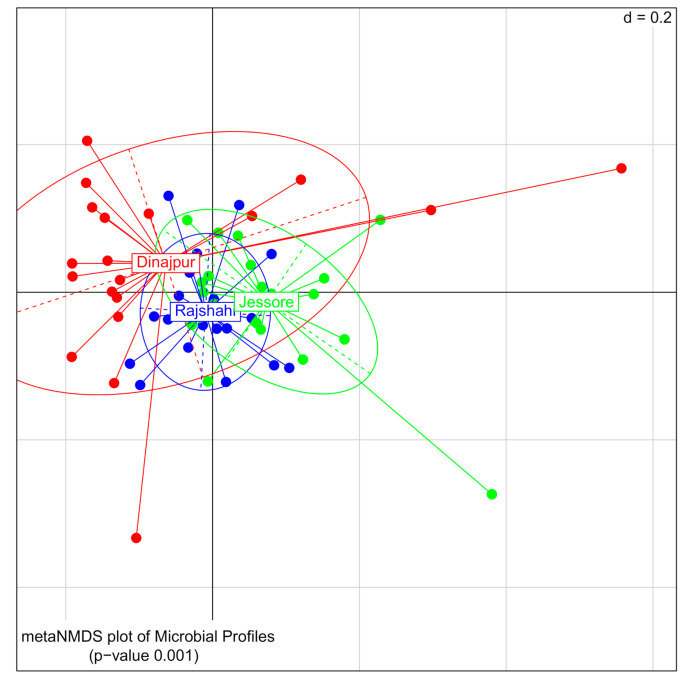
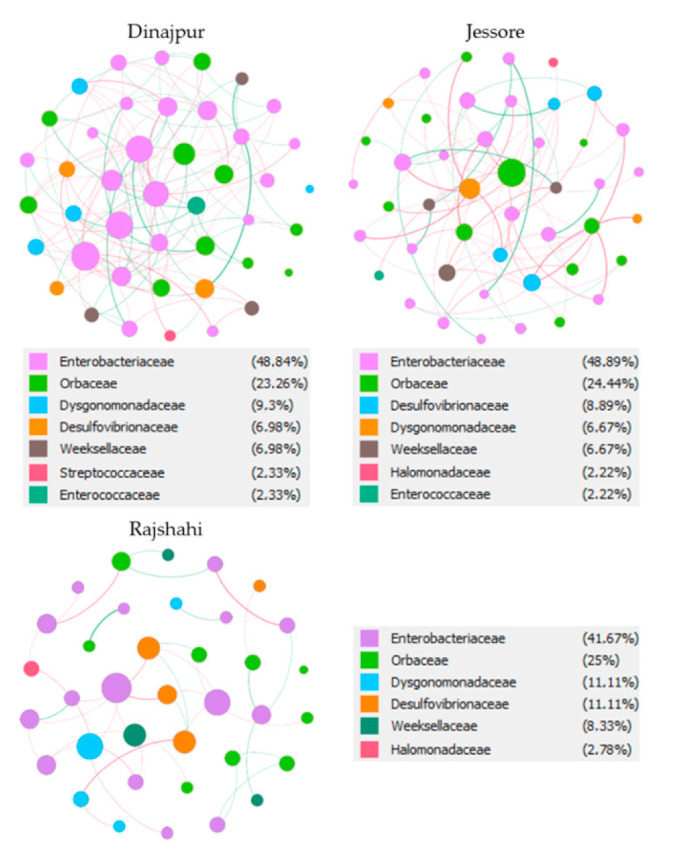
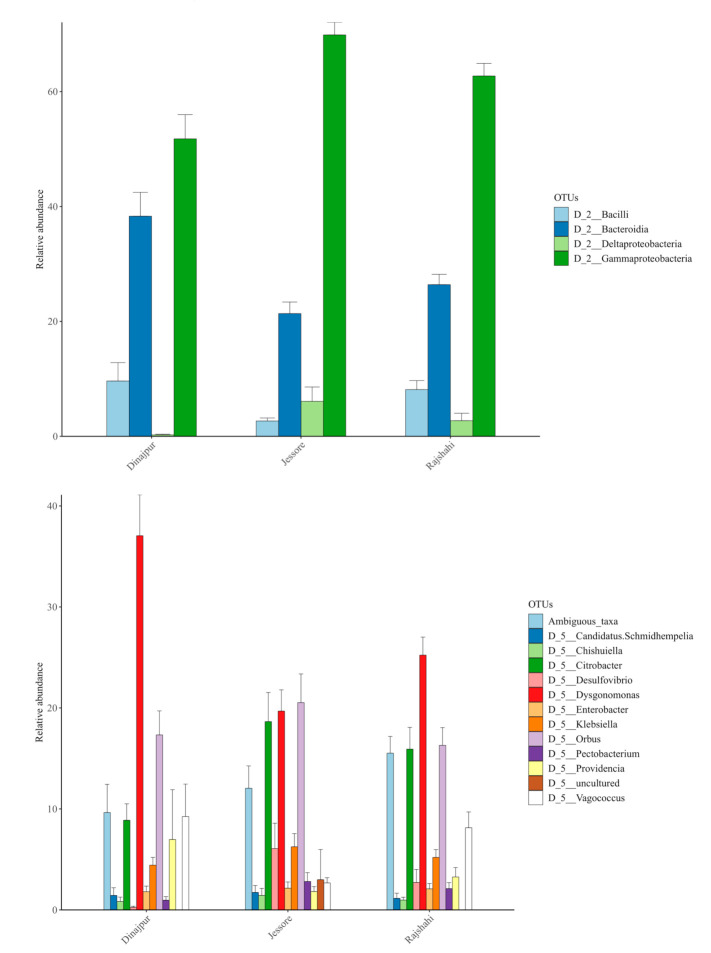
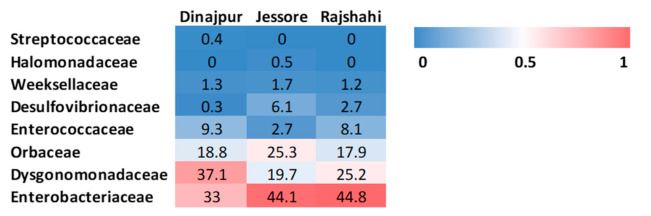
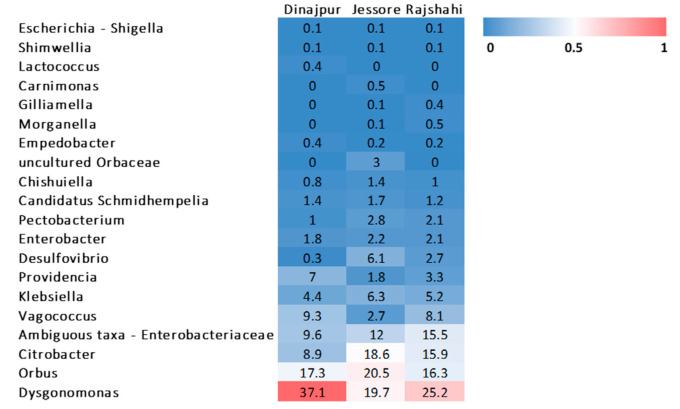
Various factors, including the insect host, diet, and surrounding ecosystem can shape the structure of the bacterial communities of insects. We have employed next generation, high-throughput sequencing of the 16S rRNA to characterize the bacteriome of wild () (Coquillett) flies from three regions of Bangladesh. The tested populations developed distinct bacterial communities with differences in bacterial composition, suggesting that geography has an impact on the fly bacteriome. The dominant bacteria belonged to the families Enterobacteriaceae, Dysgomonadaceae and Orbaceae, with the genera , and showing the highest relative abundance across populations. Network analysis indicated variable interactions between operational taxonomic units (OTUs), with cases of mutual exclusion and copresence. Certain bacterial genera with high relative abundance were also characterized by a high degree of interactions. Interestingly, genera with a low relative abundance like , , and were among those that showed abundant interactions, suggesting that they are also important components of the bacterial community. Such knowledge could help us identify ideal wild populations for domestication in the context of the sterile insect technique or similar biotechnological methods. Further characterization of this bacterial diversity with transcriptomic and metabolic approaches, could also reveal their specific role in . physiology.
包括昆虫宿主、饮食和周围生态系统在内的各种因素会影响昆虫细菌群落的结构。我们采用下一代16S rRNA高通量测序技术来表征来自孟加拉国三个地区的野生()(Coquillett)蝇的细菌群落。测试种群形成了不同的细菌群落,细菌组成存在差异,这表明地理位置对蝇类细菌群落有影响。优势细菌属于肠杆菌科、嗜胆菌科和圆菌科,其中属、和在各群体中的相对丰度最高。网络分析表明,操作分类单元(OTU)之间存在不同的相互作用,包括相互排斥和共存的情况。某些相对丰度高的细菌属也具有高度的相互作用。有趣的是,相对丰度低的属,如、和,也在具有丰富相互作用的属之列,这表明它们也是细菌群落的重要组成部分。这些知识可以帮助我们在不育昆虫技术或类似生物技术方法的背景下确定理想的野生驯化种群。用转录组学和代谢方法进一步表征这种细菌多样性,也可以揭示它们在生理中的具体作用。