
污染物在大流行后如何变化?来自受 COVID-19 影响最大的九个中国城市中五种关键污染物变化的证据。
How do pollutants change post-pandemic? Evidence from changes in five key pollutants in nine Chinese cities most affected by the COVID-19.
机构信息
School of Economics and Management, China University of Petroleum (East China), Qingdao, Shandong, 266580, People's Republic of China; Institute for Energy Economics and Policy, China University of Petroleum (East China), Qingdao, Shandong, 266580, People's Republic of China.
School of Economics and Management, China University of Petroleum (East China), Qingdao, Shandong, 266580, People's Republic of China; Institute for Energy Economics and Policy, China University of Petroleum (East China), Qingdao, Shandong, 266580, People's Republic of China.
出版信息
Environ Res. 2021 Jun;197:111108. doi: 10.1016/j.envres.2021.111108. Epub 2021 Apr 2.
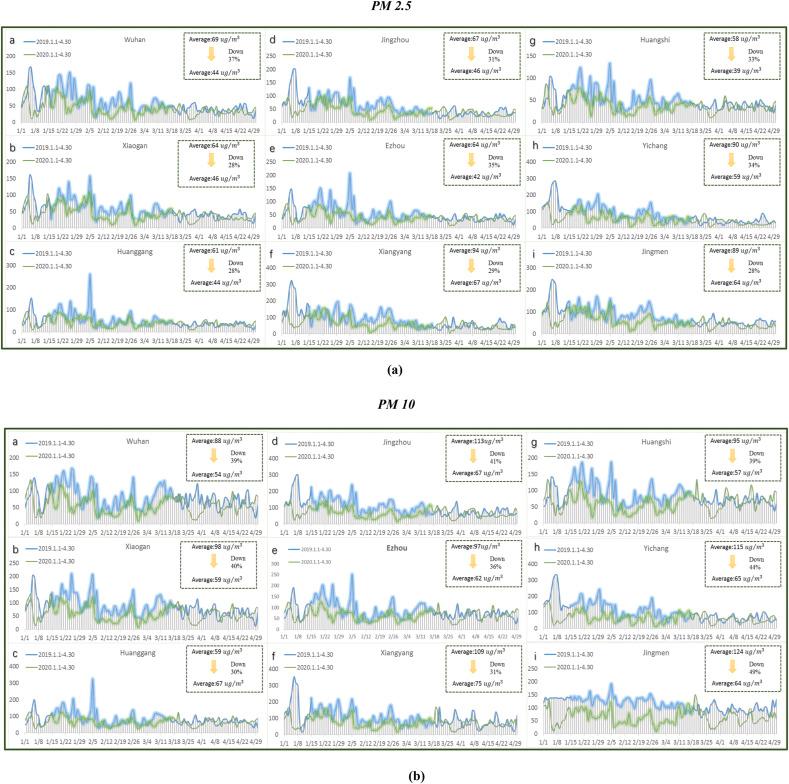
Under the COVID-19 global pandemic, China has weakened the large-scale spread of the epidemic through lockdown and other measures. At the same time, with the recovery of social production activities, China has become the only country which achieves positive growth in 2020 in the major economies. It entered the post pandemic period. These measures improved the local environmental quality. However, whether this improvement can be sustained is also a problem that needs to be solved. So, this study investigated the changes of five air pollutants (PM2.5, PM10, NO, SO, and CO) in the nine cities most severely affected by the pandemic in China during the lockdown and post pandemic period. We emphasized that when analyzing the changes of environmental quality during the epidemic, we must consider not only the impact of the day and short-term changesbut also the cumulative lag effect and sustainable development. Through a combination of qualitative and quantitative methods, it is found that the concentration of pollutants decreased significantly during the lockdown compared to the situation before the epidemic. PM10 and NO are falling most, which downs 39% and 46% respectively. During the lockdown period, the pollutant concentrations response to the pandemic has a lag of 3-7 days. More specifically, in the cities related to single pollutants, the impact on the pollutant shows a significant correlation when the measures are delayed for seven days. In the cities that are related to multiple pollutants, the correlation is usually highest in 3-5 days. This means that the impact of policy measures on the environment lasted for 3-5 days. Besides, Wuhan, Jingmen and Jingzhou have seen the most obvious improvement. However, this improvement did not last. In the post pandemic period, the pollutants rebounded, the growth rates of PM10 and NO reached 44% and 87% in September. When compared with the changes of pollutants concentration in the same period from 2017 to 2019, the decline rate has also been significantly slower, even higher than the average concentration of previous years. The research not only contributes to China's economic "green recovery" plan during the post epidemic period, but also provides references for environmental governance during economic recovery in other countries.
在 COVID-19 全球大流行期间,中国通过封锁等措施削弱了疫情的大规模传播。与此同时,随着社会生产活动的恢复,中国成为 2020 年主要经济体中唯一实现正增长的国家。它进入了后疫情时期。这些措施改善了当地的环境质量。然而,这种改善是否能够持续也是一个需要解决的问题。因此,本研究调查了中国受疫情影响最严重的九个城市在封锁和后疫情时期五种空气污染物(PM2.5、PM10、NO、SO 和 CO)的变化情况。我们强调,在分析疫情期间环境质量的变化时,不仅要考虑短期变化的影响,还要考虑累积滞后效应和可持续发展。通过定性和定量相结合的方法,发现与疫情前相比,封锁期间污染物浓度显著下降。PM10 和 NO 的降幅最大,分别下降了 39%和 46%。在封锁期间,污染物浓度对疫情的响应滞后 3-7 天。更具体地说,在与单一污染物相关的城市中,当措施延迟七天时,对污染物的影响显示出显著的相关性。在与多种污染物相关的城市中,通常在 3-5 天内相关性最高。这意味着政策措施对环境的影响持续了 3-5 天。此外,武汉、荆门和荆州的改善最为明显。然而,这种改善并没有持续。在后疫情时期,污染物反弹,9 月 PM10 和 NO 的增长率分别达到 44%和 87%。与 2017 年至 2019 年同期污染物浓度的变化相比,下降率也明显放缓,甚至高于前几年的平均浓度。这项研究不仅为中国后疫情时期的经济“绿色复苏”计划做出了贡献,也为其他国家经济复苏期间的环境治理提供了参考。




 Zotero 插件