Department of Biology, Lomonosov Moscow State University, Moscow, Russia.
Department of Immunology, Shemyakin and Ovchinnikov Institute of Bioorganic Chemistry RAS, Moscow, Russia.
Front Immunol. 2021 Mar 18;12:660085. doi: 10.3389/fimmu.2021.660085. eCollection 2021.
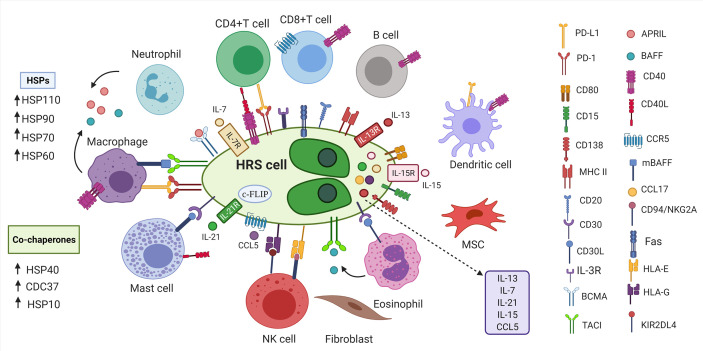
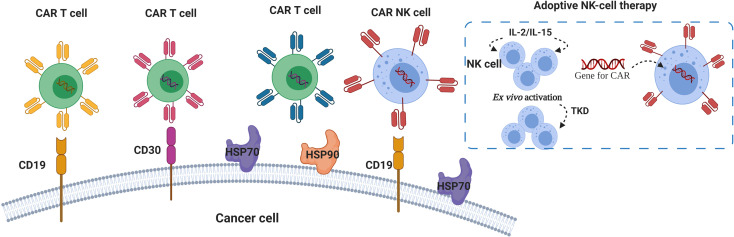
Immunotherapy harnessing the host immune system for tumor destruction revolutionized oncology research and advanced treatment strategies for lymphoma patients. Lymphoma is a heterogeneous group of cancer, where the central roles in pathogenesis play immune evasion and dysregulation of multiple signaling pathways. Immunotherapy-based approaches such as engineered T cells (CAR T), immune checkpoint modulators and NK cell-based therapies are now in the frontline of lymphoma research. Even though emerging immunotherapies showed promising results in treating lymphoma patients, low efficacy and on-target/off-tumor toxicity are of a major concern. To address that issue it is suggested to look into the emerging role of heat shock proteins. Heat shock proteins (HSPs) showed to be highly expressed in lymphoma cells. HSPs are known for their abilities to modulate immune responses and inhibit apoptosis, which made their successful entry into cancer clinical trials. Here, we explore the role of HSPs in Hodgkin and Non-Hodgkin lymphoma and their involvement in CAR T therapy, checkpoint blockade and NK cell- based therapies. Understanding the role of HSPs in lymphoma pathogenesis and the ways how HSPs may enhance anti-tumor responses, may help in the development of more effective, specific and safe immunotherapy.
免疫疗法利用宿主免疫系统来破坏肿瘤,彻底改变了肿瘤学研究和淋巴瘤患者的治疗策略。淋巴瘤是一组异质性癌症,其发病机制中的核心作用是免疫逃逸和多种信号通路的失调。基于免疫疗法的方法,如工程化 T 细胞(CAR T)、免疫检查点调节剂和基于自然杀伤 (NK) 细胞的疗法,现已成为淋巴瘤研究的前沿。尽管新兴的免疫疗法在治疗淋巴瘤患者方面显示出了有希望的结果,但低疗效和针对目标/脱靶毒性是一个主要关注点。为了解决这个问题,人们建议研究热休克蛋白的新兴作用。热休克蛋白 (HSPs) 在淋巴瘤细胞中高度表达。HSPs 以其调节免疫反应和抑制细胞凋亡的能力而闻名,这使其成功进入癌症临床试验。在这里,我们探讨了 HSPs 在霍奇金和非霍奇金淋巴瘤中的作用及其在 CAR T 治疗、检查点阻断和 NK 细胞为基础的治疗中的参与。了解 HSPs 在淋巴瘤发病机制中的作用以及 HSPs 如何增强抗肿瘤反应的方式,可能有助于开发更有效、更特异和更安全的免疫疗法。