Albakova Zarema, Mangasarova Yana, Sapozhnikov Alexander
Department of Biology, Lomonosov Moscow State University, Moscow 119192, Russia.
Chokan Limited Liability Partnership (LLP), Almaty 050039, Kazakhstan.
Biomedicines. 2022 Oct 28;10(11):2747. doi: 10.3390/biomedicines10112747.
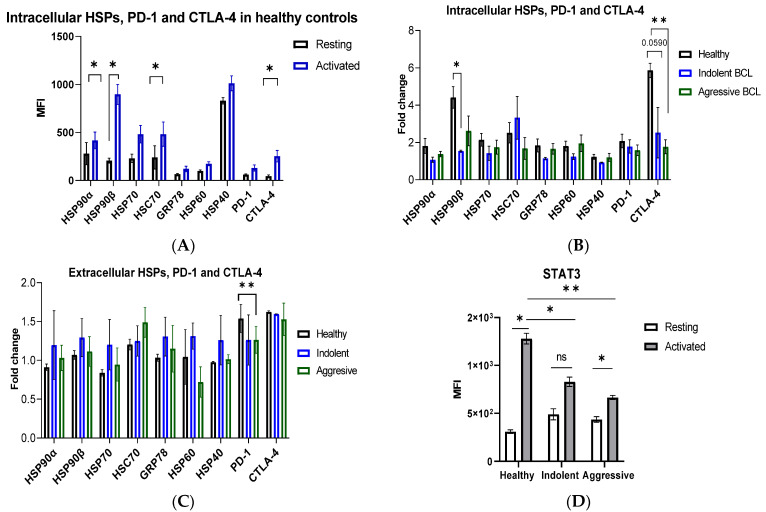
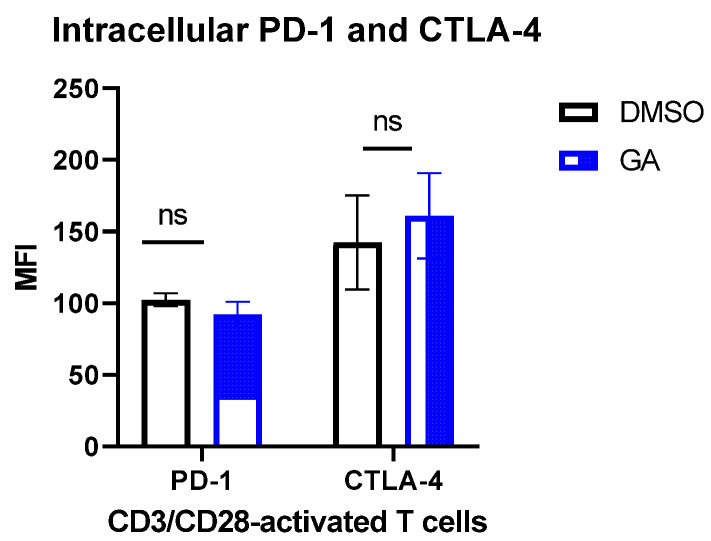
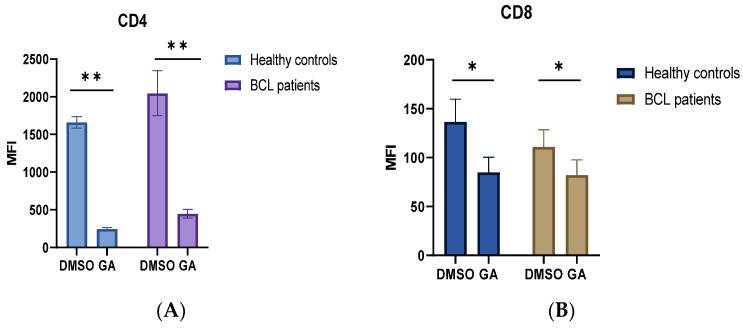
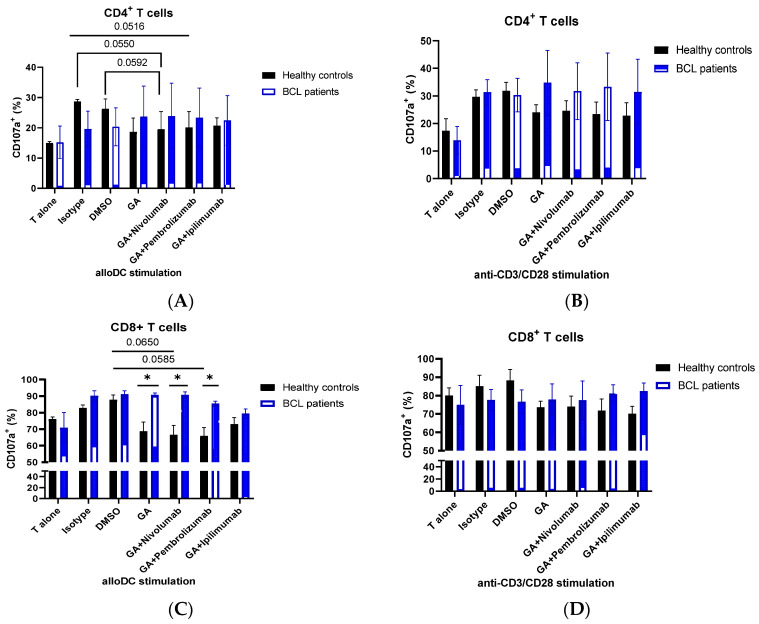
Heat shock proteins (HSPs) are molecular chaperones that act in a variety of cellular processes, ensuring protein homeostasis and integrity. HSPs play critical roles in the modulation of various immune cells. However, the role of HSPs in T cell activation is largely unknown. We show that HSPs are upregulated following CD3/CD28 stimulation, suggesting that HSP expression might be regulated via TCR. We found that B-cell lymphoma (BCL) patients have dysregulated expression of intracellular and extracellular HSPs, immune checkpoints PD-1, CTLA-4, and STAT3 in CD3/CD28-activated T cells. Consistent with previous findings, we show that HSP90 inhibition downregulated CD4 and CD8 surface markers in healthy controls and BCL patients. HSP90 inhibition alone or in combination with PD-1 or CTLA-4 inhibitors differentially affected CD4+ and CD8+ T cell degranulation responses when stimulated with allogeneic DCs or CD3/CD28 in BCL patients. Additionally, we showed that HSP90 inhibition does not significantly affect intracellular PD-1 and CTLA-4 expression in CD3/CD28-activated T cells. These findings may provide the basis for the discovery of novel immunological targets for the treatment of cancer patients and improve our understanding of HSP functions in immune cells.
热休克蛋白(HSPs)是分子伴侣,在多种细胞过程中发挥作用,确保蛋白质的稳态和完整性。HSPs在多种免疫细胞的调节中起关键作用。然而,HSPs在T细胞活化中的作用在很大程度上尚不清楚。我们发现,CD3/CD28刺激后HSPs表达上调,提示HSP表达可能通过TCR调控。我们发现,B细胞淋巴瘤(BCL)患者CD3/CD28活化的T细胞中细胞内和细胞外HSPs、免疫检查点PD-1、CTLA-4和STAT3的表达失调。与先前的研究结果一致,我们发现HSP90抑制可下调健康对照者和BCL患者的CD4和CD8表面标志物。在BCL患者中,单独抑制HSP90或与PD-1或CTLA-4抑制剂联合使用,在同种异体DCs或CD3/CD28刺激时,对CD4+和CD8+T细胞脱颗粒反应有不同影响。此外,我们发现HSP90抑制对CD3/CD28活化的T细胞中细胞内PD-1和CTLA-4的表达无显著影响。这些发现可能为发现治疗癌症患者的新型免疫靶点提供依据,并增进我们对HSPs在免疫细胞中功能的理解。