Alvisi Nicolò, van Noort Kim, Dwiani Sarlita, Geschiere Nathan, Sukarta Octavina, Varossieau Koen, Nguyen Dieu-Linh, Strasser Richard, Hokke Cornelis H, Schots Arjen, Wilbers Ruud H P
Laboratory of Nematology, Plant Sciences Group, Wageningen University and Research, Wageningen, Netherlands.
Department of Parasitology, Leiden University Medical Center, Leiden, Netherlands.
Front Plant Sci. 2021 Mar 17;12:638454. doi: 10.3389/fpls.2021.638454. eCollection 2021.
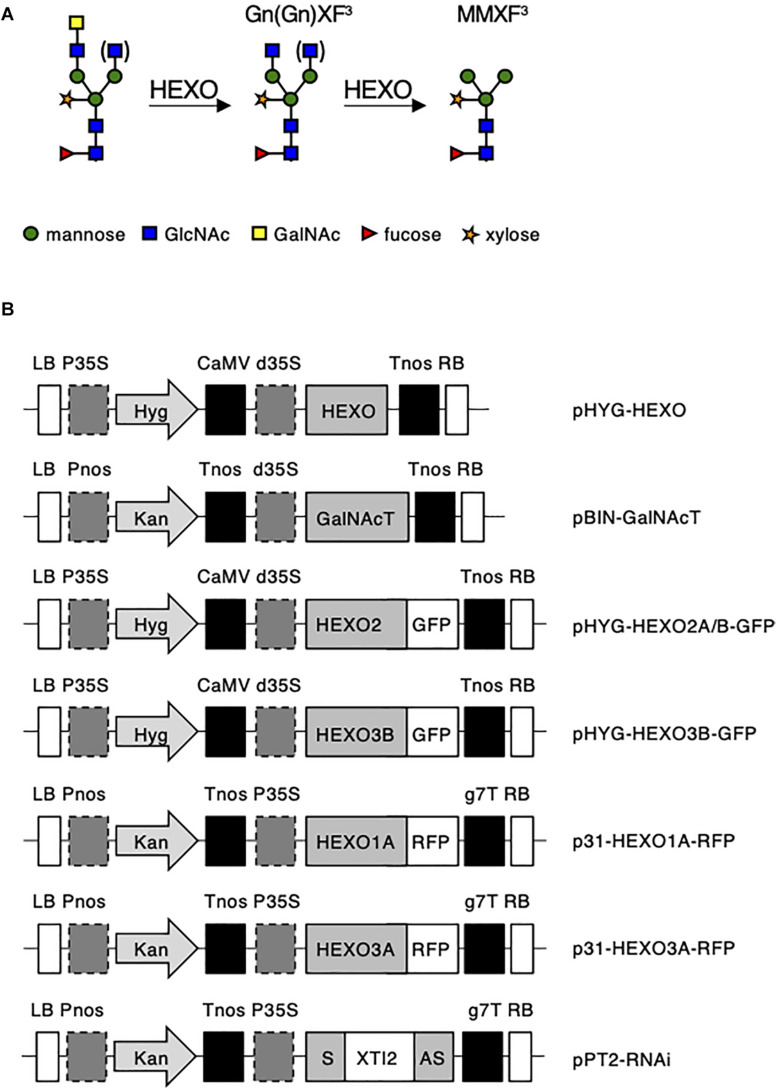
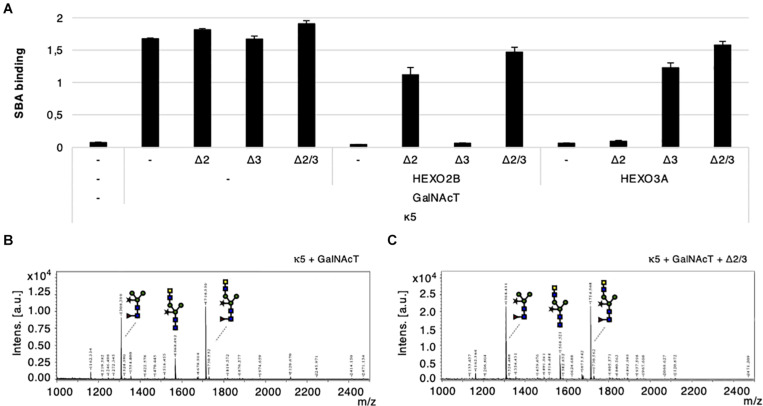
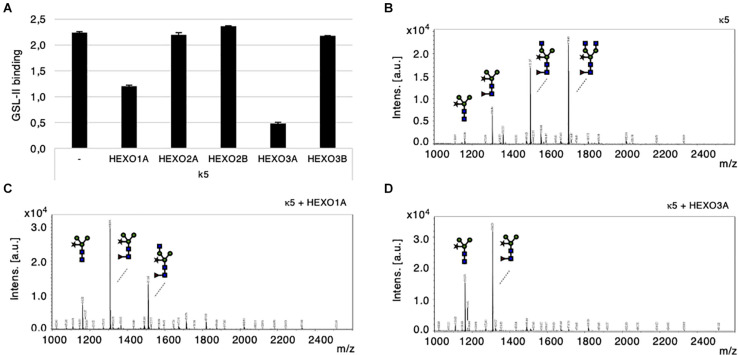
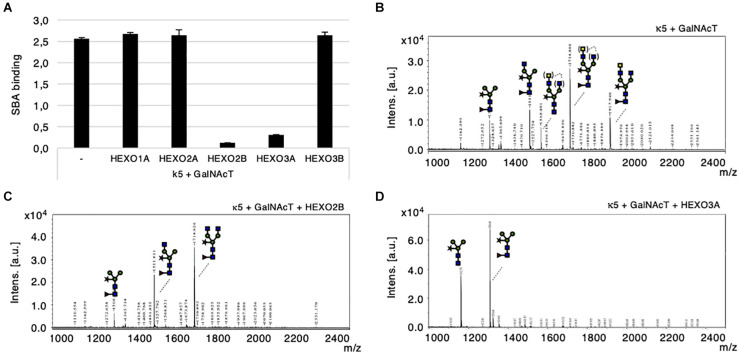
Secretions of parasitic worms (helminths) contain a wide collection of immunomodulatory glycoproteins with the potential to treat inflammatory disorders, like autoimmune diseases. Yet, the identification of single molecules that can be developed into novel biopharmaceuticals is hampered by the limited availability of native parasite-derived proteins. Recently, pioneering work has shown that helminth glycoproteins can be produced transiently in plants while simultaneously mimicking their native helminth N-glycan composition by co-expression of desired glycosyltransferases. However, efficient "helminthization" of N-glycans in plants by glyco-engineering seems to be hampered by the undesired truncation of complex N-glycans by β--acetyl-hexosaminidases, in particular when aiming for the synthesis of N-glycans with antennary GalNAcβ1-4GlcNAc (LacdiNAc or LDN). In this study, we cloned novel β-hexosaminidase open reading frames from and characterized the biochemical activity of these enzymes. We identified HEXO2 and HEXO3 as enzymes responsible for the cleavage of antennary GalNAc residues of N-glycans on the model helminth glycoprotein kappa-5. Furthermore, we reveal that each member of the HEXO family has a distinct specificity for N-glycan substrates, where HEXO2 has strict β-galactosaminidase activity, whereas HEXO3 cleaves both GlcNAc and GalNAc. The identification of HEXO2 and HEXO3 as major targets for LDN cleavage will enable a targeted genome editing approach to reduce undesired processing of these N-glycans. Effective knockout of these enzymes could allow the production of therapeutically relevant glycoproteins with tailor-made helminth N-glycans in plants.
寄生蠕虫(helminths)的分泌物含有大量免疫调节糖蛋白,具有治疗炎症性疾病(如自身免疫性疾病)的潜力。然而,由于天然寄生虫衍生蛋白的可用性有限,阻碍了可开发成新型生物药物的单一分子的鉴定。最近,开创性的工作表明,蠕虫糖蛋白可以在植物中瞬时产生,同时通过共表达所需的糖基转移酶来模拟其天然蠕虫N-聚糖组成。然而,通过糖基工程在植物中对N-聚糖进行有效的“蠕虫化”似乎受到β-N-乙酰己糖胺酶对复杂N-聚糖不期望的截短的阻碍,特别是当旨在合成具有天线状GalNAcβ1-4GlcNAc(LacdiNAc或LDN)的N-聚糖时。在本研究中,我们从克隆了新的β-己糖胺酶开放阅读框,并对这些酶的生化活性进行了表征。我们鉴定出HEXO2和HEXO3是负责切割模型蠕虫糖蛋白kappa-5上N-聚糖的天线状GalNAc残基的酶。此外,我们揭示了HEXO家族的每个成员对N-聚糖底物具有不同的特异性,其中HEXO2具有严格的β-半乳糖苷酶活性,而HEXO3切割GlcNAc和GalNAc两者。将HEXO2和HEXO3鉴定为LDN切割的主要靶点将使靶向基因组编辑方法能够减少这些N-聚糖的不期望加工。有效敲除这些酶可以使植物中产生具有定制蠕虫N-聚糖的治疗相关糖蛋白。