Bleach Rachel, Sherlock Mark, O'Reilly Michael W, McIlroy Marie
Endocrine Oncology Research Group, Department of Surgery, RCSI University of Medicine and Health Sciences, Dublin, Ireland.
Academic Department of Endocrinology, Beaumont Hospital and RCSI Medical School, Dublin, Ireland.
Front Cell Dev Biol. 2021 Mar 18;9:630503. doi: 10.3389/fcell.2021.630503. eCollection 2021.
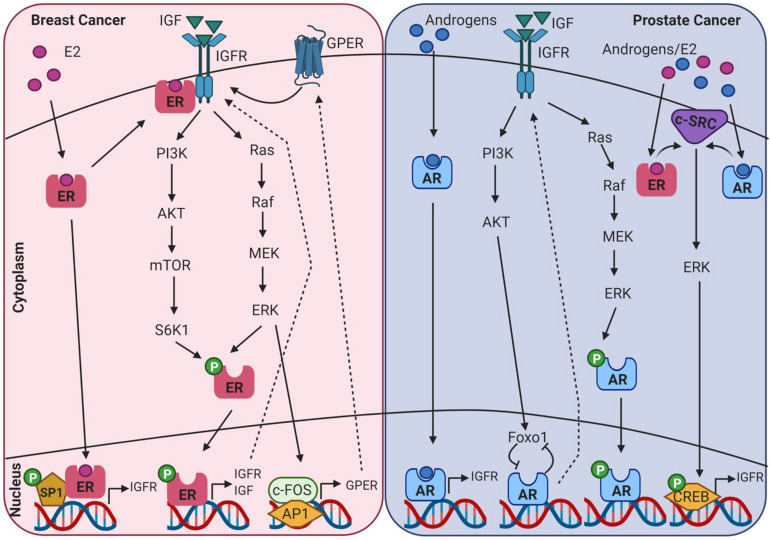
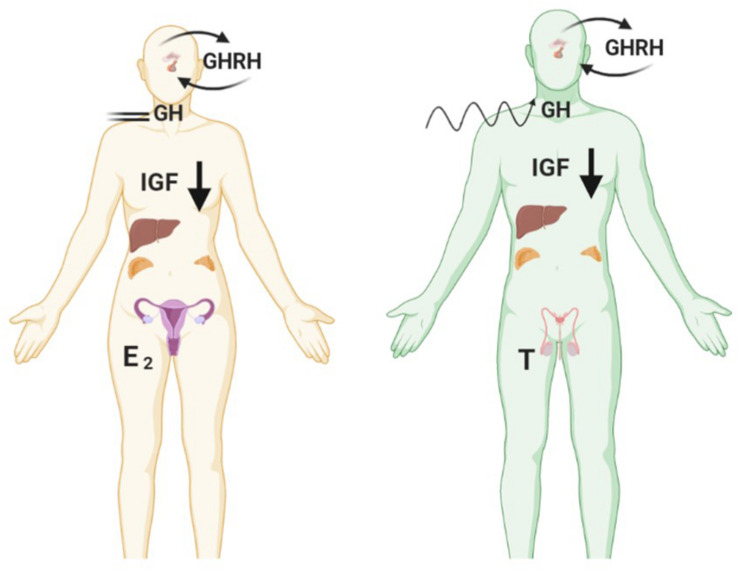
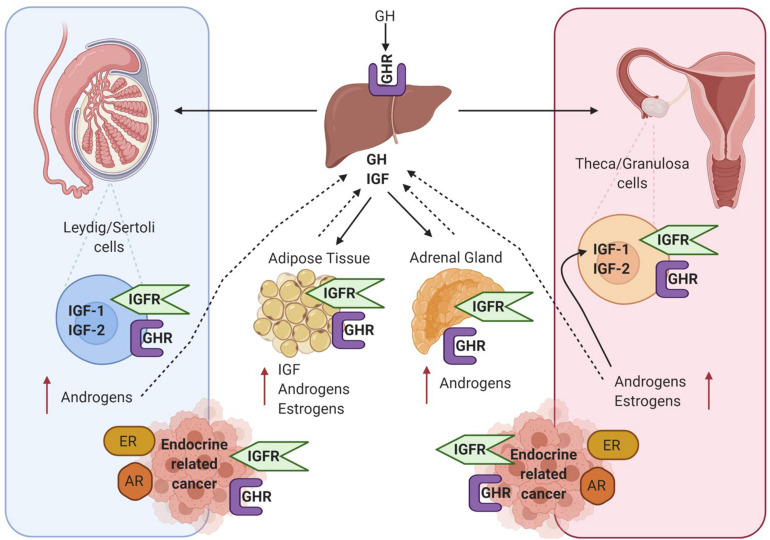
To date, almost all solid malignancies have implicated insulin-like growth factor (IGF) signalling as a driver of tumour growth. However, the remarkable level of crosstalk between sex hormones, the IGF-1 receptor (IGF-1R) and its ligands IGF-1 and 2 in endocrine driven cancers is incompletely understood. Similar to the sex steroids, IGF signalling is essential in normal development as well as growth and tissue homoeostasis, and undergoes a steady decline with advancing age and increasing visceral adiposity. Interestingly, IGF-1 has been found to play a compensatory role for both estrogen receptor (ER) and androgen receptor (AR) by augmenting hormonal responses in the absence of, or where low levels of ligand are present. Furthermore, experimental, and epidemiological evidence supports a role for dysregulated IGF signalling in breast and prostate cancers. Insulin-like growth factor binding protein (IGFBP) molecules can regulate the bioavailability of IGF-1 and are frequently expressed in these hormonally regulated tissues. The link between age-related disease and the role of IGF-1 in the process of ageing and longevity has gained much attention over the last few decades, spurring the development of numerous IGF targeted therapies that have, to date, failed to deliver on their therapeutic potential. This review will provide an overview of the sexually dimorphic nature of IGF signalling in humans and how this is impacted by the reduction in sex steroids in mid-life. It will also explore the latest links with metabolic syndromes, hormonal imbalances associated with ageing and targeting of IGF signalling in endocrine-related tumour growth with an emphasis on post-menopausal breast cancer and the impact of the steroidal milieu.
迄今为止,几乎所有实体恶性肿瘤都表明胰岛素样生长因子(IGF)信号传导是肿瘤生长的驱动因素。然而,在内分泌驱动的癌症中,性激素、IGF-1受体(IGF-1R)及其配体IGF-1和2之间显著的串扰水平尚未完全明确。与性类固醇类似,IGF信号传导在正常发育以及生长和组织稳态中至关重要,并随着年龄增长和内脏脂肪增多而稳步下降。有趣的是,已发现IGF-1在缺乏配体或配体水平较低时通过增强激素反应,对雌激素受体(ER)和雄激素受体(AR)均发挥补偿作用。此外,实验和流行病学证据支持IGF信号传导失调在乳腺癌和前列腺癌中的作用。胰岛素样生长因子结合蛋白(IGFBP)分子可调节IGF-1的生物利用度,并常在这些受激素调节的组织中表达。在过去几十年中,与年龄相关疾病以及IGF-1在衰老和长寿过程中的作用之间的联系备受关注,这促使开发了众多靶向IGF的疗法,但迄今为止这些疗法均未发挥出其治疗潜力。本综述将概述人类IGF信号传导的性别二态性本质,以及中年时性类固醇减少如何对其产生影响。还将探讨与代谢综合征、与衰老相关的激素失衡以及内分泌相关肿瘤生长中IGF信号传导靶向治疗的最新联系,重点是绝经后乳腺癌以及甾体微环境的影响。